Ever bite into a juicy, homemade burger and hit a piece that’s unpleasantly tough and chewy? You know the one. It kind of ruins the whole experience. You spent all that time selecting the perfect cut of meat, chilling it, grinding it, and forming the perfect patty, only to be let down by the texture. Well, the culprit probably wasn’t the meat itself, but its sneaky, unwanted guest. So, What Is A Sinew Or Silverskin? Understanding this is the absolute game-changer that separates amateur home grinding from professional, melt-in-your-mouth results. Stick with me, and I’ll let you in on the butcher’s secret.
My first time using a meat grinder was a comedy of errors. I bought a beautiful chuck roast, chopped it into chunks, and fed it into my shiny new machine. Within minutes, the grinder started groaning, and the meat came out as a mushy, smeared paste. The problem? I had left on all that silvery, stringy stuff, thinking the machine would just power through it. Big mistake. That day, I learned a crucial lesson that I’m about to share with you—a lesson that will elevate your ground meat forever.
What Exactly Is Sinew or Silverskin? The Nitty-Gritty
Let’s break this down in simple terms. While they’re often lumped together, sinew and silverskin are slightly different types of connective tissue you’ll find on various cuts of meat.
- Silverskin: This is the thin, pearly, almost iridescent membrane that you see stretched over the surface of certain muscles, like a pork tenderloin or a beef brisket flat. It’s made of elastin, a protein that, unlike collagen, does not break down with heat. It doesn’t melt away; it just gets tougher and chewier when you cook it. Think of it as a piece of un-chewable natural plastic wrap.
- Sinew: This is a tougher, thicker, and more fibrous type of connective tissue that connects muscle to bone. It looks like a white or yellowish cord or ribbon running through the meat. This is primarily made of collagen. Now, you might think, “Wait, collagen is good! It breaks down into gelatin in slow-cooked dishes like pot roast.” And you’d be right! But in a quick-cooking application like a burger or sausage, that sinew won’t have time to break down. Instead, it remains incredibly tough and stringy.
So, while one is a thin sheet and the other is a thick cord, they both have one thing in common: they are your enemy when it comes to grinding meat.
Why Removing Sinew and Silverskin Is a Non-Negotiable
You might be thinking, “Is it really worth the extra five minutes of prep time?” Absolutely. Here’s why trimming this stuff away is one of the most important steps for anyone serious about their ground meat.
- Texture is Everything: This is the big one. Leaving sinew and silverskin in your meat results in those tough, gristly bits that are impossible to chew. Removing them guarantees a uniform, tender, and pleasant texture in every single bite of your burgers, meatballs, or tacos.
- It Protects Your Grinder: This is where we at Meat Grinder Pro get serious. Sinew is the number one nemesis of a meat grinder. As you feed the meat into the machine, those long, tough fibers don’t get cut by the blade. Instead, they wrap themselves around the blade and auger, creating a nasty clog. This forces the motor to work overtime, which can lead to overheating and long-term damage. A clean grind is a happy grind for your machine.
- Purer Flavor: While it’s not a huge flavor component, removing the connective tissue allows the pure, rich flavor of the meat and fat to shine through without any “off” textures getting in the way.
Expert Take: “The single biggest mistake I see home cooks make is failing to properly trim their meat before grinding,” says Chef David Wilson, a butcher with over 20 years of experience. “You can have the best cut of beef in the world, but if you leave the silverskin on, you’re grinding in toughness. It’s a five-minute step that makes a world of difference.”
|
Our Picks for the Best Meat Grinder in 2026
As an Amazon Associate, we earn from qualifying purchases.
|
||
| Num | Product | Action |
|---|---|---|
| 1 | Commercial Meat Grinder #12,0.9HP Electric Meat Mincer,Heavy Duty Stainless Steel Industrial Meat Mincer w/2 Blades & Meat Pusher,Food Grinders Machine for Home Kitchen Regular Use |

|
| 2 | LEM Products BigBite #22 Meat Grinder, 1.0 HP Stainless Steel Electric Meat Grinder Machine, Ideal for Heavy Use |
|
| 3 | VEVOR Commercial Meat Grinder, 550LB/h 1100W Electric Meat Mincer, ETL Approved Heavy Duty Industrial Meat Mincer Machine |
|
| 4 | STX International Turboforce II 4000 Electric Meat Grinder | Grinds Soft Bones | Foot Pedal | 6 Grinding Plates | Stainless Steel Blades | Sausage Tubes | Kubbe Maker | Meat Claws | Patty Press & More |
|
| 5 | Weston Pro Series Electric Meat Grinder 7 Sausage Stuffer, Commercial Grade, 1500 Watts, 2 HP, 21lbs. Per Minute, Heavy Duty Stainless Steel (10-3201-W) |
|
| 6 | Electric Meat Grinder, Sausage Stuffer with 3 Sausage Tubes, 2 Blades, 3 Plates, 3200W Max, Meat Grinder Heavy Duty for Home Kitchen Use, Stainless Steel (Black) |
|
| 7 | AAOBOSI Meat Grinder Electric 3000W Max with Touch Color Screen, Auto-Reverse & Built-in Storage - 3 Speed Settings,Grinding, Sausage & Kibbe Making for Home Use, Stainless Steel |
|
| 8 | LEM Products BigBite #8 Meat Grinder, 0.50 HP Stainless Steel Electric Meat Grinder Machine, Ideal for Regular Use |
|
| 9 | MEAT! 1.5 HP Meat Grinder with 3 Stuffing Tubes, 2 Stainless Steel Grinding Plates, and a Stainless Steel Stuffing Plate for Making Ground Meat |
|
| 10 | MEAT! 1.5 HP Meat Grinder with 3 Stuffing Tubes, 2 Stainless Steel Grinding Plates, and a Stainless Steel Stuffing Plate for Making Ground Meat |
|
The Showdown: Sinew vs. Your Meat Grinder
So, what actually happens inside the machine when it meets a piece of untrimmed meat? It’s not pretty.
Manual Grinders
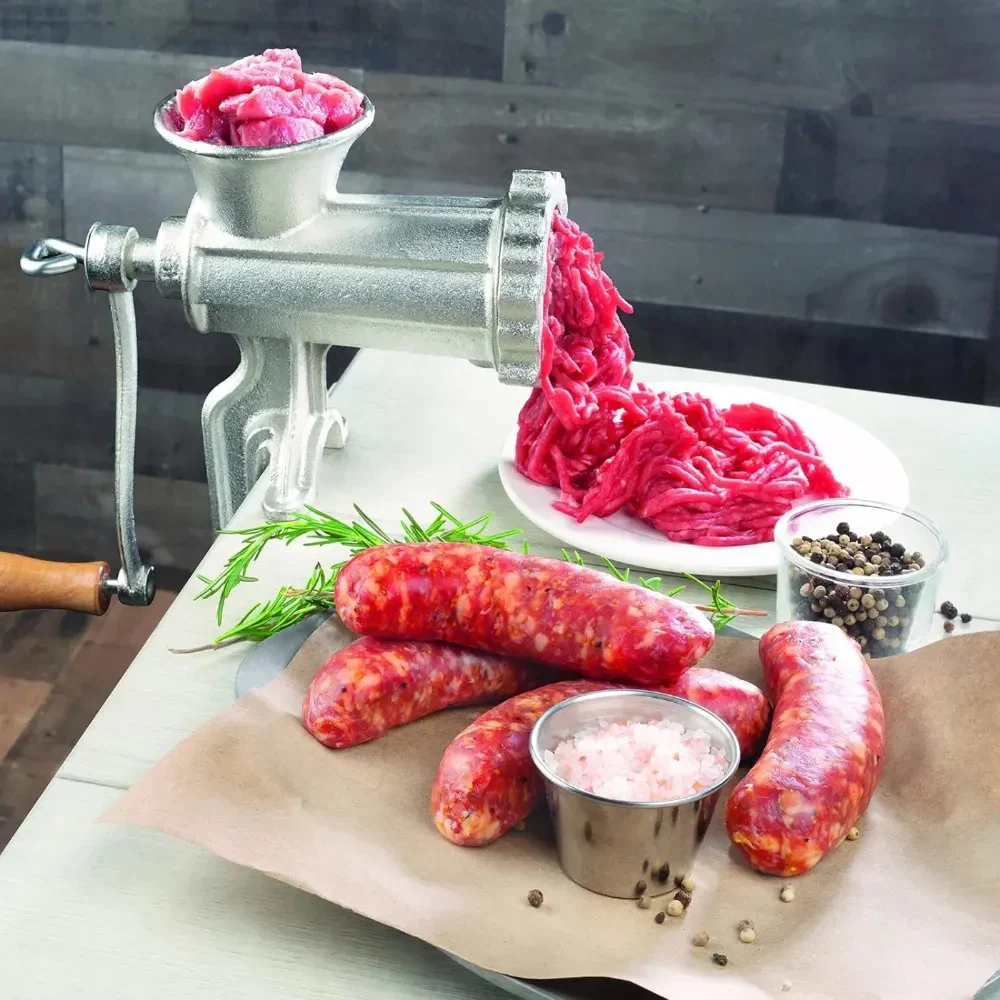
With a hand-crank grinder, you’ll feel the resistance immediately. The handle will become incredibly difficult to turn. You’ll be putting in a ton of effort for very little output. The sinew will wrap around the blade, effectively dulling it and preventing it from cutting the meat fibers. The result is a “smeared” texture, where the fat and meat are squished rather than cut.
Electric Grinders
An electric grinder’s motor will try to power through, but you’ll hear it strain. The machine will get bogged down, and the flow of meat will slow to a trickle or stop completely. If you continue to force it, you risk burning out the motor. You’ll have to stop, disassemble the entire grinding head, and painstakingly pick the stringy sinew off the blade and auger with a fork. It’s a frustrating, messy, and entirely avoidable process.
How to Remove Silverskin and Sinew Like a Pro
Ready to trim like a butcher? It’s easier than you think. All you need is a little patience and the right tool—a sharp, thin, and slightly flexible knife is ideal. A boning knife or a good filet knife works wonders.
- Chill Your Meat: Place the cut of meat in the freezer for 15-20 minutes before you start. You don’t want it frozen solid, just very firm to the touch. This makes the meat easier to handle and the silverskin easier to remove.
- Get a Good Grip: Place the meat on a stable cutting board. Identify the edge of the silverskin membrane.
- The First Cut: Slip the tip of your knife under the edge of the silverskin to lift a small tab you can grip with your other hand.
- Angle and Pull: Hold the tab of silverskin taut, pulling it away from the meat. Angle your knife blade slightly upward, against the membrane.
- Slide the Knife: Using long, smooth strokes, slide the knife forward, keeping it pressed against the silverskin. The goal is to remove the membrane with as little meat attached as possible. It should peel off in a long sheet if you do it correctly.
- Tackle the Sinew: For thicker pieces of sinew, use the tip of your knife to carefully cut it out, following it through the muscle as best you can.
It might feel a little awkward at first, but after a few tries, you’ll get the hang of it and be able to clean up a cut of meat in just a few minutes.
A Quick Trimming Checklist
Before you start grinding, run through this mental checklist:
- [ ] Is my knife sharp and clean?
- [ ] Is the meat firm and chilled?
- [ ] Have I removed all the large, obvious sheets of silverskin?
- [ ] Have I cut out any thick, ropy pieces of sinew?
- [ ] Have I cut the cleaned meat into 1-inch cubes ready for the grinder’s feed tube?
Frequently Asked Questions (FAQ)
Here are some common questions we get about dealing with these tricky tissues.
Q: What is the difference between sinew and fat?
A: Fat is soft, waxy, and creamy white. It renders down when cooked, adding moisture and flavor. Sinew is tough, stringy, and fibrous. It does not render down in the same way and becomes tough in quick-cooking methods.
Q: Can you just grind the sinew with a really powerful meat grinder?
A: While a heavy-duty, commercial-grade grinder might be able to chew through some sinew, it’s never a good idea. Even on powerful machines, it causes unnecessary wear and tear on the motor and blade. More importantly, it still results in a final product with an inferior, gristly texture. It’s always better to remove it.
Q: Do I have to remove every single tiny piece of connective tissue?
A: No, you don’t need to be a surgeon! Focus on removing the large, obvious sheets of silverskin and the thick, cord-like sinews. Tiny little bits deep within the muscle are generally fine and won’t negatively impact the final texture.
Q: Can you eat sinew or silverskin?
A: Technically, yes. In slow-cooking preparations like braising or stewing for many hours, the collagen in sinew will eventually break down into gelatin, creating a rich mouthfeel. Silverskin, however, will always remain tough. For grinding, both should be removed.
Q: What’s the best knife for removing silverskin?
A: A flexible boning knife is the industry standard for a reason. Its thin, flexible blade allows you to get right up against the membrane without taking off excess meat. A sharp filet knife is also a great alternative.
The Takeaway: A Small Step for a Giant Leap in Quality
So, what is a sinew or silverskin? It’s the difference between a good burger and a great burger. It’s the secret to unlocking a perfectly tender, uniform texture in all your ground meat creations. Taking a few extra minutes to properly trim your meat is the single most effective thing you can do to improve your results and protect your investment in a quality meat grinder.
Don’t let a little connective tissue stand between you and culinary perfection. Embrace this simple butcher’s technique, and your family and friends will wonder how you manage to make the best burgers they’ve ever tasted. Ready to take control of your grind? Explore our range of powerful and easy-to-clean meat grinders and start your journey to ground meat mastery today.