Preparing homemade raw pet food, often known as the BARF (Biologically Appropriate Raw Food) diet, has gained immense popularity among pet owners seeking to provide a natural, nutrient-rich diet for their furry companions. A critical component of this diet is the inclusion of ground bones, specifically soft chicken bones, which offer essential calcium and phosphorus. However, effectively grinding chicken bones requires a specialized and robust meat grinder, as not all models are up to the task. Choosing the wrong grinder can lead to frustrating jams, motor burnout, or even damage to the machine. This comprehensive guide will navigate you through the world of meat grinders, focusing on the power, durability, and features necessary to confidently and safely grind chicken bones for your pet’s meals, ensuring you select the perfect tool for your home kitchen.
Exploring Types of Meat Grinders for Bone Processing
When considering a meat grinder for grinding chicken bones, understanding the primary types available can help streamline your decision-making process. Each type offers distinct advantages and limitations regarding power, efficiency, and overall usability for bone grinding.
Manual Meat Grinders: Pros and Cons
Manual meat grinders are hand-operated devices, typically clamped to a countertop. They are simple in design and generally the most affordable option.
- Pros: Portability, no electricity needed, budget-friendly, easy to store.
- Cons: Requires significant physical effort, slow processing speed, limited power for tougher tasks. Manual grinders are generally not recommended for grinding chicken bones. The immense force required to crush even soft bones can be exhausting and may damage the grinder or lead to frequent clogs, making the process inefficient and potentially unsafe.
|
Our Picks for the Best Meat grinder in 2026
As an Amazon Associate I earn from qualifying purchases.
|
||
| Num | Product | Action |
|---|---|---|
| 1 | LEM Products BigBite #8 Meat Grinder, 0.50 HP Stainless Steel Electric Meat Grinder Machine, Ideal for Regular Use |

|
| 2 | Oaomi 3200W Max Electric Meat Grinder & Sausage Stuffer - Mincer Machine with Tool 2 Blade And 3 Plates, 3 Tubes & Kubbe Kit Tool for Home Kitchen Use(Black) |
|
| 3 | Electric Meat Grinder, Sausage Stuffer with 3 Sausage Tubes, 2 Blades, 3 Plates, 3200W Max, Meat Grinder Heavy Duty for Home Kitchen Use, Stainless Steel (Black) |
|
| 4 | Meat Grinder, Sausage Stuffer, [2800W Max] Electric Meat Mincer with Stainless Steel Blades & 3 Grinding Plates,Sausage Maker & Kubbe Kit for Home Kitchen & Commercial Using |
|
| 5 | Meat Grinder Manual Mincer 2-in-1 Manual Meat Grinder Sausage Maker Table Mount Pork Mincer Sausage Stuffer Funnel Make Homemade Burger Patties Hand Operated Kitchen Tool FQ |
|
| 6 | CHEFFANO Meat Grinder, 2600W Max Stainless Steel Meat Grinder Electric, ETL Approved Heavy Duty Meat Mincer Machine with 2 Blades, 3 Plates, Sausage Stuffer Tube & Kubbe Kit for Home Kitchen Use |
|
| 7 | CHEFFANO Electric Meat Grinder, [2000W Max] Heavy Duty Meat Mincer with 2 Blades, 3 Plates, Sausage Tube & Kubbe Kit for Home Kitchen Use |
|
| 8 | KitchenAid Stand Mixer Attachment, Food Grinder KSMMGA, Metal Food Grinder |
|
| 9 | GANIZA Food Processors, Electric Food Chopper with Meat Grinder & Vegetable Chopper - 2 Bowls (8 Cup+8 Cup) with Powerful 450W Copper Motor - Includes 2 Sets of Bi-Level Blades for Fruits/Meat/Nuts |
|
| 10 | Meat Chopper, Hamburger Grinder, Premium Heat Resistant Smasher for Ground Beef, Burger Grinder Nylon Potato Mix Tool, Meat & Poultry Tenderizers-Black |
|
Electric Meat Grinders: Pros and Cons
Electric meat grinders are powered by a motor, significantly automating the grinding process. These are the most common and versatile choice for home use.
- Pros: Faster and more efficient, less physical effort, consistent grind quality, often come with various attachments. Electric grinders designed for heavy-duty use are ideal for grinding chicken bones, offering the power and durability needed to handle the task effectively.
- Cons: Higher cost than manual models, requires an electrical outlet, can be bulky, some models might be loud during operation.
Industrial/Commercial Meat Grinders: Pros and Cons
Industrial or commercial meat grinders are designed for high-volume processing in butcher shops, restaurants, or large-scale pet food operations.
- Pros: Exceptional power and speed, extreme durability, large capacity, built for continuous heavy-duty use. These machines can easily handle chicken bones and even larger soft bones.
- Cons: Very expensive, extremely large and heavy, not practical for home kitchens due to size, noise, and power requirements. While capable, they are overkill for most home users focused on grinding chicken bones for a single household.
For grinding chicken bones at home, a powerful electric meat grinder—often marketed as “heavy-duty” or “light commercial”—is the optimal choice. These models strike a balance between power, capacity, and suitability for a domestic environment.
Comprehensive Buying Guide for Meat Grinders (Buying Guide)
Selecting the best meat grinder for chicken bones requires careful consideration of several key factors. Since bones are tougher than meat, the grinder needs robust components and ample power to perform consistently without issues.
Determining Your Usage Needs: Home or Business?
Your intended use is the first filter. For occasional use to prepare pet food for one or two animals, a high-quality home electric grinder will suffice. If you’re preparing large batches for multiple pets, looking into more robust “light commercial” models might be beneficial. Commercial grinders, as discussed, are typically not necessary for home use due to their size and cost.
Motor Power: How Much Is Enough?
The motor is the heart of any electric meat grinder, especially when grinding bones. Look for grinders with a high wattage or horsepower (HP).
- For chicken bones: A minimum of 500-750 watts (or around 0.75-1 HP) of continuous power is generally recommended. Many manufacturers also list “max locked wattage” which can be much higher (e.g., 1800W-3000W), but the continuous wattage or HP gives a better indication of sustained grinding capability. Higher power ensures the motor won’t strain, jam, or burn out when tackling bones, allowing it to tear through chicken bones with greater ease.
Material Quality: Which is Durable and Safe?
Durability and food safety are paramount. The grinder’s construction material directly impacts its longevity and performance.
- Housing: Look for robust materials like stainless steel or heavy-duty plastic for the exterior.
- Internal Components: Stainless steel is essential for the auger (feed screw), cutting blade, and grinding plates. These parts bear the brunt of bone grinding and must withstand high stress without corroding or dulling quickly. Avoid plastic gears or components in the grinding mechanism, as they are prone to breaking when encountering bones. Polished cast aluminum is also acceptable for the grinding head and tray, but stainless steel offers superior longevity.
Brand Reputation: Which Brands to Choose?
Choosing reputable brands known for quality and customer support can save you headaches. Brands like STX International, LEM Products, Sunmile, and Weston are frequently cited for producing durable meat grinders, including models capable of handling soft bones. Researching customer reviews and warranty offerings from these brands is a wise step.
Essential Features: Coarse, Fine Grinding, Sausage Stuffing, and More
Beyond basic grinding, certain features enhance usability and versatility, particularly for bone grinding.
- Reverse Function: This is an absolute must-have for bone grinding. If a bone jams the grinder, the reverse function allows you to clear the obstruction without disassembling the unit, preventing motor strain and potential damage.
- Multiple Grinding Plates: Having coarse, medium, and fine grinding plates offers versatility. For chicken bones, starting with a coarse plate is advisable, and then possibly a finer plate if a second pass is desired for a very smooth consistency.
- Feed Tube Size: A wider feed tube (e.g., #12 size or larger) allows you to feed larger pieces of chicken and bones, reducing the need for extensive pre-cutting and speeding up the process.
- Circuit Breaker: An integrated circuit breaker protects the motor from overheating and burnout in case of a jam or prolonged heavy use, enhancing the grinder’s lifespan and safety.
- Accessories: Look for useful accessories such as a meat stomper/pusher, different sausage stuffing tubes (if you plan on making sausage), and meat claws. Some models even include foot pedals for hands-free operation.
Budget: Price Ranges and Suitable Choices
Meat grinders capable of grinding chicken bones typically range from moderately priced home models to higher-end light commercial units.
- Entry-Level (for bones): Expect to pay between $150-$300. These models often have sufficient power (e.g., 1000W max locked) and metal gears, but might have some plastic exterior components.
- Mid-Range: $300-$600 will get you more powerful motors (e.g., 1HP+ continuous), more robust stainless steel construction, and often longer warranties. These are excellent choices for frequent use.
- High-End/Light Commercial: Over $600. These offer superior power, all-stainless steel components, large capacities, and are built for the most demanding home tasks, often approaching commercial-grade durability.
Invest in the best grinder your budget allows, prioritizing motor power and metal components, as a cheaper, underpowered model will likely fail quickly when grinding bones.
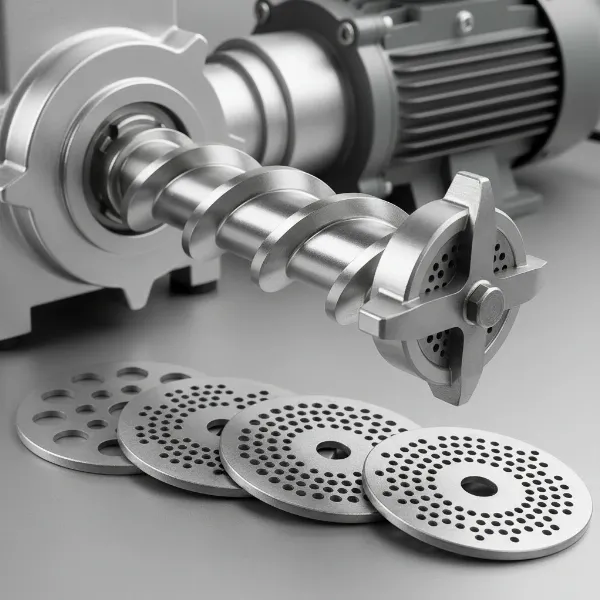 Close-up of durable stainless steel components of a meat grinder, including auger, blade, and grinding plates.
Comparison Table: Top Meat Grinders for Grinding Chicken Bones
| Brand | Model | Max Power (W) / HP | Material (Head/Internal) | Price Range | Key Advantages | Potential Drawbacks |
|---|---|---|---|---|---|---|
| STX International | Turboforce II 4000 | 2000W Locked / 4000W Peak | Polished Aluminum/Stainless Steel | $200 – $250 | High power for soft bones, foot pedal, many accessories, #12 size | Can be noisy, aluminum head |
| LEM Products | BigBite #12 | 0.75 HP Continuous | Stainless Steel | $550 – $650 | Excellent durability, powerful 0.75HP motor, 5-year warranty, quiet operation | High price point, fewer accessories than STX |
| Sunmile | SM-G50 ETL | 1000W Max / 1.3 HP Peak | Polished Cast Aluminum/Metal Gears | $150 – $200 | Good value, powerful motor for its price, reverse function, #12 size | Rated power lower than others, can be heavy |
Top Meat Grinders for Grinding Chicken Bones (Top Picks)
Based on rigorous criteria and extensive user feedback, these models consistently stand out for their ability to handle chicken bones effectively, making them excellent choices for pet owners and home processors.
1. STX International Turboforce II 4000 Series Electric Meat Grinder
The STX Turboforce II 4000 Series is a perennial favorite for processing meat and soft bones at home. Its formidable power and comprehensive accessory package make it a versatile workhorse in the kitchen.
- Key Specs: This grinder boasts a robust 2000-watt locked motor (with a maximum output often advertised up to 4000W), placing it among the most powerful home electric grinders. It features a #12 size grinding head, a large capacity meat tray, and a patented Quad Air Induction Cooling System to prevent overheating. It is explicitly designed to handle soft bones such as chicken, rabbit, squirrel, and quail.
- Pros: Exceptional power handles chicken bones with ease, comes with numerous accessories (multiple plates, blades, sausage tubes, Kubbe maker, foot pedal), high grinding capacity (220-260 lbs/hour), 3-year warranty. The included foot pedal allows for hands-free operation, enhancing convenience.
- Cons: Some users report it can be noisy during operation, the grinding head is polished aluminum, not full stainless steel.
- Ideal for: Pet owners needing a powerful, versatile grinder for regular bone grinding and general meat processing, looking for an extensive accessory kit.
2. LEM Products BigBite #12 Electric Meat Grinder (0.75 HP)
The LEM BigBite #12 is a testament to professional-grade quality scaled for serious home users. Known for its rugged construction and reliable performance, it’s a favorite among hunters and those processing large volumes.
- Key Specs: This model features a powerful 0.75 HP (horsepower) motor, offering consistent and reliable grinding power. Its entire construction, including the housing, auger, and head, is made from durable stainless steel, ensuring longevity and easy cleaning. The “BigBite” technology improves meat feeding, reducing clogs and increasing grinding speed (approximately 11 lbs per minute).
- Pros: Superior all-stainless steel construction for maximum durability and hygiene, very powerful continuous motor ideal for chicken bones, quieter operation compared to some high-wattage models, excellent 5-year factory warranty and lifetime customer support, effectively grinds large quantities.
- Cons: Higher price point compared to other home grinders, less included accessories (focused primarily on grinding), larger footprint.
- Ideal for: Users who prioritize uncompromised durability, consistent power, and long-term reliability for frequent chicken bone grinding, and who appreciate a more commercial-grade feel.
3. Sunmile SM-G50 ETL Electric Meat Grinder
The Sunmile SM-G50 ETL offers a compelling balance of power, features, and affordability, making it a strong contender for home users who need bone-grinding capabilities without breaking the bank.
- Key Specs: This grinder features a 350W rated power motor with a 1000W maximum locked power, paired with robust metal gears. It’s a #12 size grinder with a large capacity tray and includes a reverse function and circuit breaker for safety. The grinding head is made of polished cast aluminum, while the blade and plates are stainless steel.
- Pros: Affordable yet powerful enough for chicken bones, metal gearbox enhances durability, includes essential features like reverse function and circuit breaker, large capacity for its price range (up to 200 lbs/hour), easy to clean with dishwasher-safe parts.
- Cons: Rated power is lower than top-tier models, polished aluminum head might not be as durable as full stainless steel over time.
- Ideal for: Budget-conscious buyers needing a reliable electric meat grinder for regular chicken bone grinding, who appreciate safety features and ease of cleaning.
Tips for Using and Maintaining Your Meat Grinder
To ensure your meat grinder performs optimally and lasts for years, especially when grinding chicken bones, proper usage and maintenance are crucial.
Assembling and Cleaning Your Grinder Correctly
- Assembly: Always consult your grinder’s manual. Ensure all parts, especially the auger, blade, and grinding plate, are correctly aligned and securely fastened. A misaligned blade can cause poor performance and damage.
- Initial Cleaning: Before first use, wash all parts that contact food with warm, soapy water, rinse thoroughly, and dry completely.
- Post-Grinding Cleaning: Disassemble the grinder immediately after use. Wash all components thoroughly to prevent food residue from drying and hardening, which can be difficult to remove. Many parts can be washed by hand, and some stainless steel components might be dishwasher safe (check your manual). Ensure all parts are completely dry before reassembling or storing to prevent rust, especially on steel components. Feeding a slice of bread through the grinder after meat can help push out residual meat and absorb excess moisture, aiding in cleaning.
Secrets to Grinding Delicious Meat and Preventing Jams
- Prepare Your Chicken Bones: Only grind soft, uncooked chicken bones such as necks, backs, rib cages, and wingtips. Cooked bones become brittle, can splinter, and are dangerous to grind and feed. Cut larger bones into smaller, manageable pieces (1-2 inches) to ease the load on the motor and prevent jams.
- Chill Components: For optimal grinding, chill the grinding head, auger, blade, and grinding plate in the freezer for 15-30 minutes before use. Cold metal helps keep meat and bone fragments firm, resulting in a cleaner grind and less smearing.
- Feed Slowly and Consistently: Do not overload the feed tube. Feed bones one piece at a time, allowing the grinder to process each one completely before adding the next. Consistent, measured feeding prevents jams and motor strain.
- Utilize the Reverse Function: If a jam occurs, immediately stop the grinder, activate the reverse function for a few seconds to clear the obstruction, then resume normal grinding. This is far better than forcing it or repeatedly stopping and starting the motor.
Maintenance Tips to Extend Your Grinder’s Lifespan
- Lubrication: Some grinders require occasional lubrication of certain parts (e.g., gears) as per the manufacturer’s instructions.
- Blade Sharpening/Replacement: Over time, cutting blades can dull. Consider having them professionally sharpened or replacing them periodically to maintain optimal grinding efficiency, especially with bones.
- Proper Storage: Store your grinder in a dry place. Keep smaller accessories organized (some grinders have built-in storage drawers) to prevent loss and keep them in good condition.
By following these guidelines, you can ensure your meat grinder remains a reliable tool for preparing nutritious meals for your pets for years to come.
Conclusion
Selecting the right meat grinder for grinding chicken bones is a crucial investment for pet owners committed to a raw food diet. We’ve explored that the ideal choice lies within the realm of powerful electric meat grinders, often those marketed for heavy-duty home or light commercial use. Key factors such as a robust motor (at least 0.75 HP or 1000W+ max locked power), durable stainless steel components for the auger and blades, a convenient reverse function, and a suitable feed tube size are paramount. Models like the STX Turboforce II 4000 Series, LEM Products BigBite #12, and Sunmile SM-G50 ETL consistently prove their capability in tackling soft chicken bones effectively.
Remember, proper preparation of bones, careful feeding, and diligent cleaning are just as important as the grinder’s specifications in ensuring safe and efficient operation. By prioritizing these considerations, you can confidently choose a meat grinder that not only handles chicken bones with ease but also becomes a reliable and long-lasting appliance in your kitchen. What kind of raw pet food recipes are you most excited to create with your new bone-grinding capability?
Frequently Asked Questions
Can all meat grinders grind bones?
No, not all meat grinders can handle bones. Standard kitchen grinders designed only for meat typically lack the power and robust internal components (like metal gears and strong stainless steel blades/augers) necessary to process bones. Attempting to grind bones with an underpowered grinder can cause jams, damage the motor, or break plastic parts.
What kind of bones can be ground in a home meat grinder?
Home meat grinders suitable for bones are generally capable of grinding small, soft, uncooked poultry bones, such as chicken necks, backs, wings, and rib cages, as well as rabbit and quail bones. Harder or larger bones from beef, pork, or lamb, and even denser turkey bones, are typically too tough for most home-grade machines and require commercial-grade equipment.
Is grinding chicken bones safe for pets on a BARF diet?
Yes, when done correctly, grinding raw chicken bones can be a safe and highly beneficial component of a BARF (Biologically Appropriate Raw Food) diet for pets. Bones provide essential calcium, phosphorus, and other minerals. It is crucial to only feed raw bones, as cooked bones become brittle and can splinter, posing a choking hazard or causing internal injuries.
How do I prevent my meat grinder from jamming when grinding bones?
To prevent jams, ensure bones are cut into small, manageable pieces. Chill both the bones and the grinder’s metal components before use. Feed bones slowly, one piece at a time, allowing the grinder to process each piece thoroughly. A grinder with a reverse function is also vital for easily clearing any blockages that do occur.
How often should I clean my meat grinder after grinding bones?
You should clean your Meat Grinder immediately after every use, especially after grinding bones. Bone fragments, marrow, and meat residue can dry quickly and be difficult to remove, potentially harboring bacteria. Disassemble all food-contact parts, wash them with warm, soapy water, rinse, and dry thoroughly to prevent bacterial growth and corrosion.