For home cooks and seasoned charcutiers alike, a manual meat grinder is an indispensable tool, offering unparalleled control over your ground meats. But when faced with the choice between the classic heft of cast iron and the sleek durability of stainless steel, deciding can be a challenge. Both materials bring distinct advantages and considerations to your kitchen, impacting performance, maintenance, and longevity. This comprehensive guide will dissect the characteristics of each, helping you determine which manual meat grinder will best serve your culinary endeavors.
A manual meat grinder stands apart from its electric counterparts, favored for its quiet operation, compact footprint, and the precise control it offers over the grinding process. Many home chefs appreciate the hands-on experience and the ability to grind smaller batches with ease, without the need for an electrical outlet. The core components, including the body, auger, and grinding plates, are typically crafted from either robust cast iron or resilient stainless steel, each offering a unique user experience.
The Enduring Appeal of Cast Iron Manual Grinders
Cast iron meat grinders are workhorses, echoing a tradition of durable kitchen tools built to last generations. Their substantial weight provides excellent stability during operation, reducing movement and making the grinding process smoother, especially when tackling tougher cuts of meat.
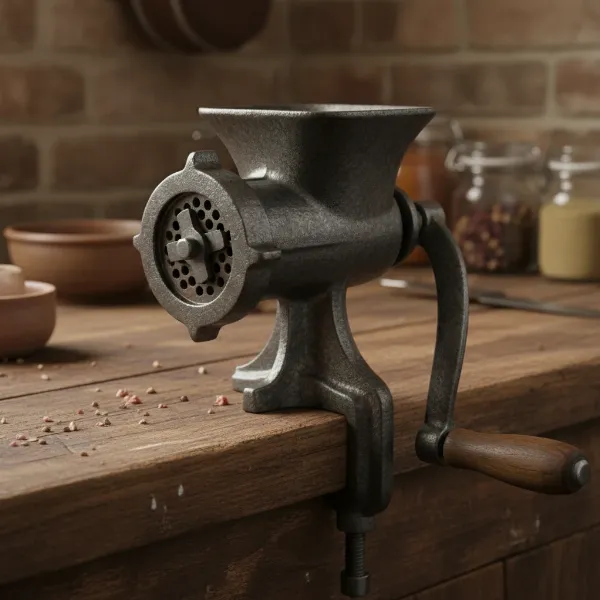 Traditional cast iron manual meat grinder clamped to a wooden table, ready for heavy-duty use.
Pros of Cast Iron:
- Exceptional Durability and Strength: Properly maintained, a cast iron grinder can last a lifetime. Its inherent strength makes it ideal for processing tough meats, sinew, or even some softer bones for pet food.
- Superior Chill Retention: This is a critical advantage, particularly for sausage making. Cast iron retains cold temperatures far longer than stainless steel, which is crucial for keeping meat and fat chilled throughout the grinding process. Chilled fat cuts cleanly rather than smearing, resulting in a superior texture and flavor in your sausages and ground meats.
- Cost-Effective: Typically, cast iron models come with a lower initial price point compared to their stainless steel counterparts, making them an attractive option for budget-conscious buyers.
- Rustic Aesthetic: Many appreciate the classic, old-world look and feel of cast iron, adding a touch of traditional charm to their kitchen.
Cons of Cast Iron:
- Rust Prone: The most significant drawback is its susceptibility to rust. Cast iron requires meticulous care, including immediate cleaning, thorough drying, and regular seasoning or oiling after each use to prevent corrosion.
- Maintenance Intensive: The need for constant rust prevention means a higher level of maintenance. Failure to properly dry and oil can lead to unsightly rust, which can then contaminate food if not removed.
- Not Ideal for Acidic Foods: Grinding acidic ingredients (like tomatoes for sauce, or anything with vinegar) can strip the seasoning and promote rust.
- Heavier Weight: While contributing to stability, the weight can make it less convenient to move and store for some users.
|
Our Picks for the Best Meat grinder in 2026
As an Amazon Associate I earn from qualifying purchases.
|
||
| Num | Product | Action |
|---|---|---|
| 1 | Oaomi 3200W Max Electric Meat Grinder & Sausage Stuffer - Mincer Machine with Tool 2 Blade And 3 Plates, 3 Tubes & Kubbe Kit Tool for Home Kitchen Use(Black) |

|
| 2 | Meat Grinder Manual Mincer 2-in-1 Manual Meat Grinder Sausage Maker Table Mount Pork Mincer Sausage Stuffer Funnel Make Homemade Burger Patties Hand Operated Kitchen Tool FQ |
|
| 3 | CHEFFANO Electric Meat Grinder, [2000W Max] Heavy Duty Meat Mincer with 2 Blades, 3 Plates, Sausage Tube & Kubbe Kit for Home Kitchen Use |
|
| 4 | Electric Meat Grinder, Sausage Stuffer with 3 Sausage Tubes, 2 Blades, 3 Plates, 3200W Max, Meat Grinder Heavy Duty for Home Kitchen Use, Stainless Steel (Black) |
|
| 5 | CHEFFANO Meat Grinder, 2600W Max Stainless Steel Meat Grinder Electric, ETL Approved Heavy Duty Meat Mincer Machine with 2 Blades, 3 Plates, Sausage Stuffer Tube & Kubbe Kit for Home Kitchen Use |
|
| 6 | LEM Products BigBite #8 Meat Grinder, 0.50 HP Stainless Steel Electric Meat Grinder Machine, Ideal for Regular Use |
|
| 7 | GANIZA Food Processors, Electric Food Chopper with Meat Grinder & Vegetable Chopper - 2 Bowls (8 Cup+8 Cup) with Powerful 450W Copper Motor - Includes 2 Sets of Bi-Level Blades for Fruits/Meat/Nuts |
|
| 8 | Meat Grinder, Sausage Stuffer, [2800W Max] Electric Meat Mincer with Stainless Steel Blades & 3 Grinding Plates,Sausage Maker & Kubbe Kit for Home Kitchen & Commercial Using |
|
| 9 | Meat Chopper, Hamburger Grinder, Premium Heat Resistant Smasher for Ground Beef, Burger Grinder Nylon Potato Mix Tool, Meat & Poultry Tenderizers-Black |
|
| 10 | KitchenAid Stand Mixer Attachment, Food Grinder KSMMGA, Metal Food Grinder |
|
The Modern Edge of Stainless Steel Manual Grinders
Stainless steel manual meat grinders represent a modern approach to kitchen durability and hygiene. They are designed for ease of use and maintenance, fitting seamlessly into contemporary kitchens.
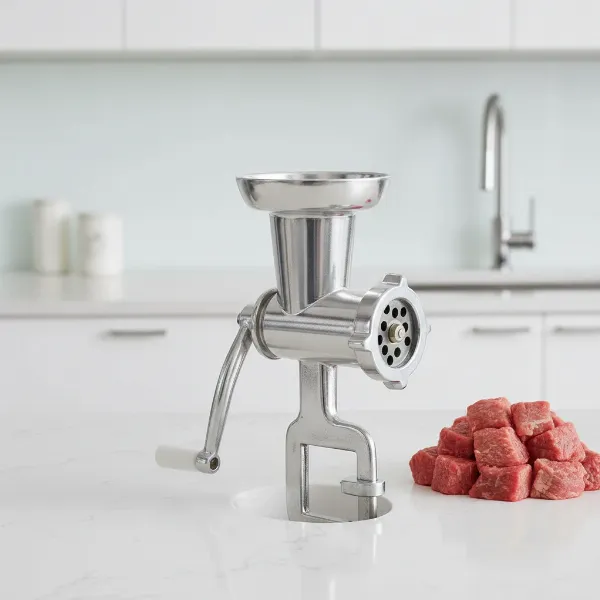 Sleek stainless steel manual meat grinder on a clean countertop, emphasizing modern design and hygiene.
Pros of Stainless Steel:
- Exceptional Hygiene: Stainless steel is non-porous, meaning it won’t harbor bacteria or absorb food odors, making it incredibly hygienic for food preparation. It’s the material of choice in commercial food processing for a reason.
- Superior Rust and Corrosion Resistance: Unlike cast iron, stainless steel is highly resistant to rust, corrosion, and staining, even when exposed to moisture and acidic foods. This makes cleanup far simpler and less demanding.
- Easy to Clean: Cleaning a stainless steel grinder is straightforward. It can be washed with soap and water, often even in a dishwasher (though hand washing is generally recommended for longevity of sharp parts), without the worry of rust.
- Modern Aesthetic: Stainless steel offers a sleek, professional look that complements most modern kitchen appliances.
- Versatility: Its resistance to acids and ease of cleaning make it suitable for grinding a wider variety of ingredients beyond just meat, such as vegetables or fruits for certain recipes.
Cons of Stainless Steel:
- Higher Initial Cost: Stainless steel grinders typically come with a higher price tag than cast iron models due to the material cost and manufacturing processes.
- Lighter Weight: While convenient for storage, a lighter stainless steel model may require a very sturdy clamp and stable surface to prevent movement during rigorous grinding.
- Less Chill Retention: Stainless steel doesn’t retain cold temperatures as effectively as cast iron. While you can pre-chill stainless steel components, they may warm up faster during extended grinding sessions.
Cast Iron vs. Stainless Steel: A Direct Comparison
| Feature | Cast Iron | Stainless Steel |
|---|---|---|
| Hygiene | Porous, requires diligent cleaning | Non-porous, highly hygienic, bacteria-resistant |
| Durability | Extremely durable with proper care | Very durable, resistant to wear and tear |
| Maintenance | High (seasoning, oiling, rust prevention) | Low (easy to clean, rust-resistant) |
| Rust Resistance | Low (very prone to rust) | High (highly rust and corrosion resistant) |
| Chill Retention | Excellent (keeps meat colder longer) | Good (can be pre-chilled, warms faster) |
| Initial Cost | Generally lower | Generally higher |
| Best Use Cases | Heavy-duty, large batches, sausage making | General grinding, acidic foods, easy cleanup |
Choosing Your Ideal Manual Meat Grinder
The choice between cast iron and stainless steel ultimately hinges on your specific needs, culinary habits, and willingness to maintain the tool.
If you are a dedicated sausage maker or frequently process large quantities of meat where keeping the mixture perfectly cold is paramount, and you don’t mind the extra effort in cleaning and seasoning, a cast iron manual meat grinder might be your preferred choice. Its robust nature and ability to stay chilled offer a traditional advantage for achieving superior texture in ground products.
However, if hygiene, ease of maintenance, and versatility are your top priorities, and you’re willing to invest a bit more upfront, a stainless steel manual meat grinder is likely the better fit. It offers peace of mind with rust resistance, straightforward cleaning, and the ability to process a broader range of ingredients without special considerations.
Consider your kitchen workflow: Do you prefer a tool that requires minimal post-use attention, or do you enjoy the ritual of caring for a classic piece of equipment? Both have their merits, promising years of fresh, homemade ground ingredients.
Maintenance and Care for Longevity
Regardless of your choice, proper care is crucial for extending the life of your manual meat grinder.
For cast iron grinders, the golden rule is “clean immediately, dry thoroughly, and oil generously.” After use, disassemble all parts, wash them by hand with hot water and mild soap (avoid harsh detergents or steel wool which can strip seasoning). Immediately dry every component completely to prevent rust. Once dry, apply a thin layer of food-grade mineral oil or shortening to all metal surfaces before storing in a dry place. Some cast iron grinders come with a tin coating or other treatments to enhance rust resistance, but the core care principles remain.
For stainless steel grinders, maintenance is much simpler. Disassemble and wash all parts with warm, soapy water. While some parts may be dishwasher safe, hand washing is often recommended for sharper components to maintain their edge. Rinse thoroughly and allow the parts to air dry completely or dry them with a towel before reassembling or storing. The inherent rust resistance significantly reduces post-use effort.
Conclusion
The debate between cast iron and stainless steel manual meat grinders boils down to a trade-off between traditional performance characteristics and modern convenience. Cast iron excels in raw grinding power and critical chill retention for tasks like sausage making, but demands diligent care to prevent rust. Stainless steel shines in hygiene, rust resistance, and easy maintenance, making it a versatile and low-fuss option for diverse kitchen tasks. Both options offer the joy of superior, homemade ground meats. By weighing your personal needs against the unique attributes of each material, you can confidently select the manual meat grinder that will become a cherished and efficient part of your culinary toolkit. Which material will you choose to empower your kitchen adventures?
Frequently Asked Questions
Are cast iron meat grinders safe for food preparation?
Yes, cast iron meat grinders are safe for food when properly maintained. The key is to keep them clean, thoroughly dry, and seasoned or oiled after each use to prevent rust, which could otherwise contaminate food. Many traditional cooks prefer cast iron for its performance.
How can I prevent rust on my cast iron manual meat grinder?
To prevent rust, clean your cast iron grinder immediately after use with hot, soapy water, then dry all components thoroughly. Apply a thin coat of food-grade mineral oil or shortening to all metal surfaces before storing it in a dry environment.
Can a manual meat grinder process bones?
Manual meat grinders, particularly robust cast iron models, can often handle small, soft bones (like chicken bones) when grinding for pet food, but it depends heavily on the grinder’s build and the bone size. Always consult your grinder’s manual to avoid damage, as harder bones can harm blades and plates.
What size manual meat grinder is suitable for home use?
For most home users, a size #8 or #10 manual meat grinder is sufficient. These sizes offer a good balance of grinding capacity and ease of use for typical batch sizes. Smaller sizes might be too slow, while larger ones can be cumbersome for a home kitchen.
Is stainless steel worth the extra cost for a manual meat grinder?
For many, the higher cost of a stainless steel manual Meat Grinder is justified by its superior hygiene, effortless cleaning, and complete resistance to rust and corrosion. If ease of maintenance and versatility for various food types are priorities, the investment in stainless steel often pays off in convenience and longevity.