Have you ever looked at the ingredient list on a bag of commercial pet food and felt a little… lost? You’re not alone. For loving pet owners, knowing exactly what goes into our furry friend’s bowl is paramount. That’s why learning How To Make Your Own Pet Food is more than a trend; it’s a movement towards better health, transparency, and a deeper bond with our pets. It might seem daunting at first, but with the right tools and knowledge, you can transform your kitchen into a five-star-rated bistro for your four-legged family member. And the secret weapon to unlocking this world of fresh, wholesome nutrition? A reliable meat grinder.
Why Go Homemade? The Pawsitive Perks of DIY Pet Food
Switching to homemade pet food isn’t just about being a gourmet chef for your pet. It’s about taking control. Commercial pet foods, while convenient, can sometimes contain fillers, preservatives, and mystery meats that might not be ideal for your pet’s specific needs.
Here’s the real scoop on why so many are making the switch:
- Total Ingredient Control: You decide what goes in. This is a game-changer for pets with allergies, sensitive stomachs, or specific dietary requirements. No more guessing if that “meat by-product” is the source of the problem.
- Superior Nutrition: You can use fresh, human-grade meats, vibrant vegetables, and essential nutrients. This often leads to a shinier coat, healthier skin, more energy, and better digestion for your pet. It’s the difference between a frozen TV dinner and a farm-to-table meal.
- Improved Palatability: Let’s be honest, fresh ground meat and veggies just taste better. Even the pickiest eaters often can’t resist a bowl of freshly prepared food.
- Cost-Effective in the Long Run: While the initial investment in a good grinder is a factor, buying quality meats and produce in bulk can often be more economical than purchasing premium, specialized commercial pet foods.
Expert Insight from Dr. Emily Carter, Veterinary Nutritionist: “The biggest advantage of a properly formulated homemade diet is transparency. As a pet owner, you become the quality control expert. However, it’s absolutely critical to consult with your veterinarian to ensure the diet is balanced and meets all of your pet’s specific nutritional needs.”
The Game Changer: Why a Meat Grinder is Your Best Friend
So, you’re sold on the idea. But how do you go from a chicken thigh and a carrot to a balanced meal? You could spend hours dicing everything by hand, but that’s not practical or effective. This is where a meat grinder becomes an indispensable tool in your quest for how to make your own pet food.
A quality meat grinder does more than just mince meat. It allows you to:
- Incorporate Edible Bones: For a balanced raw food diet, grinding soft bones (like chicken necks or wings) is essential for calcium and phosphorus. This is something a food processor simply cannot do safely or effectively.
- Control the Texture: Whether your pet prefers a fine pâté or a chunkier consistency, different grinding plates give you complete control over the final product.
- Create Perfect Blends: Easily combine different proteins (like beef, chicken, and fish) with organs (liver, heart) and vegetables to create a nutrient-dense, homogenous mixture.
- Ensure Safety and Freshness: Grinding your own meat means you know it’s fresh, eliminating concerns about bacteria in pre-ground packages.
|
Our Picks for the Best Meat Grinder in 2026
As an Amazon Associate, we earn from qualifying purchases.
|
||
| Num | Product | Action |
|---|---|---|
| 1 | Electric Meat Grinder, Sausage Stuffer with 3 Sausage Tubes, 2 Blades, 3 Plates, 3200W Max, Meat Grinder Heavy Duty for Home Kitchen Use, Stainless Steel (Black) |

|
| 2 | VEVOR Commercial Meat Grinder, 550LB/h 1100W Electric Meat Mincer, ETL Approved Heavy Duty Industrial Meat Mincer Machine |
|
| 3 | LEM Products BigBite #8 Meat Grinder, 0.50 HP Stainless Steel Electric Meat Grinder Machine, Ideal for Regular Use |
|
| 4 | MEAT! 1.5 HP Meat Grinder with 3 Stuffing Tubes, 2 Stainless Steel Grinding Plates, and a Stainless Steel Stuffing Plate for Making Ground Meat |
|
| 5 | LEM Products BigBite #22 Meat Grinder, 1.0 HP Stainless Steel Electric Meat Grinder Machine, Ideal for Heavy Use |
|
| 6 | Commercial Meat Grinder #12,0.9HP Electric Meat Mincer,Heavy Duty Stainless Steel Industrial Meat Mincer w/2 Blades & Meat Pusher,Food Grinders Machine for Home Kitchen Regular Use |
|
| 7 | MEAT! 1.5 HP Meat Grinder with 3 Stuffing Tubes, 2 Stainless Steel Grinding Plates, and a Stainless Steel Stuffing Plate for Making Ground Meat |
|
| 8 | STX International Turboforce II 4000 Electric Meat Grinder | Grinds Soft Bones | Foot Pedal | 6 Grinding Plates | Stainless Steel Blades | Sausage Tubes | Kubbe Maker | Meat Claws | Patty Press & More |
|
| 9 | AAOBOSI Meat Grinder Electric 3000W Max with Touch Color Screen, Auto-Reverse & Built-in Storage - 3 Speed Settings,Grinding, Sausage & Kibbe Making for Home Use, Stainless Steel |
|
| 10 | Weston Pro Series Electric Meat Grinder 7 Sausage Stuffer, Commercial Grade, 1500 Watts, 2 HP, 21lbs. Per Minute, Heavy Duty Stainless Steel (10-3201-W) |
|
Choosing Your Grinder: What to Look for When Making Pet Food
Not all meat grinders are created equal, especially when it comes to the demands of making pet food. The main choice is between manual and electric models, but for this task, electric is almost always the way to go.
Manual vs. Electric Grinders
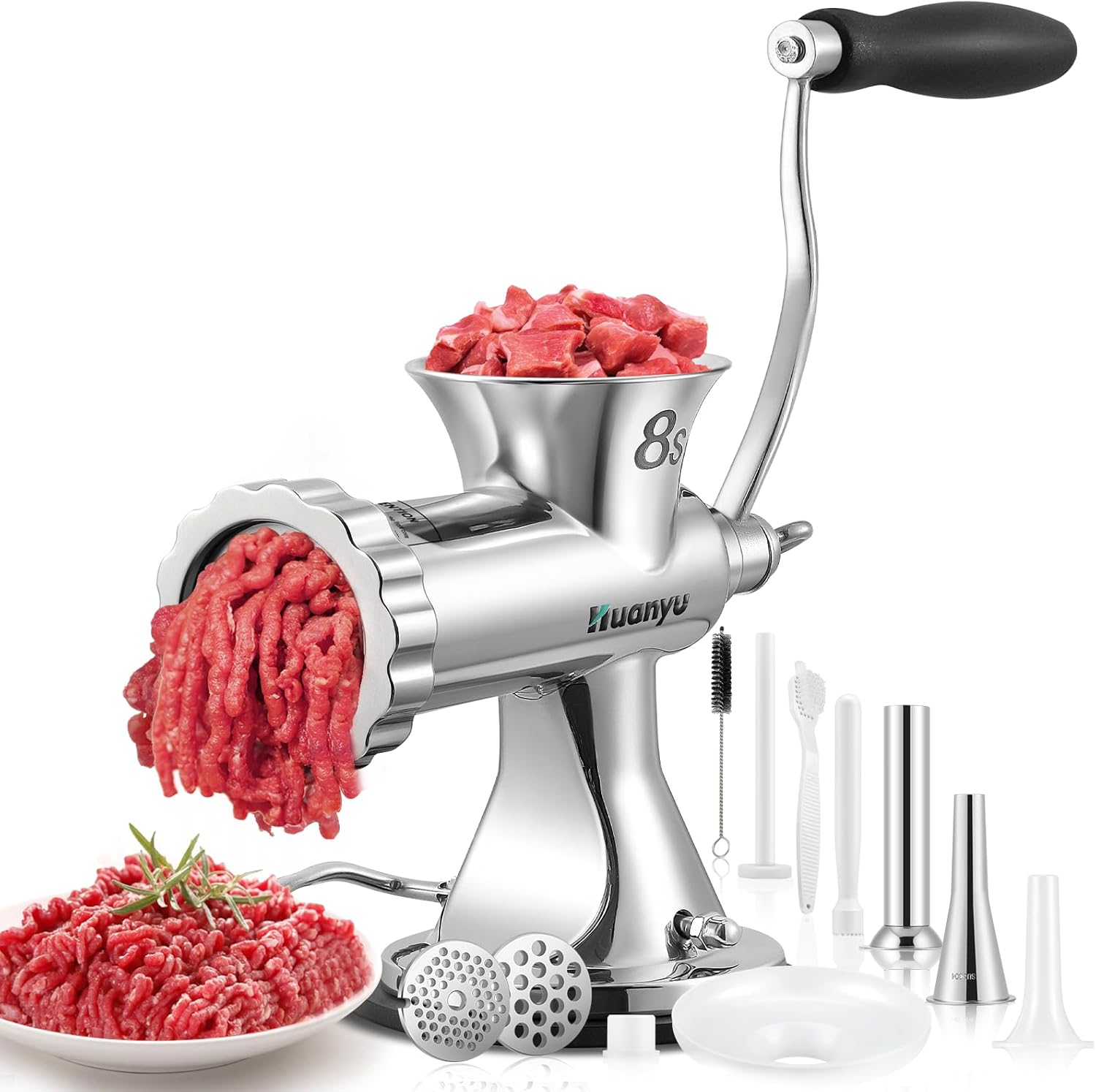
- Manual Grinders: These are clamp-on, hand-crank models. While charming and inexpensive, they are labor-intensive and not powerful enough to handle soft bones. They’re fine for occasional, small batches of boneless meat, but not a sustainable solution for regular pet food prep.
- Electric Grinders: This is your workhorse. An electric grinder makes quick work of large batches of meat, organs, and even soft bones. It’s the only practical choice if you’re serious about learning how to make your own pet food consistently.
Key Features for a Pet Food Grinder
- Power (Wattage): This is crucial, especially for grinding bones. Look for a grinder with at least 500W of running power (and a higher peak power, around 1800W or more). A stronger motor prevents burnout and powers through tougher ingredients.
- Material: Stainless steel is the gold standard. It’s durable, easy to sanitize, and won’t rust or contaminate the food. Avoid grinders with lots of plastic parts in the grinding mechanism.
- Grinding Plates: A good grinder will come with at least three plates: fine, medium, and coarse. This versatility is perfect for adjusting the texture of your pet’s food as you learn what they like.
- Sausage Stuffer Attachments: While not essential for the food itself, these can be fantastic for creating single-serving “sausages” of pet food that are easy to portion and freeze.
How to Make Your Own Pet Food: A Step-by-Step Guide
Ready to get started? Here’s a basic workflow. Remember to always consult your vet for a recipe tailored to your pet’s breed, age, and health status.
- Consult Your Vet: This is Step Zero. Do not skip it. Your vet can help you formulate a balanced recipe, ensuring your pet gets the right ratio of protein, fat, carbohydrates, vitamins, and minerals.
- Gather Your Ingredients: A typical base recipe might include:
- Muscle Meat: Chicken, turkey, beef, lamb.
- Organs: Liver, heart, kidney (usually about 10-15% of the total meat).
- Edible Bones: Chicken necks, wings, or carcasses for calcium.
- Vegetables: Pet-safe veggies like carrots, pumpkin, spinach, and green beans.
- Supplements: Your vet may recommend additions like fish oil for Omega-3s or a specific vitamin blend.
- Prep Time: Cut the meat and soft bones into strips or cubes that will easily fit down the grinder’s feed tube. Chilling the meat and the grinder parts for about 30 minutes in the freezer beforehand makes for a much cleaner, more efficient grind.
- The Grinding Process:
- Assemble your meat grinder with the desired plate (medium is a great starting point).
- Place a large bowl under the output.
- Turn the machine on and begin feeding your ingredients down the chute, alternating between muscle meat, organs, bones, and vegetables. Use the food pusher, never your fingers.
- This process mixes the ingredients together as they are ground.
- Mix and Portion: Once everything is ground, give the mixture a final stir in the bowl to ensure everything is evenly distributed. Portion the food into daily or single-meal servings using freezer-safe containers or bags.
- Store Safely: Homemade pet food can be stored in the refrigerator for 2-3 days. For longer storage, freeze it immediately. It can last for several months in the freezer without losing its nutritional value.
What NOT to Put in Your Pet’s Food
It’s just as important to know what to leave out. Many human foods are toxic to pets. Never include:
- Onions, garlic, chives
- Grapes and raisins
- Chocolate
- Avocado
- Macadamia nuts
- Cooked bones (they can splinter)
- Xylitol (an artificial sweetener)
How to Clean Your Meat Grinder After Making Pet Food
Proper cleaning is non-negotiable for preventing bacteria. A clean grinder is a safe grinder.
The best way to clean your meat grinder is to disassemble it immediately after use. Wash all removable parts with hot, soapy water, using a brush to clean inside the plates and tube. Dry every part thoroughly before storing to prevent rust. Running a few slices of bread through the grinder before disassembly can help push out any remaining meat residue, making cleanup a breeze.
Frequently Asked Questions
Q: Can I really grind bones in a home meat grinder?
A: Yes, but only soft, non-weight-bearing bones from poultry (like chicken or turkey necks and wings) and only with a powerful electric grinder designed for it. Never attempt to grind dense, weight-bearing bones from beef or lamb, as this will damage your machine and can be unsafe for your pet.
Q: Do I need a special meat grinder for making pet food?
A: You don’t need one labeled “for pet food,” but you need a high-quality, powerful electric model. The key features to look for are a strong motor (500W+), all-metal gears, and stainless steel components to handle the demands of grinding meat and soft bones safely and hygienically.
Q: What is the best meat-to-vegetable ratio for homemade dog food?
A: This varies greatly depending on your dog’s needs and the specific diet philosophy you follow. A common starting point is around 70-80% meat/organs/bones and 20-30% vegetables and supplements. However, this is a question best answered by your veterinarian.
Q: How long does homemade raw pet food last in the fridge?
A: As a rule of thumb, you should treat it like any other raw meat. It will stay fresh in the refrigerator for up to three days. For anything beyond that, it’s best to freeze it in pre-portioned amounts.
Q: Is a raw food diet safe for my pet?
A: A balanced raw food diet can have many benefits, but it also carries risks, such as bacterial contamination (for both pets and humans) and the potential for an unbalanced diet. It’s crucial to practice strict food safety and to formulate the diet in consultation with a veterinarian or veterinary nutritionist.
Your Pet’s Health is in Your Hands
Learning how to make your own pet food is one of the most rewarding things you can do as a pet owner. It puts you in the driver’s seat of their health and well-being. While it requires a commitment to safety, balance, and a bit of prep work, the results—a happier, healthier pet—are absolutely worth it. A powerful, reliable meat grinder isn’t just a kitchen appliance; it’s the key to unlocking a world of fresh, customized nutrition for the animals you love. Are you ready to take the next step in your pet’s dietary journey?