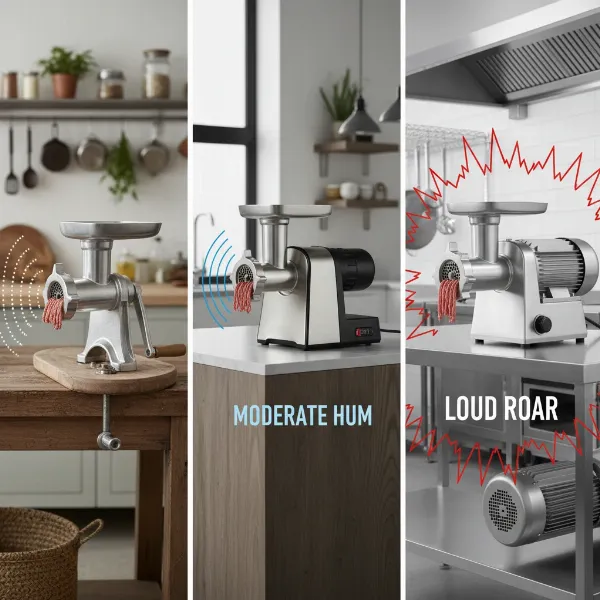
Stepping into the world of home meat grinding opens up a realm of culinary possibilities, from crafting custom burger blends to producing fresh, additive-free sausages. But before you dive in, a crucial decision awaits: should you opt for the compact convenience of a KitchenAid grinder attachment or invest in a powerful, dedicated standalone meat grinder? This guide will dissect both options, helping you understand their strengths, weaknesses, and ultimately, which choice will best serve your kitchen and culinary ambitions.
Understanding Your Options: The KitchenAid Grinder Attachment
The KitchenAid meat grinder attachment is designed to integrate seamlessly with your existing KitchenAid stand mixer, leveraging its motor to process meat. It’s often lauded for its versatility and space-saving design, appealing to home cooks who already own a mixer.
Pros of the KitchenAid Grinder Attachment
- Space-Saving Design: For those with limited counter or storage space, the attachment is an appealing solution as it doesn’t require an additional bulky appliance. It stores neatly in a drawer or cabinet when not in use.
- Cost-Effective Entry: If you already own a KitchenAid stand mixer, the attachment represents a lower initial investment compared to purchasing a completely separate unit.
- Multifunctional: Beyond grinding meat, many KitchenAid attachments can also process hard cheeses, make breadcrumbs, or even grind vegetables, expanding your mixer’s utility. The metal version typically comes with various grinding plates and sausage stuffing tubes, adding to its versatility.
- Convenience for Small Batches: For occasional use or grinding smaller quantities, typically 5-10 pounds or less, the KitchenAid attachment performs adequately, making it suitable for casual home use.
|
Our Picks for the Best Meat grinder in 2026
As an Amazon Associate I earn from qualifying purchases.
|
||
| Num | Product | Action |
|---|---|---|
| 1 | Meat Chopper, Hamburger Grinder, Premium Heat Resistant Smasher for Ground Beef, Burger Grinder Nylon Potato Mix Tool, Meat & Poultry Tenderizers-Black |

|
| 2 | GANIZA Food Processors, Electric Food Chopper with Meat Grinder & Vegetable Chopper - 2 Bowls (8 Cup+8 Cup) with Powerful 450W Copper Motor - Includes 2 Sets of Bi-Level Blades for Fruits/Meat/Nuts |
|
| 3 | KitchenAid Stand Mixer Attachment, Food Grinder KSMMGA, Metal Food Grinder |
|
| 4 | CHEFFANO Electric Meat Grinder, [2000W Max] Heavy Duty Meat Mincer with 2 Blades, 3 Plates, Sausage Tube & Kubbe Kit for Home Kitchen Use |
|
| 5 | Electric Meat Grinder, Sausage Stuffer with 3 Sausage Tubes, 2 Blades, 3 Plates, 3200W Max, Meat Grinder Heavy Duty for Home Kitchen Use, Stainless Steel (Black) |
|
| 6 | LEM Products BigBite #8 Meat Grinder, 0.50 HP Stainless Steel Electric Meat Grinder Machine, Ideal for Regular Use |
|
| 7 | Meat Grinder Manual Mincer 2-in-1 Manual Meat Grinder Sausage Maker Table Mount Pork Mincer Sausage Stuffer Funnel Make Homemade Burger Patties Hand Operated Kitchen Tool FQ |
|
| 8 | Oaomi 3200W Max Electric Meat Grinder & Sausage Stuffer - Mincer Machine with Tool 2 Blade And 3 Plates, 3 Tubes & Kubbe Kit Tool for Home Kitchen Use(Black) |
|
| 9 | CHEFFANO Meat Grinder, 2600W Max Stainless Steel Meat Grinder Electric, ETL Approved Heavy Duty Meat Mincer Machine with 2 Blades, 3 Plates, Sausage Stuffer Tube & Kubbe Kit for Home Kitchen Use |
|
| 10 | Meat Grinder, Sausage Stuffer, [2800W Max] Electric Meat Mincer with Stainless Steel Blades & 3 Grinding Plates,Sausage Maker & Kubbe Kit for Home Kitchen & Commercial Using |
|
Cons of the KitchenAid Grinder Attachment
- Limited Power and Speed: The attachment relies on your stand mixer’s motor, which is not primarily designed for the rigorous demands of meat grinding. This can result in slower processing times, especially with tougher cuts or larger quantities. Standalone grinders typically offer significantly more wattage.
- Potential for Overheating and Wear: Pushing the attachment too hard or grinding large batches can strain your stand mixer’s motor, potentially leading to overheating or premature wear on the mixer itself.
- Material Concerns: While often marketed as “all-metal,” the KitchenAid branded grinder attachment is frequently made of aluminum, not stainless steel. This can lead to oxidation, a dark residue, and makes it unsuitable for dishwashers, requiring careful hand-washing. Cheaper, third-party stainless steel alternatives are sometimes cited as being safer and more durable.
- Suboptimal for Sausage Stuffing: Many users find the KitchenAid attachment’s sausage stuffing function frustrating or inefficient, often resulting in “smeared” meat texture or requiring a separate, dedicated stuffer for better results.
- Clogging Issues: Connective tissue, gristle, and silver skin can quickly clog the attachment, requiring frequent disassembly and cleaning during the grinding process. Unlike many standalone units, KitchenAid attachments typically lack a reverse function to clear jams.
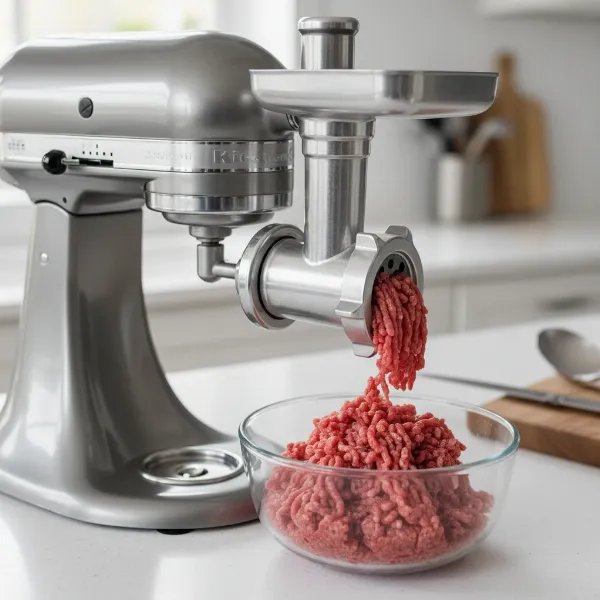 KitchenAid stand mixer with a metal meat grinder attachment processing meat
Understanding Your Options: Standalone Meat Grinders
A standalone meat grinder is a dedicated appliance built specifically for the task of grinding meat. These units vary widely in size, power, and features, catering to a spectrum of users from home enthusiasts to serious processors.
Pros of Standalone Meat Grinders
- Superior Power and Speed: Standalone units boast powerful motors, often ranging from 500W to over 2000W, allowing them to process meat much faster and more efficiently than a KitchenAid attachment. This is particularly beneficial for large batches or tough cuts.
- High Capacity: Designed for volume, dedicated grinders can handle significant quantities of meat, making them ideal for hunters, large families, or those who frequently prepare homemade sausages and ground meat in bulk.
- Better Grind Quality: With higher power and more robust components, standalone grinders often produce a cleaner, more consistent grind with less fat smearing, which is crucial for superior texture in sausages and burgers.
- Enhanced Durability: Constructed with heavy-duty materials, often stainless steel, and featuring sturdy metal gears, standalone grinders are built to withstand frequent and demanding use.
- Specialized Features: Many dedicated grinders include a reverse function to easily clear jams caused by sinew or bone fragments. They also often come with a wider array of grinding plates and superior sausage stuffing capabilities.
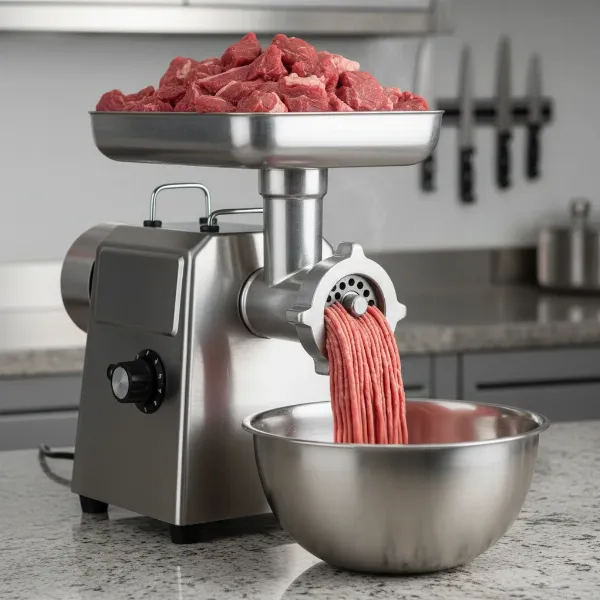 A robust stainless steel standalone electric meat grinder processing large quantities of meat
Cons of Standalone Meat Grinders
- Increased Space Requirement: These appliances demand dedicated counter space during use and proper storage, which can be a significant drawback for kitchens with limited room.
- Single-Purpose Appliance: Unlike a multi-functional stand mixer, a standalone meat grinder serves a singular purpose, which might not be justifiable for very infrequent users.
- Higher Initial Investment: While entry-level standalone grinders can be affordable, powerful and high-quality models often come with a higher price tag than a KitchenAid attachment.
Key Factors to Consider When Choosing
Making the right decision between a KitchenAid grinder attachment and a standalone unit hinges on several critical considerations tailored to your specific needs and habits.
Grinding Frequency and Volume
- Occasional, Small Batches (1-5 lbs): The KitchenAid attachment is generally sufficient. It handles small amounts well without demanding a dedicated appliance.
- Regular, Medium Batches (5-15 lbs): The KitchenAid attachment can manage, especially the metal version, but you might experience slower processing and more effort. A smaller standalone grinder starts to become a more appealing option here for efficiency and quality.
- Frequent, Large Batches (15+ lbs): A standalone meat grinder is the clear winner. Its power and capacity are designed for this kind of rigorous work, saving you significant time and effort. This is particularly true for processing game meat or making large quantities of sausage.
Power and Performance Needs
If your priority is sheer grinding power, speed, and the ability to process tougher meats or bones (for pet food, for example), a standalone grinder with a robust motor is essential. The limited power of a stand mixer’s motor will inevitably slow down the process and can struggle with challenging ingredients.
Budget and Existing Equipment
If you already own a KitchenAid stand mixer, the attachment is a financially attractive starting point. However, if you don’t have a mixer or anticipate heavy grinding, a standalone unit might be a more cost-effective long-term investment, preventing potential wear and tear on your mixer. Consider the overall value and longevity rather than just the initial price.
Kitchen Space and Storage
Assess your available kitchen space. The compact nature of the KitchenAid attachment is a significant advantage in smaller kitchens. A standalone unit requires a dedicated spot, both on the counter during use and in storage.
Grind Quality and Specific Uses
For superior grind consistency, especially for delicate sausages where fat smearing is undesirable, a standalone grinder often delivers better results due to its higher power and larger components. If sausage making is a primary goal, many users recommend a dedicated stuffer alongside either grinder type, as the grinder’s stuffing function can be a weak point.
Material and Durability
Consider the construction materials. If you opt for a KitchenAid attachment, be aware of the aluminum vs. stainless steel issue and the hand-washing requirement for the official KitchenAid metal attachment. Standalone grinders, particularly higher-end models, frequently feature full stainless steel construction that offers better hygiene and durability.
Comparison Table: KitchenAid Grinder Attachment vs. Standalone Meat Grinder
| Feature | KitchenAid Grinder Attachment | Standalone Meat Grinder |
|---|---|---|
| Power | Limited (relies on mixer motor, ~315W) | High (500W – 2000+W dedicated motor) |
| Capacity | Small batches (1-10 lbs) | Large batches (15-50+ lbs) |
| Cost | Lower (if mixer owned) | Varies, often higher |
| Storage | Compact, uses existing mixer storage | Requires dedicated counter/storage space |
| Versatility | High (can grind other foods, uses mixer for other tasks) | Low (single-purpose) |
| Grind Quality | Good for small, casual use; can smear fat on larger batches | Excellent, consistent, less smearing |
| Sausage Stuffing | Can be challenging, often requires dedicated stuffer | Generally better, but dedicated stuffer still recommended |
| Cleaning | Hand-wash recommended (especially aluminum attachments) | Varies, often easier with larger components; some dishwasher safe |
| Durability | Can strain mixer motor; attachment material varies | Built for heavy use, robust construction |
| Reverse Function | Typically absent | Common feature for clearing jams |
Top Picks for Different Needs
Choosing the “best” grinder depends entirely on your personal use case. Here are general recommendations based on common needs:
- Best for Casual Home Cooks (Occasional, Small Batches): The KitchenAid Metal Food Grinder Attachment (KSMFGA) remains a popular choice for its convenience and versatility when grinding small amounts of meat for weekly meals. Ensure you follow care instructions meticulously to prevent issues.
- Best for Frequent or Larger Batches: For those processing more than 10-15 pounds regularly, or handling game meat, dedicated units like the STX International Turboforce 3000 Series Electric Meat Grinder or models from brands like LEM and Weston are highly recommended. These provide the necessary power and durability for serious home grinding.
“For anything more than a few pounds of meat, a dedicated grinder will save you time, frustration, and often result in a superior product. The KitchenAid attachment is a fantastic entry point, but serious grinding calls for serious equipment.”
Tips for Maximizing Your Grinding Experience
No matter which option you choose, these tips will help ensure a smooth and effective grinding process:
- Chill Your Meat and Equipment: Always work with meat that is partially frozen or very cold. Likewise, chill your grinder attachment or parts (auger, plates, blade) in the freezer for 30 minutes before use. This prevents smearing, keeps fat firm, and ensures a cleaner, more defined grind.
- Cut Meat Properly: Trim excess silver skin, gristle, and small bones. Cut meat into consistent, manageable chunks or strips that fit easily into the grinder’s feed tube.
- Don’t Overstuff: Feed meat into the grinder at a steady, manageable pace. Overfeeding can lead to clogs and strain the motor.
- Clean Immediately: Disassemble and wash all grinder components by hand with warm, soapy water immediately after use. Aluminum parts of the KitchenAid attachment are especially sensitive to dishwashers and can oxidize. Ensure all parts are thoroughly dry before storing to prevent rust.
- Consider a Dedicated Sausage Stuffer: If making sausages is a priority, investing in a manual sausage stuffer (even a small 5-pound model) often yields much better results than using a grinder’s stuffing tubes, regardless of whether you have an attachment or a standalone unit.
Conclusion
The choice between a KitchenAid grinder attachment and a standalone meat grinder ultimately comes down to your personal culinary needs, frequency of use, and available kitchen space. If you’re an occasional home cook processing small quantities of meat and already own a KitchenAid mixer, the attachment offers a convenient, space-saving, and economical solution. However, for those who grind meat frequently, in larger batches, or prioritize speed, power, and superior grind quality, a dedicated standalone meat grinder is an invaluable investment that will streamline your efforts and elevate your homemade dishes.
Which path will you take to unlock the full potential of your home meat grinding?
Frequently Asked Questions
Can the KitchenAid meat grinder attachment grind bones for pet food?
The KitchenAid grinder attachment is generally not powerful enough and its components are not designed to safely or effectively grind bones. Doing so can damage both the attachment and your stand mixer. For grinding bones, a heavy-duty standalone meat grinder is required.
Is the KitchenAid metal food grinder attachment truly stainless steel?
The official KitchenAid “metal” food grinder attachment is primarily made of aluminum, not stainless steel. This distinction is important for cleaning and durability, as aluminum can oxidize and is not dishwasher safe.
How much meat can a KitchenAid grinder attachment process at once?
While some users report processing up to 10-15 pounds, the KitchenAid attachment is best suited for smaller batches, typically 1-5 pounds, to avoid straining the mixer and ensure a consistent grind. For larger quantities, a standalone unit is more efficient.
What is the advantage of a meat grinder having a reverse function?
A reverse function on a standalone Meat Grinder allows the auger to spin backward, helping to clear jams caused by sinew, gristle, or tough meat without having to disassemble the unit, significantly improving efficiency.