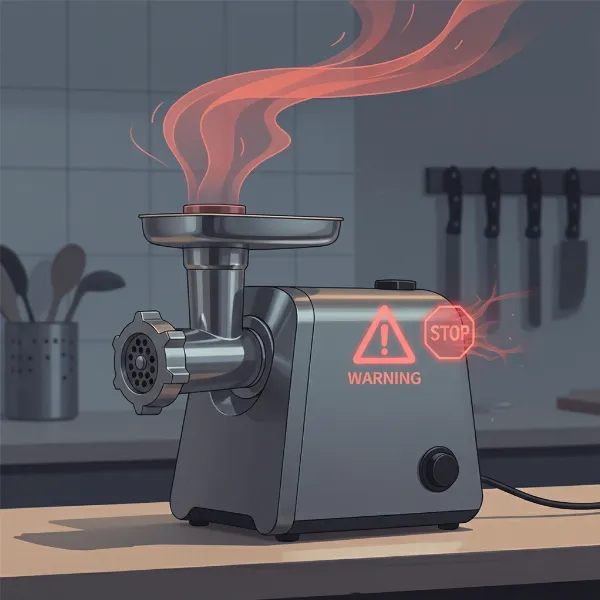
Anyone passionate about preparing their own ground meat understands the satisfaction of fresh, quality ingredients. However, even the most robust electric meat grinders can encounter a frustrating hurdle: a stubborn jam. This common kitchen dilemma, often caused by sinewy meat, small bones, or tough connective tissue, can halt your culinary process and potentially damage your appliance. This is precisely where the often-underestimated reverse function becomes not just a convenience, but a crucial feature for any electric meat grinder.
The Anatomy of a Meat Grinder and the Inevitability of Jams
To truly appreciate the reverse function, it helps to understand how an electric meat grinder operates. At its core, the appliance consists of a powerful motor driving an auger (or feed screw) that pushes meat towards a rotating blade. This blade then cuts the meat against a perforated plate, forcing the ground product through the plate’s holes. The fineness of the grind depends on the size of these holes.
While this system is highly efficient, certain elements like tough connective tissues, gristle, or small pieces of bone can wrap around the auger or become wedged between the blade and plate. When this happens, the forward motion is obstructed, causing the grinder to jam, strain its motor, and potentially overheat.
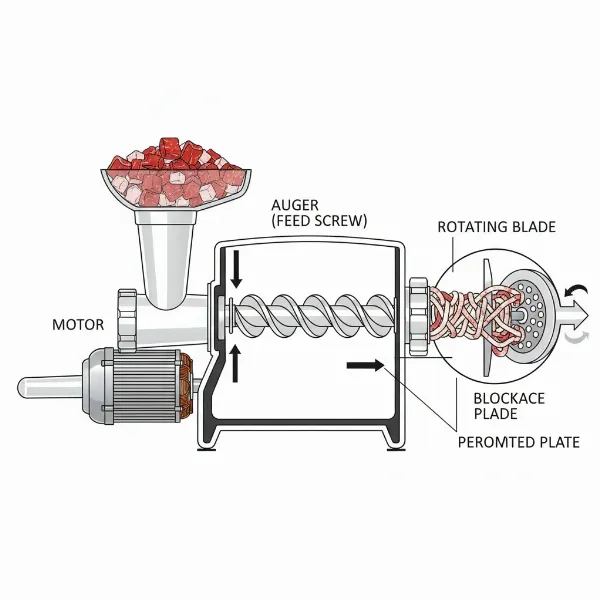 Diagram of electric meat grinder with auger, blade, and plate showing a common jam.
Understanding the Reverse Function
The reverse function, typically activated by a clearly marked “R” or “Reverse” button on an electric meat grinder, is a simple yet ingenious mechanism. When engaged, it momentarily reverses the direction of the auger’s rotation. Instead of pushing meat forward towards the cutting components, the auger pulls the jammed material backward, away from the blades and plate. This action helps to dislodge the obstruction, allowing you to either remove it from the feed chute or resume normal grinding.
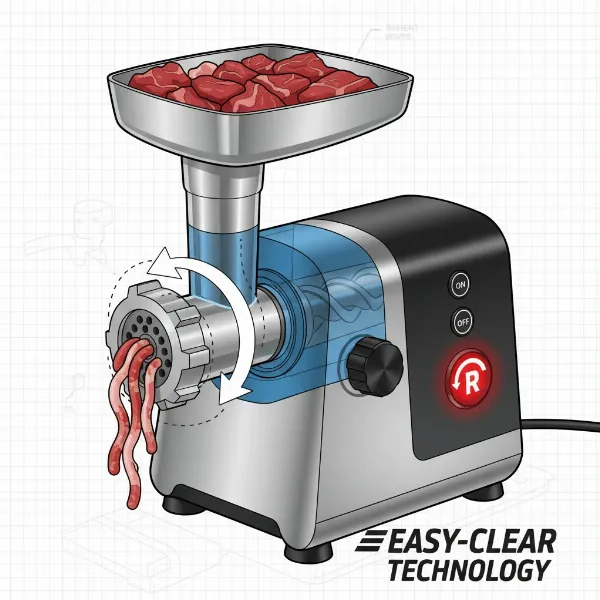 Electric meat grinder with reverse button, showing auger pulling jammed meat backward.
Why the Reverse Function is Crucial for Electric Grinders
The inclusion of a reverse function elevates an electric meat grinder from a mere processing tool to a more resilient and user-friendly kitchen companion. Its importance can be broken down into several key aspects:
Preventing Costly Clogs and Downtime
|
Our Picks for the Best Meat grinder in 2026
As an Amazon Associate I earn from qualifying purchases.
|
||
| Num | Product | Action |
|---|---|---|
| 1 | CHEFFANO Meat Grinder, 2600W Max Stainless Steel Meat Grinder Electric, ETL Approved Heavy Duty Meat Mincer Machine with 2 Blades, 3 Plates, Sausage Stuffer Tube & Kubbe Kit for Home Kitchen Use |

|
| 2 | CHEFFANO Electric Meat Grinder, [2000W Max] Heavy Duty Meat Mincer with 2 Blades, 3 Plates, Sausage Tube & Kubbe Kit for Home Kitchen Use |
|
| 3 | Electric Meat Grinder, Sausage Stuffer with 3 Sausage Tubes, 2 Blades, 3 Plates, 3200W Max, Meat Grinder Heavy Duty for Home Kitchen Use, Stainless Steel (Black) |
|
| 4 | Meat Grinder, Sausage Stuffer, [2800W Max] Electric Meat Mincer with Stainless Steel Blades & 3 Grinding Plates,Sausage Maker & Kubbe Kit for Home Kitchen & Commercial Using |
|
| 5 | GANIZA Food Processors, Electric Food Chopper with Meat Grinder & Vegetable Chopper - 2 Bowls (8 Cup+8 Cup) with Powerful 450W Copper Motor - Includes 2 Sets of Bi-Level Blades for Fruits/Meat/Nuts |
|
| 6 | KitchenAid Stand Mixer Attachment, Food Grinder KSMMGA, Metal Food Grinder |
|
| 7 | Meat Grinder Manual Mincer 2-in-1 Manual Meat Grinder Sausage Maker Table Mount Pork Mincer Sausage Stuffer Funnel Make Homemade Burger Patties Hand Operated Kitchen Tool FQ |
|
| 8 | Oaomi 3200W Max Electric Meat Grinder & Sausage Stuffer - Mincer Machine with Tool 2 Blade And 3 Plates, 3 Tubes & Kubbe Kit Tool for Home Kitchen Use(Black) |
|
| 9 | Meat Chopper, Hamburger Grinder, Premium Heat Resistant Smasher for Ground Beef, Burger Grinder Nylon Potato Mix Tool, Meat & Poultry Tenderizers-Black |
|
| 10 | LEM Products BigBite #8 Meat Grinder, 0.50 HP Stainless Steel Electric Meat Grinder Machine, Ideal for Regular Use |
|
The most immediate and practical benefit of the reverse function is its ability to clear blockages without the need for manual intervention. Imagine being halfway through a large batch of meat for sausages or burgers, only for the grinder to seize up. Without a reverse function, you would be forced to disassemble the grinding head, often a messy and time-consuming process, to clear the obstruction. The reverse function streamlines this by allowing you to resolve the issue with a simple button press, saving considerable time and effort.
Protecting Your Investment: Motor and Components
When an electric meat grinder jams, the motor continues to try and force the auger forward against the blockage. This struggle puts immense strain on the motor, leading to overheating and potential burnout. Prolonged strain can also dull or damage the blades and warp the grinding plates. The reverse function mitigates this risk by quickly releasing the pressure, thus protecting the grinder’s internal components and extending its overall lifespan. It’s an essential safeguard against premature wear and tear.
Enhancing Efficiency and User Experience
A seamless grinding experience is paramount, especially when handling substantial quantities of meat. The reverse function ensures that minor interruptions don’t derail your entire workflow. By swiftly clearing jams, it maintains consistent grinding speed and prevents frustration, making the entire meat preparation process smoother and more enjoyable. It transforms a potential breakdown into a brief pause, keeping you in control of your culinary tasks.
Dealing with Tough Ingredients
While proper meat preparation (trimming sinew and removing bones) is always recommended, it’s not always foolproof. Certain cuts of meat, or even grinding vegetables and fish, can inherently be more prone to causing blockages. The reverse function acts as a reliable failsafe, allowing you to confidently process a wider variety of ingredients without constant worry about jamming.
Types of Meat Grinders and the Role of Reverse
Meat grinders broadly fall into three categories: manual, electric, and commercial.
- Manual Meat Grinders: These rely on hand-cranked power. While they have a “reverse” action (simply cranking backward), they require significant physical effort and are best suited for very small batches of carefully prepared meat.
- Electric Meat Grinders: These are the most common for home and small-scale professional use. Their powerful motors handle larger quantities more efficiently. The reverse function is a pivotal feature for electric models, ensuring continuous operation and protecting the motor from the stresses of jamming. This is where the automated reverse truly shines.
- Commercial Meat Grinders: Designed for heavy-duty, continuous use in butcher shops or restaurants, these machines often boast very powerful motors and robust designs that naturally reduce the likelihood of jams. However, even these high-capacity units often include a reverse function as an added layer of protection and operational efficiency.
For electric grinders, which offer a balance of power and convenience for most users, the reverse function is practically indispensable.
Choosing an Electric Meat Grinder with a Reverse Function: A Buying Guide
When selecting an electric meat grinder, particularly one that offers the vital reverse function, consider the following factors:
- Motor Power and Capacity: Higher wattage (e.g., 1000W-1500W for home use, higher for commercial) generally means greater grinding efficiency and less likelihood of jamming in the first place. Even so, the reverse function is still beneficial for powerful machines to clear unexpected obstructions. Consider your typical volume of meat processing.
- Material and Durability: Look for models with stainless steel components (auger, blades, plates, housing) for longevity, hygiene, and resistance to corrosion. Durable construction ensures the grinder can withstand regular use and the occasional need for the reverse function.
- Reverse Function Implementation: Ensure the reverse button is easily accessible and responsive. Some advanced models might even feature an “auto-reverse” that detects blockages and automatically engages the reverse action, further simplifying operation.
- Ease of Cleaning: While the reverse function helps with internal blockages, easy disassembly of parts for thorough cleaning is still critical for hygiene and maintenance. Look for dishwasher-safe components if possible.
- Additional Features: Self-sharpening blades, various grinding plates for different textures, sausage stuffing attachments, and overload protection (which works in conjunction with the reverse function to protect the motor) are all valuable additions.
- Brand Reputation and Warranty: Reputable brands like LEM, PRO-CUT, Thunderbird, Maverick, Weston, Panasonic, Braun, and Kenwood are often known for quality and provide good warranties, reflecting their confidence in their products’ durability and features, including reliable reverse functions.
Maximizing Your Grinder’s Performance (Beyond Reverse)
While the reverse function is a lifesaver, optimal grinding practices can significantly reduce its frequent necessity:
- Optimal Meat Preparation: Always trim excess sinew, connective tissue, and fat from your meat. Cut meat into smaller, uniform cubes that fit easily into the feed chute. Crucially, ensure your meat is chilled to just above freezing (partially frozen) before grinding. This solidifies fats and tissues, allowing for cleaner cuts and preventing smearing or clogging.
- Maintaining Sharp Blades and Plates: Dull blades and plates are a primary cause of jams and result in mushy meat. Regularly sharpen or replace these components. Many experts recommend using a dedicated knife for each plate to ensure they wear together evenly, creating a perfectly mated cutting surface.
- Proper Assembly and Cleaning: Always assemble your grinder correctly, ensuring the blade is facing the right direction against the plate. After each use, disassemble and thoroughly clean all parts to prevent residue buildup that could lead to future clogs or bacterial growth.
Meat Grinder Comparison: Key Features
| Feature | Manual Grinders | Electric Grinders (Home Use) | Electric Grinders (Commercial/Heavy Duty) |
|---|---|---|---|
| Power Source | Hand-cranked | Electric motor (500W-1500W) | High-power electric motor (1.5HP-5HP+) |
| Capacity | Very small batches | Moderate batches (e.g., 2-7 lbs/min) | Large batches (e.g., 10-20+ lbs/min) |
| Reverse Function | Manual reversal by cranking backward | Dedicated button for auger reverse (crucial) | Dedicated button, often with higher power for jams |
| Ideal Use | Occasional small tasks, budget-conscious | Regular home use, small game, making sausages/burgers | High-volume processing, professional kitchens, large game |
| Materials | Cast iron, some stainless steel | Stainless steel, heavy-duty plastic | Full stainless steel, cast iron |
| Cost | Low | Moderate | High |
Top Meat Grinder Brands
When seeking a reliable electric meat grinder, several brands stand out for their quality and performance. For home users, Panasonic, Braun, and Kenwood are often cited for their efficient and comfortable designs, many of which include the essential reverse function. For those needing more robust options for serious home processing or light commercial use, brands like LEM, Weston, and Maverick offer excellent standalone grinders with durable construction and powerful motors, often incorporating a dependable reverse mechanism. Commercial-grade needs are well-served by PRO-CUT and Thunderbird, known for their engineering for extended periods of grinding and reliability in demanding environments.
Conclusion
The reverse function is an invaluable feature that significantly enhances the functionality and longevity of electric meat grinders. It transforms a potentially messy and frustrating jam into a minor inconvenience, safeguarding your appliance and streamlining your meat preparation. While proper technique and maintenance are always vital, investing in an electric meat grinder equipped with a reliable reverse function ensures a smoother, more efficient, and ultimately more enjoyable grinding experience. Don’t compromise on this crucial feature when choosing your next kitchen powerhouse.
Frequently Asked Questions
What causes an electric meat grinder to jam?
Jams in electric Meat Grinders are typically caused by tough sinew, connective tissue, small bones, or cartilage that wrap around the auger or get wedged between the cutting blade and plate. Processing meat that isn’t sufficiently chilled or using dull blades can also contribute to blockages.
How does the reverse function protect the meat grinder’s motor?
When a grinder jams, the motor strains to force the auger forward, which can lead to overheating and potential damage. The reverse function alleviates this strain by rotating the auger backward, dislodging the obstruction. This action prevents the motor from overworking and helps to extend the grinder’s operational life.