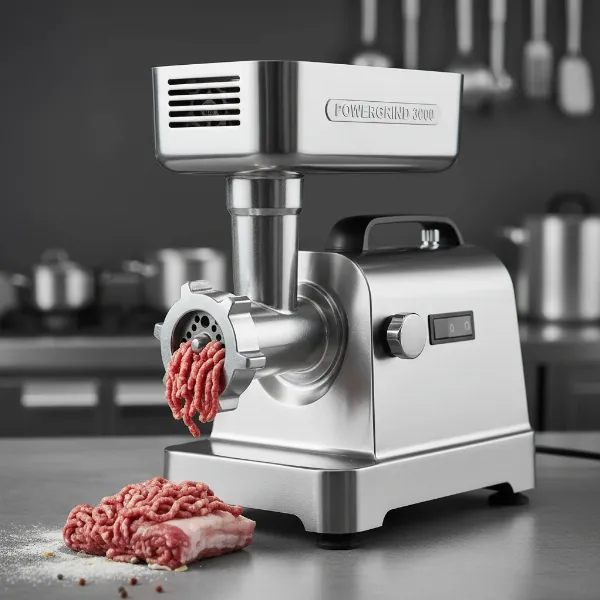
Before the hum of electric motors or the sturdy build of modern kitchen appliances, mincing meat was a laborious task, a test of patience and skill with knives and cleavers. Chefs and home cooks alike spent countless hours finely dicing ingredients to achieve the desired texture for sausages, pâtés, and various dishes. This painstaking process not only limited culinary possibilities but also made large-scale meat preparation incredibly inefficient. The need for a faster, more uniform method was clear, paving the way for a revolutionary invention that would forever change kitchens and the food industry: the meat grinder, an ingenious creation credited to the multifaceted German inventor, Karl Drais.
The Era Before the Grinder: Mincing by Hand
For centuries, the preparation of minced meat was a testament to human endurance and manual dexterity. Cooks relied on sharp knives, cleavers, and even pestle and mortar combinations to painstakingly chop and mash meat into smaller pieces. This method was not only time-consuming but also yielded inconsistent results, often lacking the fine, uniform texture that many recipes required. Imagine the sheer effort involved in preparing enough minced meat for a feast or a butcher’s daily supply; it was a slow, arduous procedure.
This reliance on manual mincing also presented challenges in terms of food hygiene and preservation. The extended exposure of meat to air during the chopping process could accelerate spoilage, and achieving a thoroughly mixed consistency was difficult. The culinary landscape yearned for an innovation that could streamline this fundamental step, offering both speed and consistency to elevate food preparation from a chore to a more efficient art form.
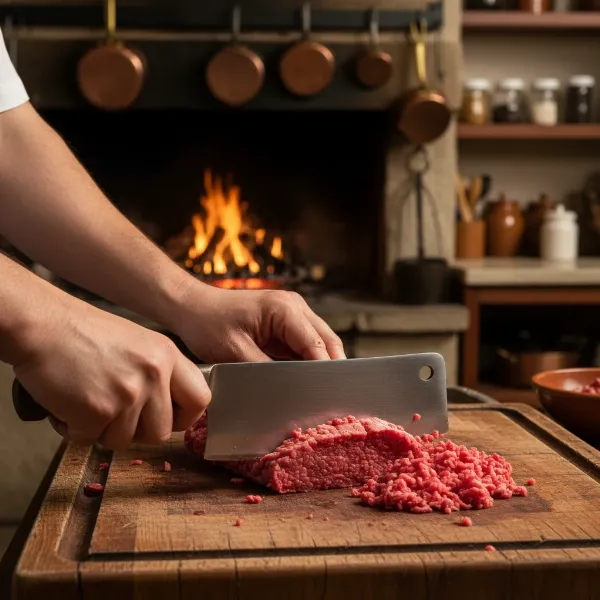 A chef meticulously mincing meat by hand with a large cleaver and knives on a wooden board.
Karl Drais: The Mind Behind the First Meat Grinder
The breakthrough arrived in the 19th century, thanks to the inventive genius of Karl Drais, a German baron, forest official, and prolific innovator. While Drais is perhaps most famously known as the inventor of the “Laufmaschine” (running machine) or velocipede – the precursor to the modern bicycle – his inventive spirit extended far beyond personal transport. Among his diverse contributions, which included an early typewriter and a wood-saving cooker, was the pioneering concept for the meat grinder, which he is credited with inventing in the 1840s.
Drais’s initial design was a marvel of mechanical ingenuity for its time. It featured a hand-cranked mechanism that simplified the laborious process of mincing. Raw or cooked meat was fed into a funnel positioned atop the device. From there, it entered a horizontal screw conveyor. As the crank was turned, this screw would squash and mix the meat, steadily propelling it towards a fixed metal plate perforated with numerous small holes. The meat, forced through these apertures, emerged as long, thin strands, achieving a uniformity previously unattainable by hand. This innovation marked a pivotal moment, transforming meat preparation from a cumbersome task into a more manageable and consistent process.
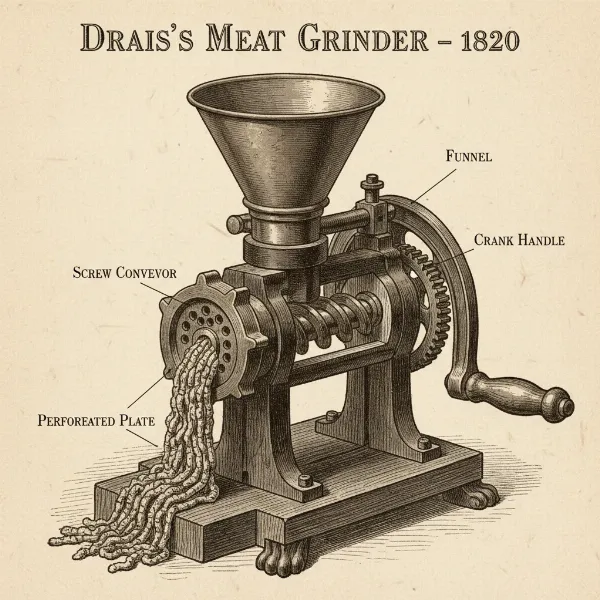 A detailed illustration or historical depiction of Karl Drais's initial hand-cranked meat grinder design.
Evolution from Manual to Mechanized: A Grinder’s Journey
The early hand-cranked meat grinder, though revolutionary, was just the beginning. As technology advanced and electricity became more widely accessible, the meat grinder underwent a significant transformation. Manufacturers began developing powered machines, replacing the strenuous hand-crank with efficient electric motors. This shift dramatically increased the speed and capacity of meat processing, making it possible to mince several pounds of meat uniformly and with ease in a fraction of the time.
The evolution didn’t stop at electrification. Designers continually refined the grinder’s capabilities, introducing interchangeable plates with varying hole sizes. This allowed for different levels of fineness, from coarse grinds ideal for chili to very fine textures for pâtés. Attachments further broadened the grinder’s functionality, enabling users to prepare sausages, kibbe, and even juice fruits and vegetables. These advancements cemented the meat grinder’s place not only in the domestic kitchen but also as an indispensable tool in commercial butcher shops and the broader food industry, adapting to an ever-growing array of culinary applications.
Impact and Legacy: Revolutionizing Culinary Arts and Industry
The invention and subsequent evolution of the meat grinder left an indelible mark on culinary practices and the food industry worldwide. In the home kitchen, it liberated cooks from tedious manual labor, opening up new possibilities for diverse meals and fresh ingredients. Families could now easily prepare their own ground meat, ensuring freshness and control over ingredients, leading to healthier and more personalized meals.
Commercially, the impact was even more profound. Butchers could process large quantities of meat with unprecedented efficiency, meeting growing consumer demand for minced products. The consistency provided by grinders also led to higher quality standards for sausages, burgers, and other processed meats. Furthermore, the enclosed nature of the grinder improved hygiene compared to open-air chopping methods, contributing to better food safety practices. Today, the meat grinder, whether a compact electric model for home use or a heavy-duty industrial machine, remains a fundamental and indispensable appliance, a direct descendant of Karl Drais’s pioneering vision, continuously streamlining and enhancing the way we prepare and consume meat.
Key Milestones in Meat Grinder Development
- Early 19th Century (c. 1840s): Karl Drais invents the first hand-cranked meat grinder, featuring a funnel, screw conveyor, and perforated plate.
- Mid-19th Century: The concept gains traction, with various manufacturers producing and refining manual meat grinders for household and small commercial use.
- Late 19th / Early 20th Century: The advent of widespread electricity leads to the development of the first electric meat grinders, significantly increasing efficiency and capacity.
- Mid-20th Century Onwards: Continuous innovation introduces diverse attachments for sausage making, kibbe, and other food preparations, making the meat grinder a versatile multi-tool.
- 21st Century: Modern meat grinders combine powerful motors, durable materials, advanced safety features, and smart designs for both professional and home chefs.
Conclusion
The journey of the meat grinder from a simple hand-cranked device to a sophisticated electric appliance is a testament to human ingenuity and the continuous quest for efficiency in daily life. Karl Drais, a visionary whose inventions spanned from personal transport to kitchen utilities, laid the foundational groundwork for this essential tool. His pioneering concept in the 19th century revolutionized how meat was processed, moving it from a strenuous manual chore to a swift and consistent mechanical operation.
Today, the meat grinder remains a cornerstone in kitchens around the globe, silently contributing to countless culinary creations and enhancing food preparation convenience. Its enduring legacy underscores the profound impact a single invention can have on both household routines and industrial practices. As we look to the future, one can only wonder what further innovations might emerge to refine this humble yet indispensable appliance.
Frequently Asked Questions
Who invented the meat grinder?
|
Our Picks for the Best Meat grinder in 2026
As an Amazon Associate I earn from qualifying purchases.
|
||
| Num | Product | Action |
|---|---|---|
| 1 | CHEFFANO Meat Grinder, 2600W Max Stainless Steel Meat Grinder Electric, ETL Approved Heavy Duty Meat Mincer Machine with 2 Blades, 3 Plates, Sausage Stuffer Tube & Kubbe Kit for Home Kitchen Use |

|
| 2 | CHEFFANO Electric Meat Grinder, [2000W Max] Heavy Duty Meat Mincer with 2 Blades, 3 Plates, Sausage Tube & Kubbe Kit for Home Kitchen Use |
|
| 3 | Meat Chopper, Hamburger Grinder, Premium Heat Resistant Smasher for Ground Beef, Burger Grinder Nylon Potato Mix Tool, Meat & Poultry Tenderizers-Black |
|
| 4 | LEM Products BigBite #8 Meat Grinder, 0.50 HP Stainless Steel Electric Meat Grinder Machine, Ideal for Regular Use |
|
| 5 | Oaomi 3200W Max Electric Meat Grinder & Sausage Stuffer - Mincer Machine with Tool 2 Blade And 3 Plates, 3 Tubes & Kubbe Kit Tool for Home Kitchen Use(Black) |
|
| 6 | Meat Grinder Manual Mincer 2-in-1 Manual Meat Grinder Sausage Maker Table Mount Pork Mincer Sausage Stuffer Funnel Make Homemade Burger Patties Hand Operated Kitchen Tool FQ |
|
| 7 | GANIZA Food Processors, Electric Food Chopper with Meat Grinder & Vegetable Chopper - 2 Bowls (8 Cup+8 Cup) with Powerful 450W Copper Motor - Includes 2 Sets of Bi-Level Blades for Fruits/Meat/Nuts |
|
| 8 | Electric Meat Grinder, Sausage Stuffer with 3 Sausage Tubes, 2 Blades, 3 Plates, 3200W Max, Meat Grinder Heavy Duty for Home Kitchen Use, Stainless Steel (Black) |
|
| 9 | KitchenAid Stand Mixer Attachment, Food Grinder KSMMGA, Metal Food Grinder |
|
| 10 | Meat Grinder, Sausage Stuffer, [2800W Max] Electric Meat Mincer with Stainless Steel Blades & 3 Grinding Plates,Sausage Maker & Kubbe Kit for Home Kitchen & Commercial Using |
|
The first meat grinder is widely credited to the German inventor Karl Drais (Karl Friedrich Christian Ludwig Freiherr Drais von Sauerbronn) in the 19th century.
When was the meat grinder invented?
Karl Drais is generally credited with inventing the first meat grinder in the 1840s, though manual mincing devices existed in earlier forms.
How did early meat grinders work?
Early meat grinders were hand-cranked. Meat was fed into a funnel, then moved by a horizontal screw conveyor through a perforated metal plate, producing uniformly minced strands.
What other inventions is Karl Drais known for?
Karl Drais is most famous for inventing the “Laufmaschine” (running machine) or velocipede, the precursor to the modern bicycle. He also invented an early typewriter and a wood-saving cooker.
How did the meat grinder change food preparation?
The Meat Grinder significantly streamlined meat preparation, making it faster, more consistent, and more hygienic than manual mincing. It allowed for the widespread production of ground meat and facilitated new culinary dishes.