Are you dreaming of sinking your teeth into a perfectly crispy fish cake or a juicy, homemade fish burger? The secret to these culinary delights often lies in the quality and texture of your ground fish. While pre-ground options exist, grinding fish at home gives you unparalleled control over freshness, ingredients, and the final texture, elevating your dishes from good to gourmet. This comprehensive guide will walk you through everything you need to know, from selecting the best fish to mastering various grinding techniques, ensuring your next fish dish is a resounding success.
Why Grind Your Own Fish?
Taking the time to grind your own fish might seem like an extra step, but the benefits are undeniable. Foremost is the superior freshness. You know exactly what’s going into your meal, free from fillers, preservatives, or questionable processing methods often found in store-bought alternatives. This control extends to flavor and texture; you can customize the grind to suit your recipe, whether you desire a coarser texture for a hearty burger or a finer mince for delicate fish cakes. Ultimately, grinding your own fish translates to a more flavorful, wholesome, and satisfying culinary experience.
Choosing the Right Fish for Grinding
The success of your fish cakes and burgers begins with selecting the right fish. Different types offer unique flavor profiles and textures, impacting your final dish.
- White Fish: These are often the go-to for fish cakes and burgers due to their mild flavor and flaky texture.
- Cod, Haddock, Grouper, Halibut, Tilapia: Excellent choices that provide a neutral canvas for your seasonings and bind well. They offer a firm but tender texture when ground.
- Oily Fish: If you’re looking for richer flavor and a more substantial patty, oily fish are a fantastic option.
- Salmon: Known for its distinct taste and high-fat content, salmon produces moist and flavorful burgers and cakes that hold together beautifully.
- Freshwater Fish: Don’t overlook freshwater varieties, especially if you’re a keen angler.
- Pike, Pickerel: While known for their Y-bones, these can be exceptionally flavorful when properly filleted and deboned, yielding delicious fish cakes.
- Considerations:
- Flavor Profile: Match the fish’s natural flavor to your desired recipe. Mild fish are versatile, while stronger fish like mackerel or sardine make bolder patties.
- Fat Content: Fattier fish like salmon tend to produce juicier, more cohesive patties. Leaner fish may require a bit more binder.
- Bone Structure: Always ensure the fish is completely deboned before grinding to prevent unpleasant surprises.
Essential Preparation Steps Before Grinding
Proper preparation is paramount for both safety and achieving the best texture.
- Filleting and Deboning: This is the most crucial step. Start by filleting your chosen fish, carefully removing the skin. Then, meticulously check each fillet for any remaining pin bones using tweezers or pliers. Run your fingers along the length of the fillet to detect any hidden bones. For certain fish like pike, specific filleting techniques might be needed to remove Y-bones effectively.
- Cleaning and Rinsing: Once filleted and deboned, rinse the fish fillets under cold running water. Pat them thoroughly dry with paper towels. Excess moisture can lead to a mushy texture during grinding and make your patties less firm.
- Chilling the Fish: For optimal grinding, especially with a meat grinder, the fish should be very cold, almost partially frozen. Cut the fillets into 1-inch chunks and place them in the freezer for 15-30 minutes. This firms up the flesh, preventing it from turning into a paste and allowing for a cleaner, more distinct grind. Keep your grinder parts cold too!
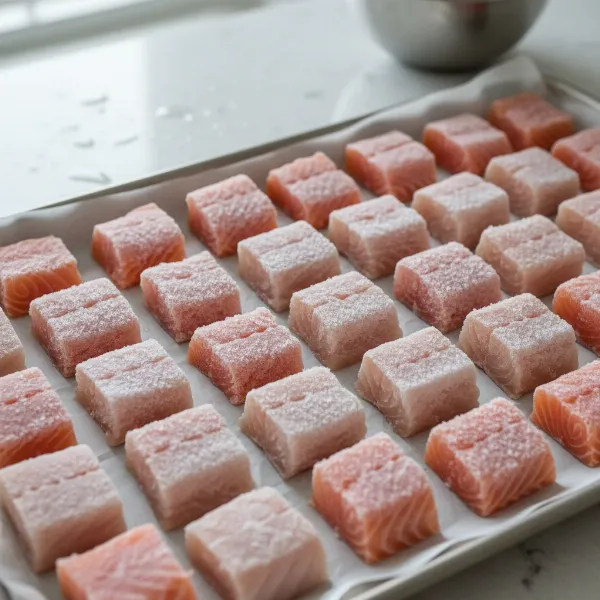 Chilled fish chunks prepared for grinding to ensure optimal texture and consistency.
- (Optional) Pre-cooking: Some traditional fish cake recipes call for cooking the fish first, often by poaching or boiling, before mashing it with potatoes and other ingredients. This method results in a flakier, softer cake, distinct from those made with raw ground fish.
Grinding Methods: Choosing Your Tool
The method you choose for grinding will significantly influence the texture of your fish. Each tool offers distinct advantages and disadvantages.
Meat Grinder
A dedicated meat grinder, whether manual or electric, is excellent for achieving a consistent, coarse grind.
- Pros: Produces a uniform texture, ideal for larger quantities, and allows for control over coarseness by changing plates. It’s perfect for a classic ground fish texture.
- Cons: Can be bulky to store and requires thorough cleaning. The initial investment might be higher.
- Tips: Ensure all parts of the grinder are chilled before use. Feed the cold fish chunks evenly into the grinder, pushing them through gently without forcing. Avoid over-grinding, especially with oilier fish, which can turn into a paste.
|
Our Picks for the Best Meat grinder in 2026
As an Amazon Associate I earn from qualifying purchases.
|
||
| Num | Product | Action |
|---|---|---|
| 1 | KitchenAid Stand Mixer Attachment, Food Grinder KSMMGA, Metal Food Grinder |

|
| 2 | Meat Chopper, Hamburger Grinder, Premium Heat Resistant Smasher for Ground Beef, Burger Grinder Nylon Potato Mix Tool, Meat & Poultry Tenderizers-Black |
|
| 3 | Electric Meat Grinder, Sausage Stuffer with 3 Sausage Tubes, 2 Blades, 3 Plates, 3200W Max, Meat Grinder Heavy Duty for Home Kitchen Use, Stainless Steel (Black) |
|
| 4 | GANIZA Food Processors, Electric Food Chopper with Meat Grinder & Vegetable Chopper - 2 Bowls (8 Cup+8 Cup) with Powerful 450W Copper Motor - Includes 2 Sets of Bi-Level Blades for Fruits/Meat/Nuts |
|
| 5 | CHEFFANO Electric Meat Grinder, [2000W Max] Heavy Duty Meat Mincer with 2 Blades, 3 Plates, Sausage Tube & Kubbe Kit for Home Kitchen Use |
|
| 6 | Meat Grinder Manual Mincer 2-in-1 Manual Meat Grinder Sausage Maker Table Mount Pork Mincer Sausage Stuffer Funnel Make Homemade Burger Patties Hand Operated Kitchen Tool FQ |
|
| 7 | Meat Grinder, Sausage Stuffer, [2800W Max] Electric Meat Mincer with Stainless Steel Blades & 3 Grinding Plates,Sausage Maker & Kubbe Kit for Home Kitchen & Commercial Using |
|
| 8 | CHEFFANO Meat Grinder, 2600W Max Stainless Steel Meat Grinder Electric, ETL Approved Heavy Duty Meat Mincer Machine with 2 Blades, 3 Plates, Sausage Stuffer Tube & Kubbe Kit for Home Kitchen Use |
|
| 9 | LEM Products BigBite #8 Meat Grinder, 0.50 HP Stainless Steel Electric Meat Grinder Machine, Ideal for Regular Use |
|
| 10 | Oaomi 3200W Max Electric Meat Grinder & Sausage Stuffer - Mincer Machine with Tool 2 Blade And 3 Plates, 3 Tubes & Kubbe Kit Tool for Home Kitchen Use(Black) |
|
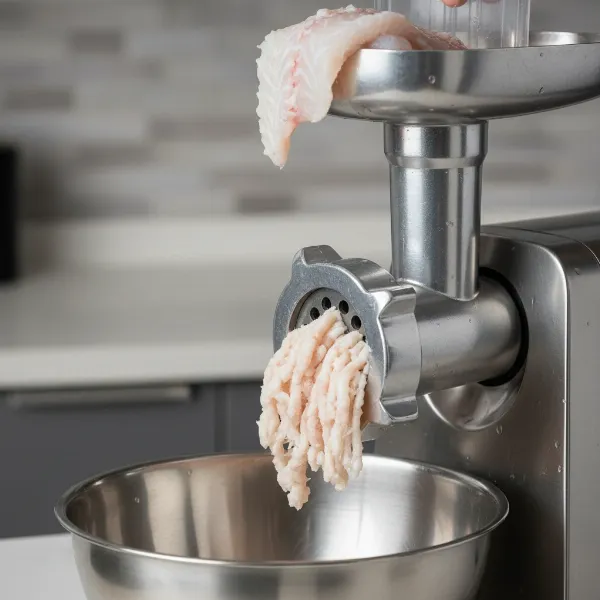 Electric meat grinder actively processing fish fillets into a coarse, consistent ground texture.
Food Processor
For smaller batches or if you don’t own a meat grinder, a food processor is a convenient and quick alternative.
- Pros: Fast, easy to clean for small quantities, and versatile for other kitchen tasks.
- Cons: It’s very easy to over-process fish in a food processor, leading to a pasty or mushy texture rather than a desirable ground consistency.
- Tips: Cut the fish into 1-inch cubes. Work in small batches. Use the “pulse” function in short bursts (1-2 seconds at a time) rather than continuous blending. Check the consistency frequently, stopping when you reach your desired coarse, flaky texture. Aim for visible pieces, not a smooth puree.
By Hand (Chopping or Mincing)
For those who prefer a rustic texture or don’t have specialized equipment, a sharp knife is all you need.
- Pros: Offers the most control over the final texture, from finely minced to roughly chopped. No special equipment required.
- Cons: Labor-intensive and time-consuming, especially for larger amounts. Achieving uniformity can be challenging.
- Tips: Use a very sharp chef’s knife. Cut fish fillets into thin strips, then cross-cut into small dice. Gather the pieces and use a rock-chopping motion to further mince them to your desired consistency.
Mashing (for Cooked Fish)
This method is primarily used for recipes where the fish is cooked prior to forming patties, often combined with potatoes.
- Pros: Simple and requires minimal equipment (a fork or potato masher). Results in a soft, flaky texture.
- Cons: Not suitable for raw fish recipes. The texture is less “ground” and more “flaked.”
- Tips: Poach or steam fish until just cooked through. Flake the fish with a fork, removing any remaining bones. Combine with mashed potatoes or other binders while still warm for easier mixing.
Achieving the Perfect Texture for Fish Cakes and Burgers
The ideal texture for fish cakes and burgers strikes a balance between holding together and having a pleasant mouthfeel.
- Coarse vs. Fine Grind: For most fish cakes and burgers, a coarse grind is preferred. It provides distinct pieces of fish, contributing to a satisfying bite and preventing the patty from becoming rubbery or dense. A very fine grind can be useful for certain Asian-style fish balls or specific delicate preparations, but generally, avoid a paste-like consistency.
- Binders are Key: Ground fish, especially leaner varieties, needs help to hold its shape during cooking.
- Eggs: A classic binder that adds moisture and structure.
- Breadcrumbs (Panko): Absorb moisture and help bind ingredients while adding a light texture. Panko is often favored for its crispness.
- Flour: A small amount can aid in binding, especially for dredging.
- Mayonnaise or Greek Yogurt: Add richness, moisture, and act as a binder, complementing the fish’s flavor.
- Sautéed Vegetables: Finely minced onions, celery, or bell peppers not only add flavor but also moisture and structure to the mix, preventing dryness.
- Moisture Control: The goal is a mixture that is moist enough to be flavorful but firm enough to form and hold its shape. If your mix feels too wet, add a little more breadcrumbs or flour. If it’s too dry, a touch more mayonnaise, yogurt, or an extra egg yolk can help.
Expert Tips for Success
Armed with the right tools and knowledge, here are a few extra tips to ensure your fish grinding endeavors are always successful:
- Keep Everything Cold: This cannot be stressed enough. Cold fish, cold equipment, and cold hands prevent the fish fat from smearing and ensure a cleaner, more defined grind.
- Don’t Over-Process: Whether using a food processor or a meat grinder, stopping just before you think it’s “done” is often the right move. A slightly coarse texture is generally more appealing than a dense, uniform paste.
- Season Generously: Fish loves bold flavors. Don’t be shy with herbs, spices, lemon juice, salt, and pepper. Taste a small, cooked portion of your mix before forming all the patties to adjust seasonings.
- Test a Small Patty: Cook a tiny sample of your fish mixture before shaping the entire batch. This allows you to check the seasoning, binding, and texture and make any necessary adjustments.
- Hygiene and Food Safety: Always work with clean hands, utensils, and cutting surfaces. Wash everything thoroughly after handling raw fish to prevent cross-contamination.
Conclusion
Grinding fish for your homemade fish cakes and burgers is a rewarding process that unlocks a world of fresh, flavorful possibilities. By choosing the right fish, meticulously preparing it, and employing the most suitable grinding method, you gain complete control over the taste and texture of your culinary creations. From the delicate flakiness of a food-processed fillet to the satisfying chew of a meat-ground patty, mastering this technique will undoubtedly elevate your home cooking. So, grab your fillets, embrace the process, and get ready to savor the incredible difference that freshly ground fish makes. What delicious fish creation will you embark on first?
Frequently Asked Questions
Can I grind fish with bones?
No, it is crucial to remove all bones before grinding fish. Bones can damage your equipment and, more importantly, pose a serious choking hazard. Meticulously debone your fish fillets before any grinding process.
How do I prevent my fish cakes from falling apart?
To prevent fish cakes from falling apart, ensure you use adequate binders such as eggs, breadcrumbs (panko works excellently), or mashed potatoes. Chilling the mixture for at least 30 minutes before forming and cooking can also help firm up the patties.
What’s the difference between grinding raw and cooked fish?
Grinding raw fish, typically with a meat grinder or food processor, yields a firmer, more cohesive texture ideal for burgers and substantial cakes. Grinding or mashing cooked fish, often combined with starches like potatoes, results in a flakier, softer texture, more common in traditional fish cakes.
Can I use frozen fish?
Yes, you can use frozen fish, but it must be properly thawed first. Thaw fish in the refrigerator overnight. Once thawed, pat it very dry to remove excess moisture before proceeding with cutting and chilling for grinding. Ensure it’s not refrozen after grinding.