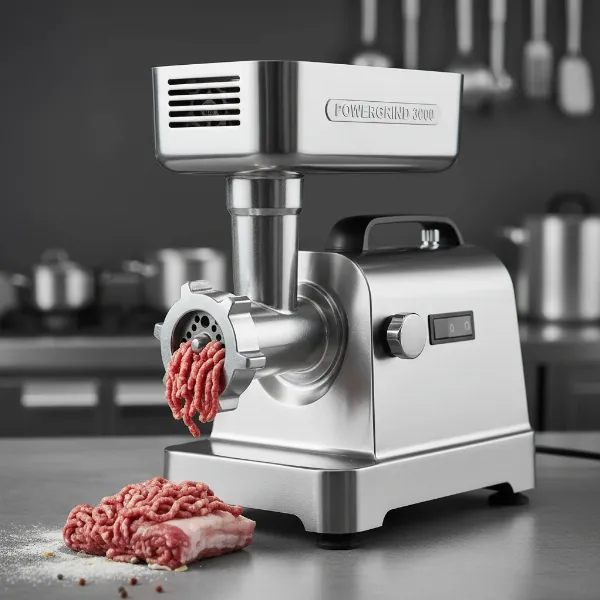
For any home chef or culinary enthusiast who delights in fresh, homemade ground meat, a meat grinder is an invaluable appliance. But to truly elevate your grinding experience and ensure both exceptional results and impeccable hygiene, the right accessories are paramount. Beyond the basic grinder, two categories of tools stand out as essential companions: innovative burger presses for perfectly formed patties and specialized cleaning brushes that keep your equipment pristine. These accessories not only streamline your cooking process but also unlock new culinary possibilities, making your meat grinder an even more versatile workhorse in the kitchen.
The Art of Perfect Patties: Exploring Burger Presses
Imagine serving perfectly uniform, restaurant-quality burgers every time. That’s the promise of a good burger press. This seemingly simple tool ensures consistency in patty size and thickness, leading to even cooking and a superior dining experience. Whether you’re aiming for a classic diner smash burger or a hefty, gourmet patty, a dedicated press can transform your ground meat into culinary masterpieces. It minimizes direct handling of raw meat, promoting hygiene and keeping the meat colder, which is crucial for texture.
Types of Burger Presses
Burger presses come in various designs and materials, each offering distinct advantages for different cooking styles and preferences. Understanding these differences will help you choose the best fit for your kitchen.
-
Manual Presses (Patty Makers): These are the most common type, designed to create uniform patties from a ball of ground meat. They typically consist of a base and a pressing plate.
- Cast Iron: Renowned for its weight and heat retention, cast iron presses are ideal for smash burgers. Their heft provides excellent pressure, creating crispy edges and a thin profile. However, they require more maintenance (seasoning) and are not dishwasher safe.
- Stainless Steel: Durable, rust-resistant, and easy to clean, stainless steel presses are a low-maintenance choice. They offer good weight for pressing and are often dishwasher safe, making them a popular option for many home cooks.
- Aluminum: Lightweight yet strong, aluminum presses often feature non-stick coatings and good heat transfer. While efficient, some un-anodized aluminum can react with acidic ingredients, and they may lack the substantial weight desired for true smash burgers.
- Plastic/Silicone: These are generally the most affordable and lightweight options. They are easy to clean and often dishwasher safe. However, they may not apply enough consistent pressure for certain styles of burgers and some models can over-compress the meat, potentially leading to a tougher texture if not used carefully.
-
Stuffed Burger Presses: For those who love experimenting with flavors, a stuffed burger press allows you to create a cavity in your patty, which you can then fill with cheese, bacon, jalapeños, or other delicious ingredients before sealing it. This tool often involves multiple parts to form both the outer patty and the inner pocket.
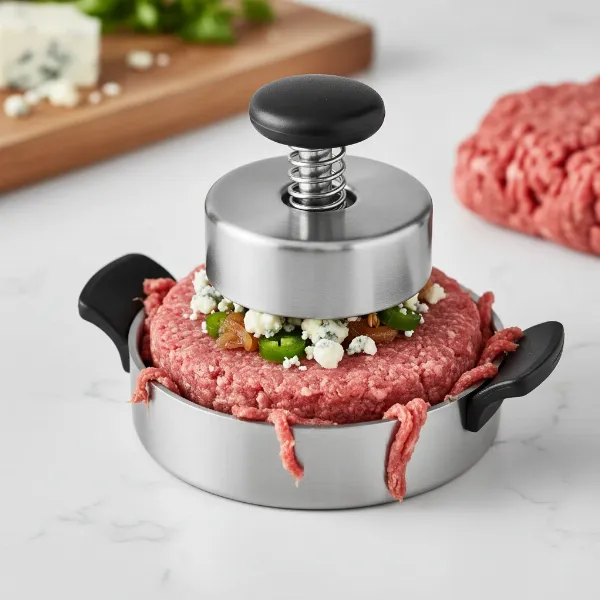 A burger press designed for making stuffed burgers with a filling.
 -
Adjustable Thickness Presses: Some advanced presses feature adjustable mechanisms, allowing you to control the thickness of your patties. This versatility is excellent for preparing different types of burgers, from thin sliders to thick, juicy steak burgers, all with consistent results.
|
Our Picks for the Best Meat grinder in 2026
As an Amazon Associate I earn from qualifying purchases.
|
||
| Num | Product | Action |
|---|---|---|
| 1 | Meat Grinder, Sausage Stuffer, [2800W Max] Electric Meat Mincer with Stainless Steel Blades & 3 Grinding Plates,Sausage Maker & Kubbe Kit for Home Kitchen & Commercial Using |
![Check Meat Grinder, Sausage Stuffer, [2800W Max] Electric Meat Mincer with Stainless Steel Blades & 3 Grinding Plates,Sausage Maker & Kubbe Kit for Home Kitchen & Commercial Using on Amazon](https://meatgrinderpro.com/wp-content/plugins/amazon-tables/assets/images/buy.png)
|
| 2 | LEM Products BigBite #8 Meat Grinder, 0.50 HP Stainless Steel Electric Meat Grinder Machine, Ideal for Regular Use |
|
| 3 | CHEFFANO Meat Grinder, 2600W Max Stainless Steel Meat Grinder Electric, ETL Approved Heavy Duty Meat Mincer Machine with 2 Blades, 3 Plates, Sausage Stuffer Tube & Kubbe Kit for Home Kitchen Use |
|
| 4 | CHEFFANO Electric Meat Grinder, [2000W Max] Heavy Duty Meat Mincer with 2 Blades, 3 Plates, Sausage Tube & Kubbe Kit for Home Kitchen Use |
|
| 5 | KitchenAid Stand Mixer Attachment, Food Grinder KSMMGA, Metal Food Grinder |
|
| 6 | GANIZA Food Processors, Electric Food Chopper with Meat Grinder & Vegetable Chopper - 2 Bowls (8 Cup+8 Cup) with Powerful 450W Copper Motor - Includes 2 Sets of Bi-Level Blades for Fruits/Meat/Nuts |
|
| 7 | Meat Chopper, Hamburger Grinder, Premium Heat Resistant Smasher for Ground Beef, Burger Grinder Nylon Potato Mix Tool, Meat & Poultry Tenderizers-Black |
|
| 8 | Electric Meat Grinder, Sausage Stuffer with 3 Sausage Tubes, 2 Blades, 3 Plates, 3200W Max, Meat Grinder Heavy Duty for Home Kitchen Use, Stainless Steel (Black) |
|
| 9 | Meat Grinder Manual Mincer 2-in-1 Manual Meat Grinder Sausage Maker Table Mount Pork Mincer Sausage Stuffer Funnel Make Homemade Burger Patties Hand Operated Kitchen Tool FQ |
|
| 10 | Oaomi 3200W Max Electric Meat Grinder & Sausage Stuffer - Mincer Machine with Tool 2 Blade And 3 Plates, 3 Tubes & Kubbe Kit Tool for Home Kitchen Use(Black) |
|
Key Features to Look for in a Burger Press
When selecting a burger press, consider these features to ensure it meets your needs and enhances your burger-making prowess:
- Weight and Material: For smash burgers, a heavier press (like cast iron or heavy stainless steel) is beneficial to achieve optimal contact with the cooking surface. For general patty making, a robust material like stainless steel offers durability and easy cleaning.
- Size and Shape: Choose a press that creates patties of your preferred diameter and thickness. Most presses make standard 4-6 inch patties. Consider if you want traditional round, or perhaps square patties for certain buns.
- Non-Stick Properties: A non-stick surface or the use of patty papers is crucial to prevent meat from sticking, ensuring easy release and perfectly formed burgers. Some presses come with a removable bottom plate or an ejection lever for added convenience.
- Ergonomic Handle: A comfortable, heat-resistant handle is essential, especially for smash burgers where you’ll be applying downward pressure on a hot surface. Wooden or silicone-wrapped handles are common for this purpose.
- Ease of Cleaning: Opt for a press that is easy to disassemble and clean. Dishwasher-safe materials (like stainless steel or some plastics) simplify cleanup.
- Versatility: Do you need a press that can make stuffed burgers, sliders, or different patty thicknesses? Some models offer multi-functionality.
“A great burger press isn’t just about speed; it’s about achieving a level of consistency and quality in your patties that hand-forming often can’t match, particularly for that coveted crispy smash burger edge.” – Chef Elena Rodriguez, Culinary Instructor and Meat Processing Expert
Using Your Burger Press Effectively
While a burger press offers great convenience, proper technique is key to avoiding common pitfalls like over-compressed, tough patties.
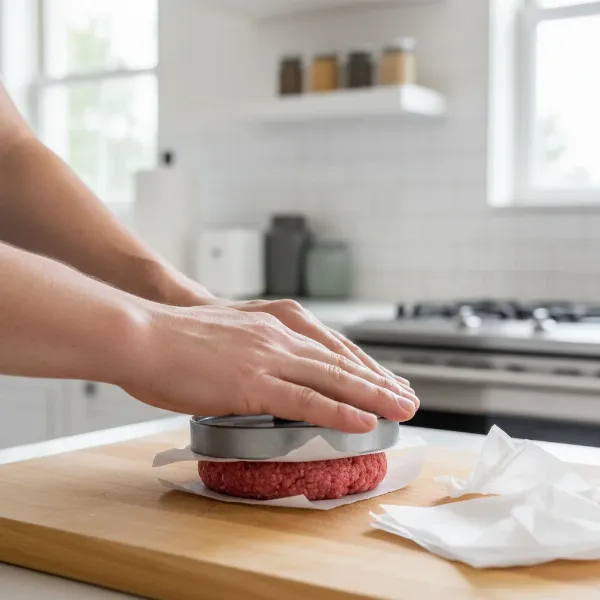 Hands using a burger press to form a perfectly shaped ground meat patty.
- Start with Chilled Meat: Cold meat is easier to work with and less prone to sticking.
- Avoid Overworking: Gently form your ground meat into a loose ball before placing it in the press. Overworking the meat can develop proteins too much, leading to a tougher texture.
- Use Patty Paper: Placing a square of parchment or patty paper on both sides of the meat before pressing can prevent sticking and make stacking and freezing much easier.
- Control Pressure (for non-smash burgers): For traditional patties, apply enough pressure to form a cohesive patty, but avoid mashing it excessively. For smash burgers, apply firm, even pressure to flatten the meat quickly onto a hot griddle.
- Create a Dimple: Many chefs recommend pressing a small dimple in the center of the patty (especially for thicker burgers) to prevent it from bulging in the middle during cooking.
Beyond the Grind: Essential Cleaning Brushes for Your Meat Grinder
After enjoying the fruits of your meat grinder’s labor, the reality of cleanup sets in. Meat grinders, with their intricate parts and nooks, can be challenging to clean thoroughly. This is where specialized cleaning brushes become indispensable. Proper cleaning is not just about aesthetics; it’s critical for food safety, preventing cross-contamination, and extending the lifespan of your valuable equipment.
Why Specialized Cleaning Brushes are Non-Negotiable
Residual meat particles and grease can quickly become a breeding ground for bacteria, posing serious health risks. Furthermore, dried meat can corrode metal parts, dull blades, and hinder the grinder’s performance over time. Standard kitchen sponges and brushes often can’t reach the tight spaces within a grinder head, plates, or stuffing tubes. Specialized brushes are designed precisely for these areas, ensuring a meticulous clean.
Types of Meat Grinder Cleaning Brushes
Effective meat grinder cleaning requires a variety of brushes tailored to different components:
- Grinder Head Brushes: These often feature a round or conical head with stiff bristles, designed to scrub the interior of the grinder’s throat and housing where meat residue tends to accumulate. Their robust construction can tackle stubborn, stuck-on meat.
- Tube/Pipe Brushes: Meat grinder kits frequently include a selection of thin, long brushes with varying diameters. These are specifically for cleaning the narrow interiors of sausage stuffing tubes and the small holes in grinding plates. They typically have flexible wire handles to navigate curves.
- Plate Brushes: While tube brushes can clean plate holes, some kits offer flatter, more rigid brushes designed to scrub the entire surface of grinding plates, ensuring all food particles are removed from both sides and around the central bore.
- General Purpose Bristle Brushes: A sturdy, hand-held brush with stiff bristles is useful for scrubbing larger components like the auger, feeder tray, and the exterior of the grinder body. Look for brushes made with food-grade bristles.
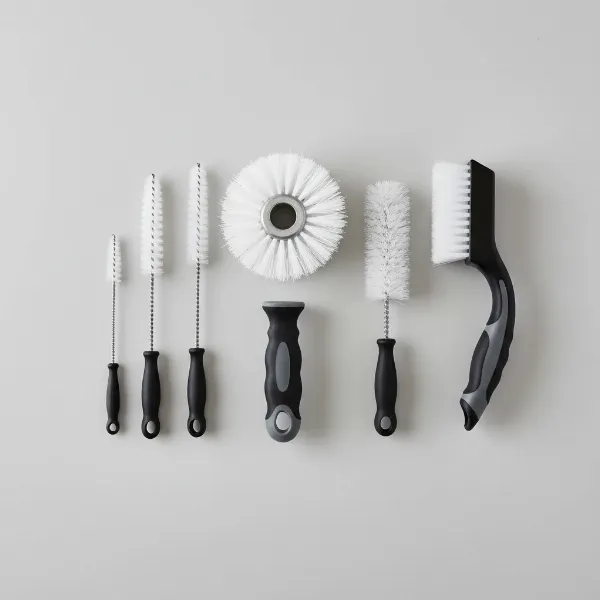 An assortment of specialized brushes for cleaning a meat grinder.
What to Look for in a Cleaning Brush
Choosing the right cleaning brushes is as important as selecting the grinder itself.
- Bristle Material: Look for stiff, durable, food-grade bristles, such as Dupont Tynex® nylon or stiff polyester. These materials are effective at scrubbing without scratching metal surfaces and are resistant to absorbing odors.
- Handle Material and Design: Ergonomic handles provide a comfortable grip, especially when scrubbing tough residue. Aluminum or twisted steel wire handles offer durability, while a good length is essential for reaching deep into grinder throats.
- Size Assortment: A comprehensive cleaning brush kit with multiple sizes (e.g., 1/4″, 3/8″, 1/2″, 3/4″ diameters for tube brushes) is crucial to ensure every part of your grinder can be thoroughly cleaned.
- Durability and Hygiene: Brushes should withstand repeated use in hot, soapy water and sanitizing solutions without degrading. Consider brushes that are easy to rinse clean themselves to avoid harboring bacteria.
A Step-by-Step Guide to Cleaning Your Meat Grinder with Brushes
Maintaining a clean meat grinder involves a systematic approach, greatly facilitated by the right brushes:
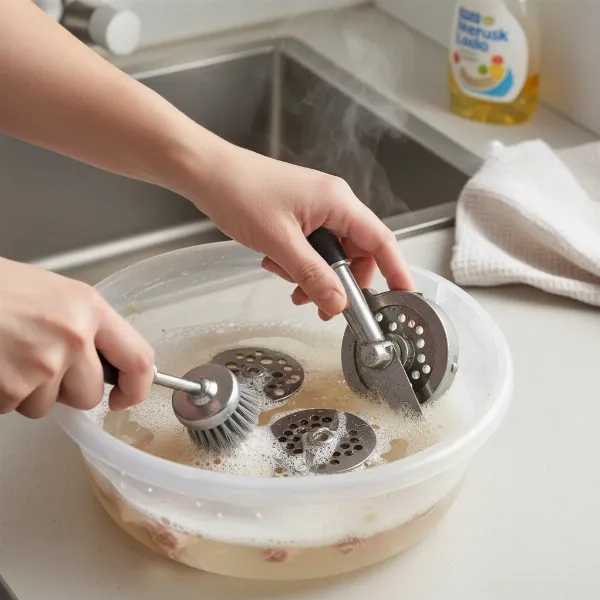 Hands cleaning disassembled meat grinder parts with specialized brushes in soapy water.
- Safety First: Always unplug your meat grinder before disassembling or cleaning any part.
- Disassemble: Carefully remove all detachable parts that come into contact with meat, including the grinding plate, knife, auger, and feeder tray.
- Initial Rinse: Rinse all parts under warm running water to remove loose meat debris. You can run a piece of bread or a potato through the grinder before disassembling to push out most of the meat.
- Soak: Fill a basin with hot, soapy water (using mild dish detergent) and submerge all disassembled parts for 15-20 minutes. This helps loosen stuck-on meat and grease.
- Scrub with Brushes:
- Use a grinder head brush to thoroughly scrub the interior of the grinder’s throat and housing. Pay attention to any grooves.
- Employ the various tube brushes to clean the inside of your stuffing tubes and meticulously clean each hole of the grinding plates.
- Use a plate brush or a general-purpose stiff brush to scrub the flat surfaces of the plates and the auger.
- Don’t forget the knife and other smaller parts, using a smaller brush or even a kitchen toothbrush for tiny crevices.
- Rinse Thoroughly: Rinse all components under clean, hot water to remove all soap residue and dislodged particles.
- Sanitize (Optional but Recommended): For an extra layer of hygiene, especially after processing raw meat, soak or spray the parts with a food-safe sanitizing solution, following the product’s instructions. Rinse again if required by the sanitizer.
- Dry Completely: This is a crucial step to prevent rust. Dry all parts immediately and thoroughly with a clean cloth, then allow them to air dry completely on a rack before reassembly. Moisture is the enemy of metal grinder parts.
- Lubricate: Before storage or next use, lightly lubricate metal parts like plates and knives with food-grade silicone spray or mineral oil to prevent rust and ensure smooth operation.
Synergy in the Kitchen: How Accessories Enhance Your Meat Grinder Experience
Integrating high-quality burger presses and specialized cleaning brushes into your meat grinding routine transforms a functional task into a true culinary craft. Burger presses empower you to create visually appealing and consistently cooked patties, elevating your homemade burgers to gourmet status. Simultaneously, cleaning brushes ensure that your meat grinder remains a safe, efficient, and long-lasting appliance. They work in tandem: the press helps you create, and the brushes help you maintain, allowing you to maximize the utility and enjoyment of your meat grinding endeavors.
Conclusion
The journey of creating exceptional homemade ground meat extends beyond the grinder itself. Investing in the best burger presses and cleaning brushes is a testament to your commitment to culinary quality and kitchen hygiene. From crafting perfectly shaped burgers with ease to meticulously cleaning every intricate component, these accessories are indispensable tools for any meat grinder owner. They not only save time and effort but also ensure consistent results and the longevity of your equipment, ultimately enriching your cooking experience. So, are you ready to upgrade your meat grinding game and bring unparalleled precision and cleanliness to your culinary creations?
Frequently Asked Questions
Are burger presses really necessary for homemade burgers?
While you can hand-form patties, a burger press offers unparalleled consistency in size and thickness, which leads to more even cooking. It’s particularly beneficial for creating smash burgers with crispy edges or for making multiple uniform patties quickly and efficiently.
What’s the best material for a burger press?
The “best” material depends on your primary use. Cast iron is excellent for smash burgers due to its weight and heat retention. Stainless steel offers durability and easy maintenance, often being dishwasher safe. Aluminum is lightweight and good for general use, while plastic/silicone is affordable but may lack the heft for certain styles.
How often should I clean my meat grinder with brushes?
You should thoroughly clean your meat grinder, including all parts that contact meat, after every single use. This prevents bacterial growth, cross-contamination, and the build-up of dried meat residue that can damage your machine.
Can I put meat grinder parts in the dishwasher?
Some meat grinder parts, particularly those made of plastic or stainless steel, may be dishwasher safe. However, many metal components, especially cast iron, carbon steel blades, and plates, are not. Always consult your meat grinder’s manual to confirm which parts are safe for dishwasher cleaning to prevent rust or damage.
Why are different brush sizes important for cleaning?
Meat grinders have various nooks, crannies, and narrow passages, such as the grinder’s throat, the small holes in grinding plates, and the interiors of stuffing tubes. A set of different-sized brushes ensures you can reach and thoroughly scrub every surface, removing all food particles and maintaining optimal hygiene.