For serious hunters and home processors, transforming a successful hunt into delicious ground meat, burgers, and sausages is a rewarding endeavor. However, this process demands more than just a standard kitchen appliance; it requires a robust, reliable meat grinder designed specifically for the unique characteristics of venison and other wild game. These lean, often tougher cuts of meat can quickly overwhelm lesser machines, leading to frustration and an inferior product.
This comprehensive guide will navigate the world of meat grinders, focusing on what truly matters for wild game processing. From understanding the crucial role of motor power to selecting the right materials and essential features, we’ll equip you with the knowledge to choose a grinder that makes quick, efficient, and enjoyable work of your harvest. Prepare to unlock the full potential of your wild game with the perfect meat grinder.
Understanding Meat Grinders for Wild Game
When processing venison, elk, or other wild game, you’re dealing with meat that’s typically leaner and has more connective tissue than store-bought beef or pork. This demands a grinder built for durability and power. A specialized meat grinder ensures a consistent texture, prevents bogging down, and can handle tough sinew without overheating. Using a dedicated grinder, rather than an attachment for a kitchen mixer, significantly prolongs the life of your equipment and delivers superior results.
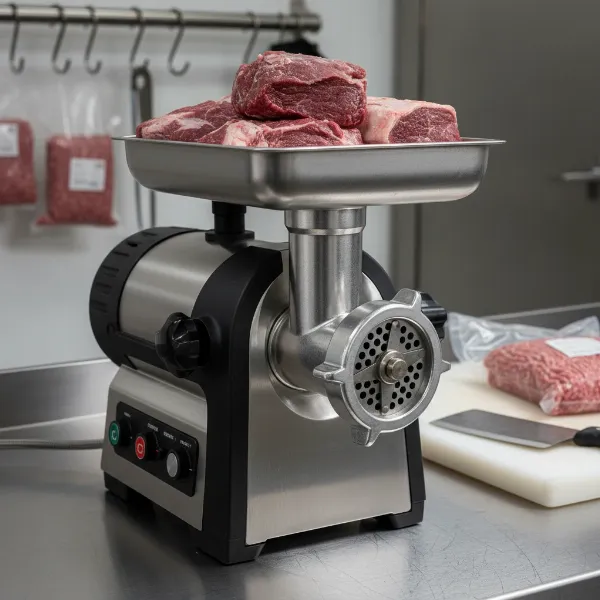 A powerful electric meat grinder specifically designed for processing tough wild game.
Manual vs. Electric Meat Grinders: Which is Right for You?
The first decision in selecting a meat grinder is often between a manual (hand-cranked) and an electric model. Both have distinct advantages and disadvantages depending on your processing volume and preferences.
Manual Meat Grinders
Manual grinders are classic tools, relying on physical effort to turn the auger. They are:
- Affordable and Portable: Generally less expensive and don’t require electricity, making them ideal for use in remote camps or areas without power.
- Durable: Often feature sturdy, all-metal construction that can withstand years of use.
- Best for Small Batches: Perfect for processing an occasional roast or a small amount of trim from a single deer.
However, they demand considerable arm strength and can be time-consuming for larger quantities, typically grinding around 3 pounds per minute.
Electric Meat Grinders
Electric grinders offer convenience and speed, making them the popular choice for most wild game processors. They provide:
- Speed and Efficiency: Process meat much faster, often at rates of 10 pounds per minute or more, significantly reducing processing time for large batches.
- Less Effort: The motor does the hard work, allowing you to focus on feeding the meat.
- Versatility: Many come with multiple grinding plates and sausage stuffing attachments.
|
Our Picks for the Best Meat grinder in 2026
As an Amazon Associate I earn from qualifying purchases.
|
||
| Num | Product | Action |
|---|---|---|
| 1 | Meat Grinder, Sausage Stuffer, [2800W Max] Electric Meat Mincer with Stainless Steel Blades & 3 Grinding Plates,Sausage Maker & Kubbe Kit for Home Kitchen & Commercial Using |
![Check Meat Grinder, Sausage Stuffer, [2800W Max] Electric Meat Mincer with Stainless Steel Blades & 3 Grinding Plates,Sausage Maker & Kubbe Kit for Home Kitchen & Commercial Using on Amazon](https://meatgrinderpro.com/wp-content/plugins/amazon-tables/assets/images/buy.png)
|
| 2 | Meat Chopper, Hamburger Grinder, Premium Heat Resistant Smasher for Ground Beef, Burger Grinder Nylon Potato Mix Tool, Meat & Poultry Tenderizers-Black |
|
| 3 | GANIZA Food Processors, Electric Food Chopper with Meat Grinder & Vegetable Chopper - 2 Bowls (8 Cup+8 Cup) with Powerful 450W Copper Motor - Includes 2 Sets of Bi-Level Blades for Fruits/Meat/Nuts |
|
| 4 | Meat Grinder Manual Mincer 2-in-1 Manual Meat Grinder Sausage Maker Table Mount Pork Mincer Sausage Stuffer Funnel Make Homemade Burger Patties Hand Operated Kitchen Tool FQ |
|
| 5 | LEM Products BigBite #8 Meat Grinder, 0.50 HP Stainless Steel Electric Meat Grinder Machine, Ideal for Regular Use |
|
| 6 | Electric Meat Grinder, Sausage Stuffer with 3 Sausage Tubes, 2 Blades, 3 Plates, 3200W Max, Meat Grinder Heavy Duty for Home Kitchen Use, Stainless Steel (Black) |
|
| 7 | KitchenAid Stand Mixer Attachment, Food Grinder KSMMGA, Metal Food Grinder |
|
| 8 | CHEFFANO Meat Grinder, 2600W Max Stainless Steel Meat Grinder Electric, ETL Approved Heavy Duty Meat Mincer Machine with 2 Blades, 3 Plates, Sausage Stuffer Tube & Kubbe Kit for Home Kitchen Use |
|
| 9 | Oaomi 3200W Max Electric Meat Grinder & Sausage Stuffer - Mincer Machine with Tool 2 Blade And 3 Plates, 3 Tubes & Kubbe Kit Tool for Home Kitchen Use(Black) |
|
| 10 | CHEFFANO Electric Meat Grinder, [2000W Max] Heavy Duty Meat Mincer with 2 Blades, 3 Plates, Sausage Tube & Kubbe Kit for Home Kitchen Use |
|
Electric grinders vary widely in power and features, which directly impacts their ability to handle tough game meat without issues.
Key Factors to Consider When Buying a Wild Game Meat Grinder
Choosing the best meat grinder involves evaluating several critical components to ensure it meets the demands of wild game processing.
Motor Power: The Heart of Your Grinder
For wild game, motor power is arguably the most crucial factor. It dictates how efficiently and effectively the grinder can process tough cuts without stalling or overheating. Horsepower (HP) and wattage are key indicators.
- 0.5 – 0.75 HP (500-750 watts): Suitable for light to moderate use, handling up to 100 pounds of meat annually or 6-10 pounds per session. These are sufficient for casual hunters processing one to two deer per season.
- 1 HP (750+ watts): A robust choice for moderate to heavy use, capable of processing over 200 pounds annually or 10-18 pounds per session. This power tier efficiently handles tougher sinew and provides faster throughput for multiple deer or larger game.
- 1.5 HP and Beyond (1100-1500+ watts): Designed for commercial-level or heavy-duty use, these grinders can tackle 20+ pounds per session and withstand continuous operation. They are ideal for large animals like elk, moose, or bison, ensuring high efficiency and durability under strenuous conditions.
Construction Material: Built to Last
Durability is paramount for a wild game grinder. Look for models constructed with high-quality, food-grade materials.
- Stainless Steel: The gold standard for grinder components, including the housing, head, auger, grinding plates, and blades. Stainless steel is rust-resistant, easy to clean, and extremely durable, standing up to the demands of grinding tough meat.
- Steel Gears: Ensure the internal gears are made of steel, not plastic, to withstand heavy loads and prevent premature wear and tear. Plastic components are a common point of failure in less expensive or underpowered units.
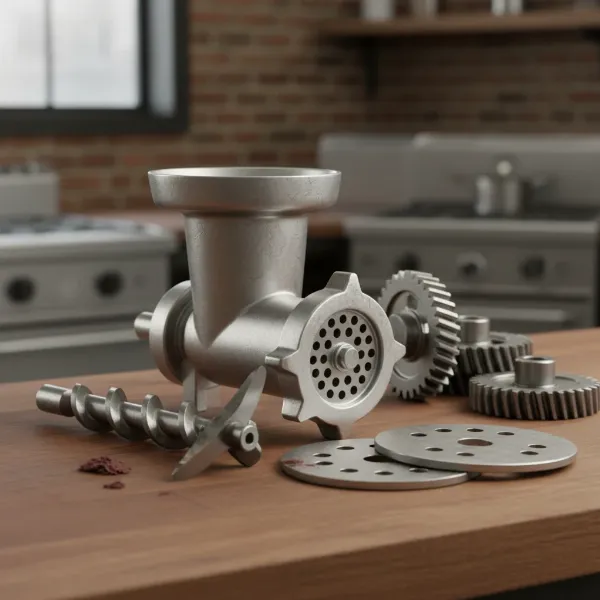 Close-up of stainless steel grinding head, auger, blade, and steel gears for durability.
Grind Plate Sizes: Tailoring Texture
Different wild game products require specific meat textures, which are achieved through various grind plate sizes. Most quality grinders come with an assortment of plates.
- Coarse (4.5mm – 6mm, or 7mm – 10mm): Ideal for the first pass of grinding, and often preferred for sausages to retain moisture and develop a hearty texture.
- Medium-Fine (3mm – 4.5mm): Best for ground venison intended for burgers, meatloaf, or tacos, providing a finer, more consistent texture for even cooking.
- Fine (2mm – 3mm): Used for smoother products like pâtés or jerky, preventing lumps and creating a paste-like consistency.
Having the right plate size prevents clogging and ensures the desired outcome for your culinary creations.
Essential Accessories
A good meat grinder package often includes valuable accessories that enhance its functionality.
- Sausage Stuffing Tubes: Essential for making venison sausages, brats, or snack sticks. Look for a variety of sizes.
- Meat Stomper/Pusher: Safely guides meat into the grinder without risking injury.
- Auger Puller: A tool that simplifies the removal of the auger for cleaning.
- Large Meat Tray/Hopper: A high-capacity tray minimizes refills and prevents meat from escaping, making the process smoother.
Ease of Cleaning
Processing wild game can be messy, so easy cleanup is a significant advantage.
- Disassemblable Parts: The grinder head, auger, blade, and plates should disassemble quickly and easily.
- Stainless Steel Components: These are simple to wash with hot soapy water and are rust-resistant. Avoid abrasive scrubbers that can scratch surfaces.
- Food-Grade Mineral Oil: Essential for lubricating and protecting metal components after cleaning to prevent corrosion and rust during storage.
Safety Features and Other Considerations
- Reverse Function: A crucial feature for clearing jams, allowing the auger to spin backward to dislodge any stuck meat or sinew.
- Tray Guard: Prevents fingers from getting too close to the auger during operation.
- Noise Level: While powerful, some modern grinders are surprisingly quiet, making the processing experience more pleasant.
- Brand Reputation & Warranty: Reputable brands like LEM, Weston, and Cabela’s often offer excellent durability and warranties, ensuring a worthwhile investment.
Top Meat Grinders for Venison and Wild Game
Based on robust performance, durability, and features crucial for wild game, certain types and models consistently stand out.
- For Heavy-Duty & Large Volumes: Commercial-grade models like the Cabela’s Commercial-Grade Carnivore Meat Grinder (available in various HP) or the Weston Pro Series Electric Meat Grinder are powerhouses. The Cabela’s 3/4HP model can grind up to 10 pounds per minute with a 550-watt motor, while the Weston Pro Series with a 2 HP/1,500-watt motor can process up to 1,200 pounds per hour. These machines are built with heavy-duty steel construction and steel gears, designed for extensive, clog-free processing of large game like elk and moose.
- For Dedicated Wild Game Processing (Excellent Value): The LEM #12 BigBite Grinder (1 HP) is frequently recommended for its balance of power and features tailored for hunters. It offers fast and efficient grinding, comes with a comprehensive set of accessories including coarse and fine plates, and often features a 5-year warranty, making it a reliable choice for consistent wild game processing.
- For Home Use & Budget-Conscious Hunters: The Vevor Electric Meat Grinder (1.5 HP/1,100-watt) offers good value for home processors, handling up to 661 pounds per hour. While its feed throat might be smaller, its energy-efficient, air-cooled motor and built-in circuit breaker provide solid performance for most home applications. For processing one or two deer per season, a smaller electric model like the Magic Chef Realtree Edition (600-watt) can also be a perfect, affordable tool.
- For Small Batches & Portability: The LEM Products #10 Stainless Steel Clamp-on Hand Grinder is an excellent manual option. Made from highly polished stainless steel, it’s durable, rust-resistant, and comes with two grinding plates and three stuffing tubes, perfect for small jobs or when electricity isn’t available.
Maximizing Your Wild Game Processing: Tips & Best Practices
Beyond choosing the right equipment, proper technique and preparation are key to achieving the best results with your wild game.
Meat Preparation for Optimal Grinding
- Chill Your Meat: This is perhaps the most critical tip. Ensure your venison is thoroughly chilled (between 32°F-40°F / 0°C-4°C) before grinding. Cold meat grinds cleanly, preventing “smearing” where fat separates from the lean meat, and reduces the risk of bacterial growth.
- Trim Carefully: Remove all bones, silver skin, and excessive sinew. These can damage your grinder or cause it to clog.
- Cut into Strips/Cubes: Cut your meat into pieces that fit easily into the grinder’s feed tube.
- Achieve the Right Fat Ratio: Venison is very lean. For better flavor, moisture, and binding, it’s often recommended to mix it with fattier pork or beef trimmings. Aim for an 80:20 or 85:15 lean-to-fat ratio for most ground meat applications. Chill the fat as well.
Grinding Techniques
- Chill Grinder Components: For best results, place the grinder head, auger, and plates in the freezer for 15-30 minutes before use. This keeps everything cold, promoting a cleaner grind.
- First Pass (Coarse Grind): Start with a coarse grinding plate (7mm-10mm). This initial pass breaks down the meat, mixes in fat more uniformly, and prepares it for a smoother second grind.
- Second Pass (Finer Grind): If a finer texture is desired (e.g., for burgers or specific sausages), follow with a medium-fine (3mm-4.5mm) or fine (2mm-3mm) plate.
- Consistent Feeding: Feed the meat into the grinder at a steady pace. Do not force large amounts through, as this can strain the motor and lead to jams.
Versatility: Using Your Grinder for Other Wild Game
A quality meat grinder is a versatile tool for various wild game types, though some adjustments might be beneficial.
- Elk: More fibrous than venison. Start with a coarse plate (6mm-8mm) for most applications. If making burgers, a finer plate (2mm-3mm) can be used for the second pass after mixing in fat.
- Wild Boar: With higher fat and tougher fibers, a coarse plate (8mm-10mm) is ideal for the initial grind to prevent clogging. Fine grinding works well for emulsified sausages.
- Rabbit or Small Game Birds: These gentler meats benefit from finer plates (2mm-4mm) for smoother, even textures, suitable for pâté or delicate ground mixtures.
- Bear or High-Fat Game: For initial grinding, a medium plate (4.5mm-6mm) is often effective, followed by coarse or fine plates depending on the recipe.
Always ensure your grinder’s motor power (at least 500-700 watts) and plate compatibility are suitable for the specific game you’re processing to avoid overworking the machine.
Cleaning and Maintenance for Longevity
Proper cleaning and maintenance are essential for the longevity of your meat grinder and for ensuring food safety.
Proper Cleaning Techniques
- Disassemble Completely: After each use, disassemble all removable parts: the meat tray, stomper, screws, blade, and auger.
- Hot Soapy Water: Rinse and scrub each piece under hot soapy water (ideally hotter than 60°C / 140°F) to remove all meat remnants and fat. Use dedicated brushes for tight spots, holes, and grooves.
- Avoid Abrasives: Do not use abrasive scrubbers or harsh chemicals that can scratch stainless steel surfaces.
- Thorough Drying: After washing, rinse all components with clean water and dry them immediately and thoroughly to prevent rust and microbial growth. Air dry completely if possible, for 30-60 minutes post-washing.
Maintenance Tips to Extend Lifespan
- Lubrication: Apply food-grade mineral oil to all metal components, especially the blade and grinding plates, before storage. This prevents corrosion. For moving parts, use food-grade lubricants as per the manufacturer’s instructions.
- Proper Storage: Store cleaned and dried grinder components wrapped in a dry, clean cloth in a cool, dry place to prevent contamination and rust.
- Usage Intervals & Cooling: Avoid continuous operation for prolonged periods. For electric grinders, observe recommended usage intervals (e.g., 10-15 minutes of grinding followed by a 5-minute cool-down period) to prevent motor overheating and reduce stress on components.
- Component Checks: Regularly inspect blades and plates for wear, dullness, or damage. Sharpen or replace them as needed to maintain optimal grinding efficiency and product quality. Ensure plates are properly aligned during assembly.
“A well-maintained meat grinder isn’t just a tool; it’s an investment in the quality of your harvest. Prioritize cleanliness and proper storage to ensure it serves you for years.”
Conclusion
Processing your own venison and wild game is a deeply satisfying aspect of the hunting experience, offering unparalleled control over the quality and customization of your meat. Investing in the best meat grinder is not merely a purchase; it’s an investment in efficiency, safety, and the culinary potential of your harvest. By carefully considering motor power, construction materials, grind plate versatility, and committing to diligent maintenance, you can select a grinder that will faithfully serve your needs for seasons to come.
Whether you’re crafting savory venison burgers, spicy wild boar sausages, or delicate rabbit pâtés, the right meat grinder transforms the often-challenging task of wild game processing into an enjoyable and rewarding part of your culinary journey. So, are you ready to elevate your wild game processing game?
Frequently Asked Questions
What size meat grinder do I need for processing deer?
The ideal grinder size depends on your annual processing volume. For one to two deer per season, a #8 or #12 electric grinder is usually sufficient. However, if you process multiple deer or larger game like elk, a #22 or #32 grinder with higher horsepower (1 HP or more) will offer greater efficiency and durability.
Can I use my deer meat grinder for other types of wild game?
Yes, most quality deer meat grinders are versatile enough to handle other wild game like elk, moose, rabbit, or wild boar. Ensure your grinder has sufficient motor power (at least 500-700 watts) and that you use appropriate grinding plate sizes and prepare the meat by removing tough sinew and bones to avoid overworking the machine.
What’s the difference between a manual and an electric meat grinder for wild game?
Manual grinders are more affordable, portable, and suitable for small batches or remote use without electricity, though they require more physical effort. Electric grinders are faster, require less physical exertion, and are ideal for processing larger quantities of meat efficiently, especially tougher wild game cuts.
How much horsepower is recommended for grinding venison?
For light to moderate venison processing (up to 100 pounds annually), 0.5 – 0.75 HP is usually adequate. For heavier use, multiple deer, or tougher game, 1 HP or more is highly recommended for optimal performance, faster processing, and to prevent motor strain. Commercial-grade processing often benefits from 1.5 HP or higher.
What are the best practices for cleaning a meat grinder after processing wild game?
After each use, immediately disassemble all components and wash them thoroughly with hot, soapy water (above 60°C/140°F), using brushes for tight spots. Rinse well and dry completely to prevent rust and bacterial growth. Apply food-grade mineral oil to metal parts before storage. Regular cleaning and proper drying are crucial for hygiene and longevity.