In the dynamic world of culinary arts, equipping your kitchen with the right tools can elevate your cooking from good to extraordinary. Two powerful contenders often spark a debate among home cooks and seasoned chefs alike: the food processor and the meat grinder. Both promise to simplify prep work, but they tackle tasks with distinct approaches and deliver unique results. Understanding their core functions, strengths, and limitations is key to making an informed decision that perfectly aligns with your cooking style and needs. Let’s explore these kitchen workhorses to determine which one will truly revolutionize your culinary adventures.
Understanding the Essentials: What is a Meat Grinder?
At its heart, a meat grinder is a specialized kitchen appliance meticulously engineered for one primary purpose: transforming whole cuts of raw meat into precise, uniform grinds. This dedication to grinding ensures superior texture and quality in your meat preparations.
The magic happens through a specific mechanical process. Meat is fed into a hopper, then an auger, or spiral screw, pushes it forward. It passes through sharp blades that cut the meat, which then exits through a perforated grinding plate. These plates come in various sizes—coarse, medium, and fine—allowing you to control the final texture of your ground meat. From manual, hand-cranked models perfect for small batches, to robust electric versions for regular home use, and heavy-duty commercial machines built for high-volume processing, meat grinders offer options for every scale of cooking.
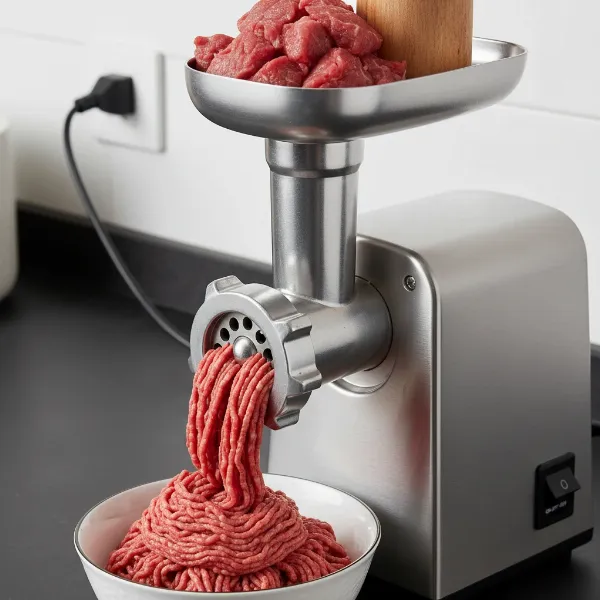 An electric meat grinder actively grinding raw beef, producing uniform ground meat for culinary use.
Key Benefits of a Meat Grinder:
- Unmatched Texture Consistency: A dedicated meat grinder produces a uniform, pebbly texture ideal for burgers, sausages, and meatballs, preventing the meat from becoming overworked or pasty.
- Preserved Meat Quality: By efficiently cutting rather than chopping, meat grinders minimize friction and heat, which helps maintain the protein structure, ensuring juicy, tender results instead of a rubbery consistency.
- Superior Capacity: Electric and commercial meat grinders are designed to handle significant quantities of meat quickly and efficiently, making them indispensable for bulk processing.
- Ingredient Control & Freshness: Grinding your own meat gives you complete control over the cuts, fat content, and seasonings, ensuring the freshest possible product without additives or preservatives.
- Versatile for Specialized Tasks: Beyond traditional meat grinding, these machines are excellent for making homemade sausages with appropriate attachments and can even handle grinding soft bones for pet food or creating unique meat blends.
Limitations of a Meat Grinder:
While exceptional at its core function, a meat grinder is a specialized tool. Its versatility beyond grinding meat is limited, meaning it won’t replace your need for other general food preparation tools. Cleaning can also be more involved due to multiple intricate parts, and larger models may demand considerable counter and storage space.
Unveiling the Versatility: What is a Food Processor?
The food processor, often lauded as the “Swiss Army knife” of the kitchen, is a multi-functional appliance designed to perform a vast array of food preparation tasks with remarkable speed and ease. It’s a true jack-of-all-trades, capable of transforming laborious manual chopping into a quick, effortless process.
This versatile machine typically features a powerful motor, a spacious work bowl, and an S-shaped chopping blade. However, its true versatility shines through its various attachments, including slicing discs, shredding discs, and even dough blades. These different components allow a food processor to chop, slice, shred, grate, purée, mix, knead, and even emulsify ingredients.
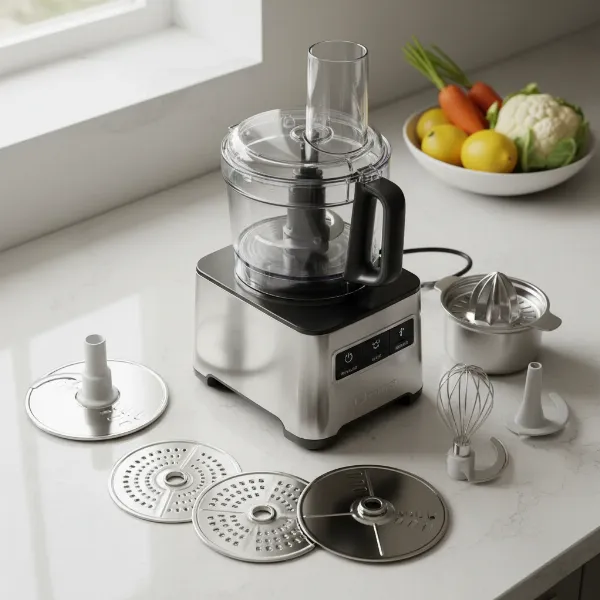 A modern food processor with a variety of blades and discs demonstrating its multi-functional capabilities.
Key Benefits of a Food Processor:
- Exceptional Versatility: A food processor can chop vegetables, slice fruits, shred cheese, knead dough, mix batters, create smooth purees for soups and sauces, prepare pestos and dips, and even make nut butters and breadcrumbs. It effectively replaces numerous manual tools, consolidating kitchen gadgets.
- Significant Time Savings: Tasks that would take minutes or even hours by hand, like grating a block of cheese or finely dicing onions, can be accomplished in mere seconds, drastically cutting down on meal prep time.
- Convenience and Ease of Use: Generally, food processors are simpler to assemble and disassemble, making cleanup quicker and more straightforward than a meat grinder.
- Compact Storage: For home cooks, a single food processor can often replace several other appliances, thereby saving valuable counter and storage space.
- Occasional Meat Grinding: While not its primary function, a food processor can grind small quantities of meat, especially if you freeze the meat in chunks beforehand to prevent it from turning into a paste. It works well for dishes where a slightly “worked” or chopped meat texture is acceptable.
Limitations of a Food Processor:
When it comes to grinding meat, a food processor may fall short compared to a dedicated meat grinder. Its spinning blades tend to chop rather than grind, often resulting in an inconsistent texture with some pieces too fine and others too chunky. It can also overwork meat, generating heat and leading to a tougher, rubbery consistency, particularly with larger batches. The bowl size also limits the amount of meat you can process at once, requiring multiple cycles for larger quantities.
Food Processor vs. Meat Grinder: A Head-to-Head Comparison
To help clarify which appliance is best suited for your kitchen, let’s examine their performance across key aspects:
Grinding Performance & Texture
|
Our Picks for the Best Meat grinder in 2026
As an Amazon Associate I earn from qualifying purchases.
|
||
| Num | Product | Action |
|---|---|---|
| 1 | Electric Meat Grinder, Sausage Stuffer with 3 Sausage Tubes, 2 Blades, 3 Plates, 3200W Max, Meat Grinder Heavy Duty for Home Kitchen Use, Stainless Steel (Black) |

|
| 2 | Oaomi 3200W Max Electric Meat Grinder & Sausage Stuffer - Mincer Machine with Tool 2 Blade And 3 Plates, 3 Tubes & Kubbe Kit Tool for Home Kitchen Use(Black) |
|
| 3 | LEM Products BigBite #8 Meat Grinder, 0.50 HP Stainless Steel Electric Meat Grinder Machine, Ideal for Regular Use |
|
| 4 | CHEFFANO Electric Meat Grinder, [2000W Max] Heavy Duty Meat Mincer with 2 Blades, 3 Plates, Sausage Tube & Kubbe Kit for Home Kitchen Use |
|
| 5 | Meat Grinder Manual Mincer 2-in-1 Manual Meat Grinder Sausage Maker Table Mount Pork Mincer Sausage Stuffer Funnel Make Homemade Burger Patties Hand Operated Kitchen Tool FQ |
|
| 6 | Meat Chopper, Hamburger Grinder, Premium Heat Resistant Smasher for Ground Beef, Burger Grinder Nylon Potato Mix Tool, Meat & Poultry Tenderizers-Black |
|
| 7 | GANIZA Food Processors, Electric Food Chopper with Meat Grinder & Vegetable Chopper - 2 Bowls (8 Cup+8 Cup) with Powerful 450W Copper Motor - Includes 2 Sets of Bi-Level Blades for Fruits/Meat/Nuts |
|
| 8 | CHEFFANO Meat Grinder, 2600W Max Stainless Steel Meat Grinder Electric, ETL Approved Heavy Duty Meat Mincer Machine with 2 Blades, 3 Plates, Sausage Stuffer Tube & Kubbe Kit for Home Kitchen Use |
|
| 9 | Meat Grinder, Sausage Stuffer, [2800W Max] Electric Meat Mincer with Stainless Steel Blades & 3 Grinding Plates,Sausage Maker & Kubbe Kit for Home Kitchen & Commercial Using |
|
| 10 | KitchenAid Stand Mixer Attachment, Food Grinder KSMMGA, Metal Food Grinder |
|
This is where the meat grinder truly shines. Its auger and plate system delivers a consistent, uniform grind that’s crucial for perfectly textured burgers, sausages, and meatballs. The process minimizes working the meat, preserving its structure and preventing it from becoming rubbery. A food processor, conversely, uses blades that chop rather than grind. While it can process meat, the result is often less consistent, more like finely chopped chunks, and can lead to a pasty texture if over-processed.
Versatility
The food processor is the undisputed champion of versatility. With its array of blades and discs, it handles an incredible diversity of tasks from slicing and dicing vegetables to kneading dough and pureeing sauces. A meat grinder, while adaptable for sausage making and some vegetable processing with specific attachments, remains a specialist tool.
Capacity & Efficiency
For large volumes of meat, especially for commercial use or frequent home sausage making, a dedicated electric meat grinder is far more efficient. It’s built to process pounds of meat quickly without overheating. Food processors are limited by their bowl capacity, meaning larger batches of meat or other ingredients require multiple processing cycles, which can be time-consuming.
Cleaning & Maintenance
Generally, food processors are designed for easier cleaning, often with dishwasher-safe parts and fewer components to disassemble. Meat grinders, particularly the larger electric models, can be more challenging to clean due to the grease from meat and the intricate parts of the auger, blade, and plates.
Cost & Space
A basic food processor can be a more budget-friendly initial investment and a greater space-saver if it replaces multiple other kitchen tools. High-end food processors with many attachments can be pricier. Dedicated meat grinders, especially powerful electric models, represent a more significant investment, though this can be offset by long-term savings from grinding your own meat. They also typically require more dedicated storage space.
| Feature | Meat Grinder | Food Processor |
|---|---|---|
| Primary Function | Grinding raw meat, sausage making | Chopping, slicing, shredding, pureeing, mixing |
| Meat Grinding Quality | Excellent, consistent, uniform texture | Good for small batches, can be uneven/pasty |
| Versatility | Limited (specialized) | High (multi-purpose) |
| Capacity (Meat) | High (especially electric/commercial models) | Limited by bowl size, suitable for small batches |
| Texture Control | Precise (via different plates) | Less precise (pulsing for desired chunkiness) |
| Cleaning Ease | More parts, can be challenging | Generally easier |
| Common Uses | Sausages, burgers, meatballs, pet food | Veg prep, dough, sauces, dips, nut butter, purees, breadcrumbs |
Which One Do YOU Need? Making the Right Choice
The decision between a food processor and a meat grinder ultimately boils down to your individual cooking habits, priorities, and culinary aspirations.
- You need a Meat Grinder if:
- You frequently grind large quantities of meat, game, or bones.
- Sausage making is a regular hobby or commercial endeavor for you.
- You prioritize precise control over meat texture for superior burgers, meatballs, and other ground meat dishes.
- You value the freshest possible ground meat and want complete control over its ingredients.
- You need a Food Processor if:
- You desire a versatile appliance to speed up a wide range of daily kitchen tasks, from chopping vegetables to making dough.
- Your meat grinding needs are occasional and for small batches, where a slightly less uniform texture is acceptable.
- You want to consolidate kitchen gadgets and save space, as it can perform many functions.
- You frequently make purees, sauces, dips, nut butters, or require efficient slicing and shredding.
For many home cooks, a high-quality food processor might be the more practical all-in-one solution, capable of handling occasional meat grinding alongside its myriad other functions. However, for those passionate about meat preparation, a dedicated meat grinder is an investment that will yield unparalleled results and open up a world of culinary possibilities that a food processor simply cannot match.
Tips for Maximizing Your Appliance
Regardless of your choice, a few tips can enhance your experience:
- For Grinding Meat (in either device): Always ensure your meat is very cold, ideally chilled in the freezer for 20-30 minutes until firm. For meat grinders, chilling the parts beforehand also helps maintain meat quality and prevents smearing.
- For Food Processors: When grinding meat, cut it into 1-inch cubes and pulse in short bursts to achieve your desired consistency without over-processing. Don’t overload the bowl.
Conclusion
Navigating the choice between a food processor and a meat grinder can seem daunting, but by evaluating your specific culinary demands, the path becomes clear. The meat grinder stands as the specialist, perfecting the art of ground meat with precision and consistency. The food processor emerges as the versatile workhorse, a multi-talented helper that streamlines almost every other prep task in your kitchen.
Ultimately, the best appliance isn’t about one being inherently “better” than the other, but rather which one is “better for you.” Consider how often you tackle specific tasks, the importance of meat texture in your cooking, and your available kitchen space and budget. By doing so, you’ll select the tool that truly empowers your culinary journey and helps you create delicious, homemade meals with confidence and ease.
What dishes are you most excited to prepare with your chosen kitchen companion?
Frequently Asked Questions
Can a food processor replace a meat grinder entirely?
While a food processor can handle small batches of meat, especially if chilled properly, it cannot fully replicate the consistent, uniform grind of a dedicated meat grinder. For serious meat processing or specific textures required for sausages, a meat grinder is superior.
What’s the best way to grind meat in a food processor?
To grind meat in a food processor effectively, cut the meat into 1-inch cubes and freeze them for 20-30 minutes until they are very firm but not solid. Process in small batches using short pulses to avoid overheating and to achieve a more consistent, chopped texture.
Can I use a meat grinder for vegetables?
Yes, some meat grinders can process vegetables, particularly with larger grinding plates. They can be useful for achieving uniformly chopped vegetables for dishes like relish or salsas, though their versatility for various vegetable preparations is less than that of a food processor.
Are meat grinders hard to clean?
Meat grinders typically have more intricate parts (auger, blades, plates) that require thorough cleaning, especially after processing raw meat. Disassembly and careful washing, often by hand, can be more time-consuming compared to cleaning a food processor.