Your meat grinder is a powerhouse in the kitchen, often reserved for crafting succulent sausages or perfectly ground beef. But what if you could unlock its potential to elevate your baking, cooking, and spice blends? This comprehensive guide will show you how to transform raw nuts into delicious flours and butters, and whole spices into aromatic powders, all with the versatile power of your meat grinder. Prepare to discover a new realm of fresh, homemade ingredients that will revolutionize your culinary creations.
Understanding Your Meat Grinder’s Potential
Before diving into grinding nuts and spices, it’s essential to understand how your meat grinder works and its capabilities. A meat grinder uses an auger (worm gear) to push ingredients through a rotating cutting blade, which then presses them through a perforated grinding plate. The size of the holes in this plate determines the fineness of your grind.
Meat grinders come in various types:
- Manual Grinders: These hand-cranked models are robust and excellent for smaller batches, offering precise control over the grinding speed. They are often less prone to overheating.
- Electric Home Grinders: Designed for household use, these models come with varying motor strengths. A powerful motor and sharp blades are crucial for effectively processing harder ingredients like nuts and tough spices.
- Commercial Grinders: Built for high volume and continuous use, these heavy-duty machines can handle almost any grinding task with ease, though they are overkill for most home kitchens.
The key to successful non-meat grinding lies in having a well-maintained grinder with sharp blades and a sturdy motor. Different grinding plates (coarse, medium, fine) will allow you to achieve various textures, from chunky to finely milled.
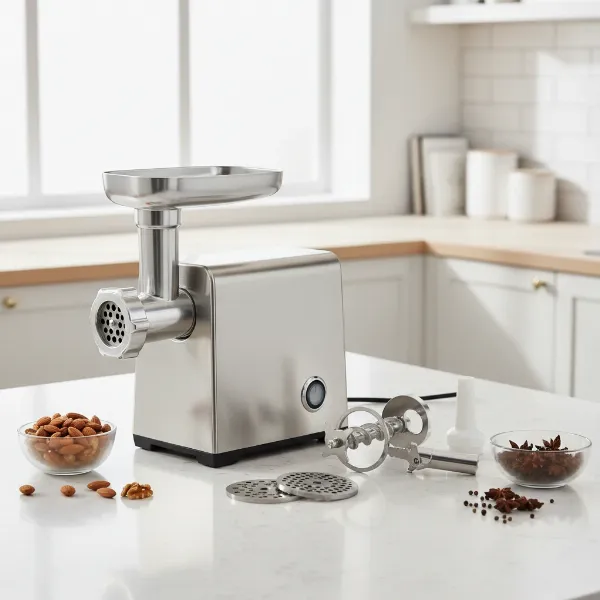 A versatile electric meat grinder with various attachments, ready for grinding nuts and spices.
Mastering Nut Grinding in Your Meat Grinder
Grinding nuts in a meat grinder can yield excellent results, from textured meal to smooth nut butter. It’s particularly effective for handling larger quantities that might overwhelm a food processor.
Choosing and Preparing Your Nuts
Not all nuts are created equal when it comes to a meat grinder. Prioritize hard, dry nuts for the best results:
- Ideal Choices: Almonds, peanuts, walnuts, pecans, hazelnuts, and cashews work wonderfully.
- Avoid: Extremely soft or highly oily nuts that can quickly turn into a paste and clog the machine on the first pass.
Proper preparation is paramount:
- Chill Your Nuts: Place your nuts in the refrigerator or freezer for at least an hour before grinding. Chilling helps prevent the natural oils from separating and creating a sticky, clumpy mess, making them easier to process.
- Pre-cut Larger Nuts: Whole almonds, Brazil nuts, or large walnuts should be roughly chopped into smaller, manageable pieces (about 1-inch chunks). This eases the load on your grinder and ensures a more consistent initial grind.
- Dry Roasting (Optional but Recommended): For enhanced flavor, especially if making nut butter or nut flours for baking, consider dry roasting your nuts on a baking sheet at 350°F (175°C) for 5-10 minutes, or until fragrant. Let them cool completely before chilling and grinding.
|
Our Picks for the Best Meat grinder in 2026
As an Amazon Associate I earn from qualifying purchases.
|
||
| Num | Product | Action |
|---|---|---|
| 1 | Electric Meat Grinder, Sausage Stuffer with 3 Sausage Tubes, 2 Blades, 3 Plates, 3200W Max, Meat Grinder Heavy Duty for Home Kitchen Use, Stainless Steel (Black) |

|
| 2 | CHEFFANO Meat Grinder, 2600W Max Stainless Steel Meat Grinder Electric, ETL Approved Heavy Duty Meat Mincer Machine with 2 Blades, 3 Plates, Sausage Stuffer Tube & Kubbe Kit for Home Kitchen Use |
|
| 3 | Meat Grinder, Sausage Stuffer, [2800W Max] Electric Meat Mincer with Stainless Steel Blades & 3 Grinding Plates,Sausage Maker & Kubbe Kit for Home Kitchen & Commercial Using |
|
| 4 | Meat Grinder Manual Mincer 2-in-1 Manual Meat Grinder Sausage Maker Table Mount Pork Mincer Sausage Stuffer Funnel Make Homemade Burger Patties Hand Operated Kitchen Tool FQ |
|
| 5 | KitchenAid Stand Mixer Attachment, Food Grinder KSMMGA, Metal Food Grinder |
|
| 6 | GANIZA Food Processors, Electric Food Chopper with Meat Grinder & Vegetable Chopper - 2 Bowls (8 Cup+8 Cup) with Powerful 450W Copper Motor - Includes 2 Sets of Bi-Level Blades for Fruits/Meat/Nuts |
|
| 7 | CHEFFANO Electric Meat Grinder, [2000W Max] Heavy Duty Meat Mincer with 2 Blades, 3 Plates, Sausage Tube & Kubbe Kit for Home Kitchen Use |
|
| 8 | LEM Products BigBite #8 Meat Grinder, 0.50 HP Stainless Steel Electric Meat Grinder Machine, Ideal for Regular Use |
|
| 9 | Oaomi 3200W Max Electric Meat Grinder & Sausage Stuffer - Mincer Machine with Tool 2 Blade And 3 Plates, 3 Tubes & Kubbe Kit Tool for Home Kitchen Use(Black) |
|
| 10 | Meat Chopper, Hamburger Grinder, Premium Heat Resistant Smasher for Ground Beef, Burger Grinder Nylon Potato Mix Tool, Meat & Poultry Tenderizers-Black |
|
The Grinding Process
- Assemble Your Grinder: Ensure your meat grinder is thoroughly clean and all parts are properly assembled. Select the appropriate grinding plate. For a coarse nut meal, start with a medium or coarse plate. For finer flour or butter, you’ll need the fine plate.
- Feed Gradually: Add a small amount of chilled, pre-cut nuts into the feed tube. Use the pusher to guide them through steadily, but avoid forcing them.
- First Pass for Coarse Grinds: The initial pass will yield a coarse, crumbly texture. This is perfect for toppings, breading, or adding crunch to salads.
- Multiple Passes for Finer Consistencies: To achieve a finer nut flour or to start making nut butter, collect the nuts from the first pass and feed them through the grinder again using a finer plate if available.
- Nut Flour: One to two passes with a fine plate typically yields a suitable flour.
- Nut Butter: For nut butter, you’ll likely need three or more passes. The nuts will become progressively smoother and more paste-like. During these passes, the nuts will release their oils and warm up.
- Monitor for Overheating and Clogging: As you make multiple passes, especially for nut butter, the grinder’s motor can heat up, and the oily paste can start to clog the plates. If you notice the grinder struggling or the nuts becoming excessively oily and sticky, stop and allow the machine to cool. You may need to clear any blockages.
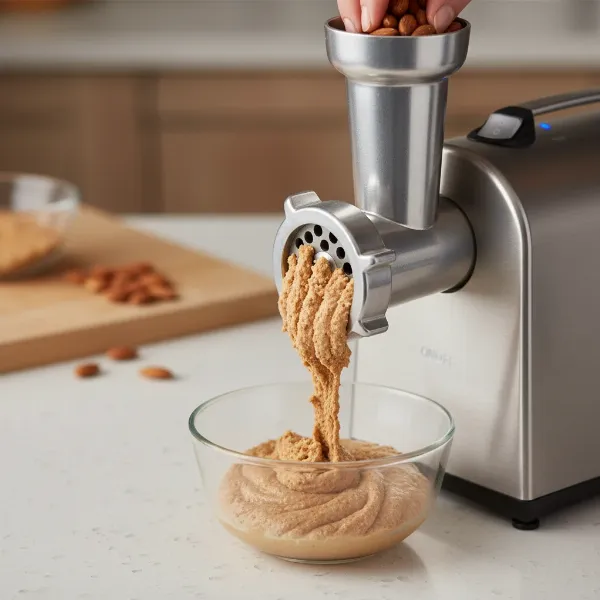 A person actively grinding nuts using an electric meat grinder to produce nut butter.
Tips for Specific Nut Textures
- Chunky Nut Meal: Use a coarse grinding plate and only one pass.
- Fine Nut Flour: Use a fine grinding plate and two passes. For an even finer powder, you might need to spread the ground nuts on a baking sheet and let them air dry slightly before the second pass, as excess oil can hinder fineness.
- Homemade Nut Butter: Begin with a coarse plate, then move to a fine plate for subsequent passes. The texture will be rustic and less smooth than store-bought butters, offering a delightful homemade quality. Add a pinch of salt or a tablespoon of neutral oil during the final pass if desired.
Grinding Spices in Your Meat Grinder
While dedicated spice grinders or mortar and pestles are often preferred for very fine spice powders, your meat grinder can be surprisingly effective for processing larger, tougher whole spices, especially when preparing substantial batches for rubs, marinades, or traditional recipes.
Selecting and Preparing Your Spices
The meat grinder excels with whole, dry spices that have some bulk and firmness:
- Suitable Spices: Whole peppercorns (black, white, green), coriander seeds, cumin seeds, dried chilies (like ancho or guajillo), star anise, cinnamon sticks (broken into pieces), dried ginger, and allspice berries.
- Less Ideal: Very small seeds (poppy, sesame) or delicate leafy herbs (dried oregano, basil) are often better handled by a dedicated spice grinder or mortar and pestle for consistency.
Preparation is crucial for maximizing flavor and protecting your grinder:
- Dry Roasting is Essential: Toasting whole spices in a dry pan over medium-low heat until fragrant intensifies their flavor and makes them more brittle, which aids in grinding. Allow them to cool completely before grinding. Never grind hot or warm spices, as this can release excessive oils and create gumminess.
- Break Down Large Spices: Hard spices like cinnamon sticks or star anise should be broken into smaller fragments (about ½ to 1 inch) to prevent jamming the grinder.
- Ensure Absolute Dryness: Any moisture can turn your spices into a sticky paste and is detrimental to both the grinder and the final product.
The Grinding Procedure
- Choose the Smallest Plate: For spices, you’ll typically want the finest grinding plate available to achieve the closest thing to a powder.
- Assemble and Clean: Ensure your meat grinder is meticulously clean and dry to prevent flavor transfer from previous uses.
- Feed Slowly and Gradually: Add toasted and cooled spices into the feed tube in small, consistent amounts. Use the pusher gently.
- Consider a “Grinding Aid”: For very oily spices or to help achieve a finer, more consistent powder, you can mix a small amount of a neutral, dry ingredient with your spices. A few tablespoons of uncooked rice, a slice of stale dry bread, or even a small amount of coarse salt can help push the spices through and absorb excess oils.
- Multiple Passes for Finer Powder: Similar to nuts, spices may require two or more passes to reach your desired fineness. Be patient and monitor the output.
- Challenges and Considerations:
- Fine Powder Limitations: A meat grinder might not produce the super-fine, talcum-powder consistency achievable with a blade-style spice grinder. Expect a slightly coarser texture.
- Flavor Transfer: Spices are potent. Even with thorough cleaning, strong spice flavors can linger. Consider dedicating specific grinder parts (like a spare plate and blade) if you frequently grind diverse spices.
- Overheating: While less common than with nuts, continuous grinding of hard spices can still cause the motor to warm up. Give your grinder short breaks if it feels hot.
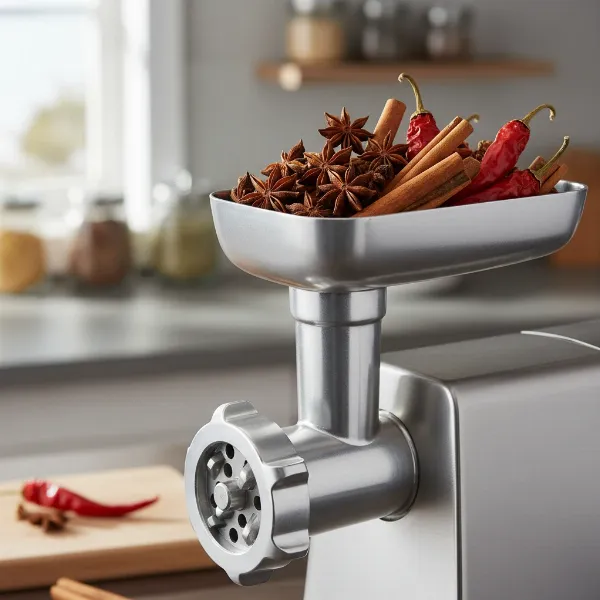 Whole dried spices being fed into a meat grinder to create aromatic spice blends.
Cleaning and Maintenance for Longevity
Thorough cleaning after grinding nuts and spices is non-negotiable to maintain hygiene, prevent rust, avoid cross-contamination of flavors, and extend the life of your meat grinder.
- Disassemble Immediately: As soon as you finish grinding, disassemble all parts of your grinder. Do not let any residue dry on the components.
- Initial Rinse and Scrape: Rinse all parts under warm running water. Use a small brush or a plastic scraper to remove any visible nut or spice particles.
- Warm, Soapy Water Bath: Wash all components in warm, soapy water. For stubborn oily residues from nuts, a degreasing dish soap can be helpful.
- Specialized Cleaning for Residue:
- Stale Bread/Rice Trick: To absorb lingering oils and push out tiny lodged particles, grind a few pieces of stale bread or a handful of uncooked rice through the assembled (but empty) grinder after washing, then clean again. This is particularly useful after grinding oily nuts or potent spices.
- Dedicated Brushes: Keep a stiff-bristled brush specifically for cleaning your grinder’s plates and blades, as tiny holes can trap particles.
- Thorough Drying: This is perhaps the most critical step. Metal components, especially, must be completely dry before storage to prevent rust. Air dry them or use a clean cloth. For internal parts, ensure no moisture remains.
- Lubrication (for Manual Grinders): Some manual grinder components may benefit from a light coat of food-grade mineral oil before storage to prevent rust.
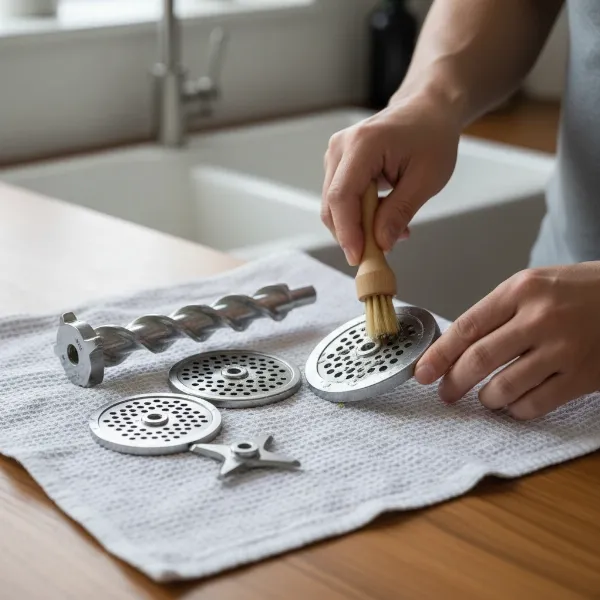 Disassembled metal components of a meat grinder being meticulously cleaned and dried to prevent rust.
Conclusion
Your meat grinder is more than just a tool for meat; it’s a versatile appliance capable of expanding your culinary horizons. By understanding its mechanics and following proper preparation and grinding techniques, you can confidently process nuts into fresh flours and butters, and whole spices into aromatic blends. While it might require a bit more effort or yield a slightly different texture than specialized tools, the control, volume capacity, and sheer satisfaction of homemade ingredients are unmatched. Experiment with different nuts, spices, and grind settings, and don’t forget the cardinal rule of meticulous cleaning. Embrace the power of your meat grinder and unlock a world of fresh, vibrant flavors in your kitchen. What delicious creations will you grind next?
Frequently Asked Questions
Can I grind wet nuts or fresh spices in a meat grinder?
No, it is strongly advised against grinding wet nuts or fresh/moist spices in a meat grinder. Moisture can cause clogging, a gummy texture, and can even promote bacterial growth if not cleaned immediately. Always use dry, preferably chilled ingredients.
Will grinding nuts and spices damage my meat grinder?
When used correctly, grinding nuts and hard, dry spices should not damage a robust meat grinder. However, forcing large, un-prepped ingredients, ignoring overheating, or failing to clean it properly can lead to wear and tear or damage to the motor and blades. Ensure your grinder has a powerful motor and sharp blades for best results.
Can a meat grinder make smooth nut butter comparable to store-bought varieties?
A meat grinder can produce delicious homemade nut butter, but its consistency will typically be thicker and more rustic than ultra-smooth store-bought versions. Multiple passes (three or more) are required to achieve a smoother consistency, and you might need to add a touch of neutral oil for a creamier texture.
Is a meat grinder better than a food processor or spice grinder for nuts and spices?
Each tool has its strengths. A meat grinder is excellent for processing larger quantities of nuts and tougher, whole spices, offering a unique texture profile and efficient bulk processing. Food processors are generally better for quickly making finer nut flours or smaller batches of coarser spice blends. Dedicated blade or burr spice grinders excel at producing very fine spice powders. The “best” tool depends on the ingredient, desired texture, and quantity.