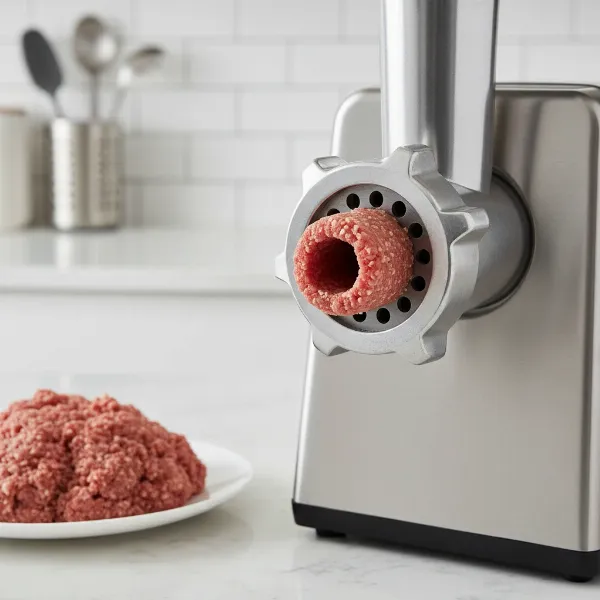
Embarking on the journey of grinding your own meat can revolutionize your cooking, offering unparalleled freshness and control over ingredients. However, a crucial first step is understanding the jargon, particularly the mysterious numbers like #5, #8, #12, and #22. These designations aren’t arbitrary; they signify the size and capability of a meat grinder, directly impacting its performance and suitability for various tasks. Choosing the right meat grinder size ensures efficiency, prevents frustration, and ultimately enhances your culinary creations.
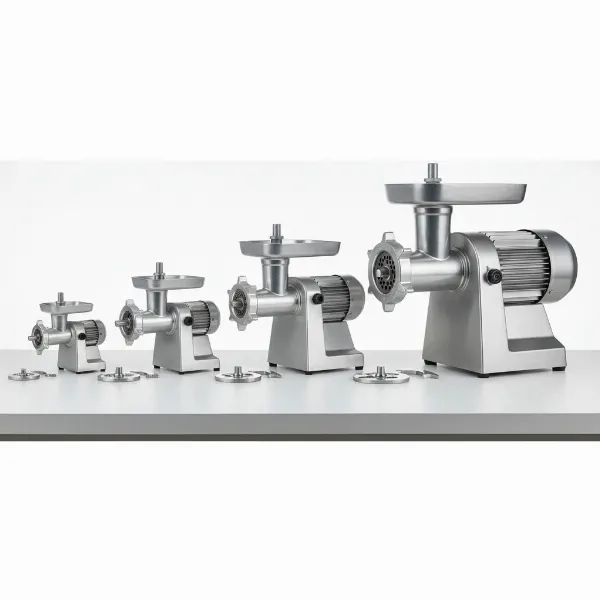 Variety of meat grinders of different sizes, including #5, #8, #12, and #22 models.
Understanding Meat Grinder Sizes: What Do the Numbers Mean?
When you see a meat grinder labeled with a number such as #5, #8, #12, or #22, this number primarily refers to the diameter of the grinding plate and the overall size of the grinder’s head, which houses the auger, blade, and plate. A larger number indicates a larger grinding head, translating to increased capacity and often more powerful motors. This distinction is vital because it determines how much meat can be processed at once and how quickly the machine can handle the task.
While some might mistakenly associate these numbers with specific hole sizes on the grinding plates (which dictate the fineness or coarseness of the grind), the grinder size itself refers to the compatibility of components like the grinding plate and knife. Standardized across the industry, a #8 plate will fit any #8 grinder, regardless of the manufacturer.
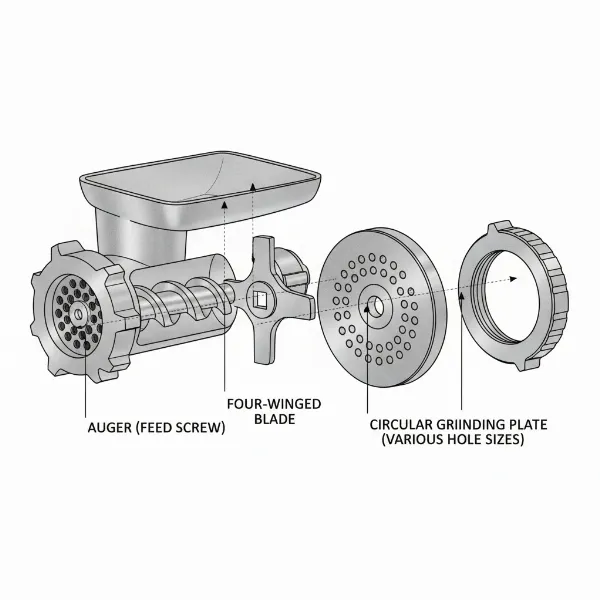 Diagram illustrating the key components of a meat grinder: auger, blade, and grinding plate.
Detailed Breakdown of Meat Grinder Sizes
Let’s delve into the specific characteristics and ideal applications for #5, #8, #12, and #22 meat grinders.
#5 Meat Grinder
The #5 meat grinder represents the smallest end of the spectrum, typically designed for very light, occasional use.
- Plate Diameter: Approximately 2 1/8 inches.
- Typical Usage: Best suited for individuals who grind small quantities of meat infrequently, such as preparing a single batch of hamburger or a modest amount of sausage for personal use. Manual #5 grinders are often clamp-on models, requiring significant effort.
- Capacity: These grinders offer the lowest output, usually processing around 1-2 pounds of meat per minute.
- Pros: Compact, easy to store, often the most affordable option.
- Cons: Limited capacity, slower operation, can struggle with tougher meats, not ideal for frequent or larger batch processing.
|
Our Picks for the Best Meat grinder in 2026
As an Amazon Associate I earn from qualifying purchases.
|
||
| Num | Product | Action |
|---|---|---|
| 1 | Oaomi 3200W Max Electric Meat Grinder & Sausage Stuffer - Mincer Machine with Tool 2 Blade And 3 Plates, 3 Tubes & Kubbe Kit Tool for Home Kitchen Use(Black) |

|
| 2 | Meat Chopper, Hamburger Grinder, Premium Heat Resistant Smasher for Ground Beef, Burger Grinder Nylon Potato Mix Tool, Meat & Poultry Tenderizers-Black |
|
| 3 | GANIZA Food Processors, Electric Food Chopper with Meat Grinder & Vegetable Chopper - 2 Bowls (8 Cup+8 Cup) with Powerful 450W Copper Motor - Includes 2 Sets of Bi-Level Blades for Fruits/Meat/Nuts |
|
| 4 | Electric Meat Grinder, Sausage Stuffer with 3 Sausage Tubes, 2 Blades, 3 Plates, 3200W Max, Meat Grinder Heavy Duty for Home Kitchen Use, Stainless Steel (Black) |
|
| 5 | CHEFFANO Electric Meat Grinder, [2000W Max] Heavy Duty Meat Mincer with 2 Blades, 3 Plates, Sausage Tube & Kubbe Kit for Home Kitchen Use |
|
| 6 | Meat Grinder, Sausage Stuffer, [2800W Max] Electric Meat Mincer with Stainless Steel Blades & 3 Grinding Plates,Sausage Maker & Kubbe Kit for Home Kitchen & Commercial Using |
|
| 7 | LEM Products BigBite #8 Meat Grinder, 0.50 HP Stainless Steel Electric Meat Grinder Machine, Ideal for Regular Use |
|
| 8 | KitchenAid Stand Mixer Attachment, Food Grinder KSMMGA, Metal Food Grinder |
|
| 9 | Meat Grinder Manual Mincer 2-in-1 Manual Meat Grinder Sausage Maker Table Mount Pork Mincer Sausage Stuffer Funnel Make Homemade Burger Patties Hand Operated Kitchen Tool FQ |
|
| 10 | CHEFFANO Meat Grinder, 2600W Max Stainless Steel Meat Grinder Electric, ETL Approved Heavy Duty Meat Mincer Machine with 2 Blades, 3 Plates, Sausage Stuffer Tube & Kubbe Kit for Home Kitchen Use |
|
#8 Meat Grinder
A step up from the #5, the #8 meat grinder is a popular choice for many home users, striking a balance between size and capability.
- Plate Diameter: Approximately 2 1/2 inches.
- Typical Usage: Ideal for home cooks who regularly grind meat, process small game (like a single deer per year), or make small to medium batches of sausage. It handles domestic meats well and can manage slightly tougher cuts than a #5.
- Capacity: An electric #8 grinder can typically process around 2-5 pounds of meat per minute.
- Pros: Good for regular home use, more versatile than a #5, generally affordable, and doesn’t require excessive storage space.
- Cons: May still be slow for larger batches or very tough game, limited for commercial applications.
“For the average home cook or a hunter processing one deer a year, a #8 meat grinder often provides the perfect blend of performance and convenience.”
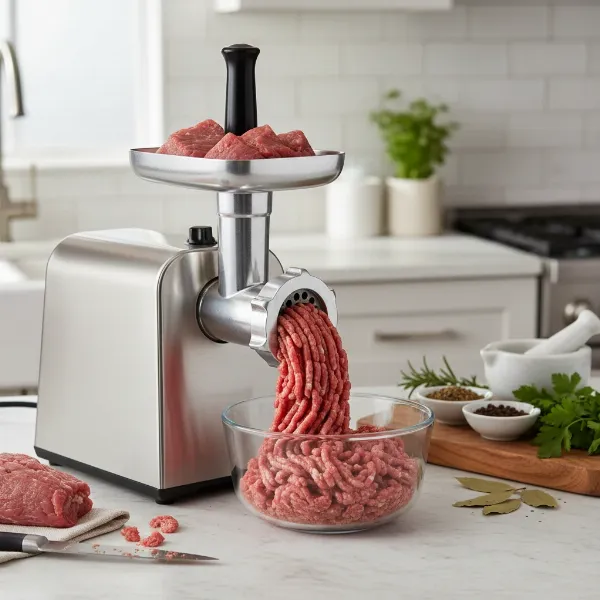 An electric #8 meat grinder in a home kitchen, processing ground beef for everyday cooking.
#12 Meat Grinder
The #12 meat grinder marks a transition into more robust performance, suitable for serious home users and lighter commercial applications.
- Plate Diameter: Approximately 2 3/4 inches.
- Typical Usage: Excellent for hunters processing larger game like deer or elk, avid home sausage makers, or small restaurants and delis requiring a consistent supply of freshly ground meat. It can handle higher volumes and tougher meats with greater ease.
- Capacity: These machines typically process 3-7 pounds of meat per minute, making them significantly faster than #8 models. They are generally recommended if you plan to grind more than 300 pounds of meat annually.
- Motor: Often features a more powerful motor (e.g., 0.75 horsepower), providing greater torque and reducing strain during heavier workloads.
- Pros: Significantly increased speed and capacity, better for tougher meats and larger quantities, offers a wider range of commercial-grade attachments.
- Cons: Larger and heavier than #5 or #8, higher price point.
#22 Meat Grinder
The #22 meat grinder is a workhorse, designed for high-volume processing and demanding tasks, pushing into serious commercial territory.
- Plate Diameter: Approximately 3 1/4 inches.
- Typical Usage: Best suited for high-volume home users, small-to-medium butcher shops, restaurants with significant grinding needs, or serious game processors tackling multiple animals. If you frequently need to grind large batches quickly and efficiently, this size is ideal.
- Capacity: A #22 grinder can typically process 9-12 pounds of meat per minute, providing substantial throughput.
- Motor: Features powerful motors capable of continuous, heavy-duty operation, often exceeding 1 horsepower.
- Pros: High capacity and speed, excellent for tough meats and large volumes, built for durability and continuous use.
- Cons: Substantially larger and heavier, requires dedicated counter or floor space, higher cost, potentially overkill for occasional home use.
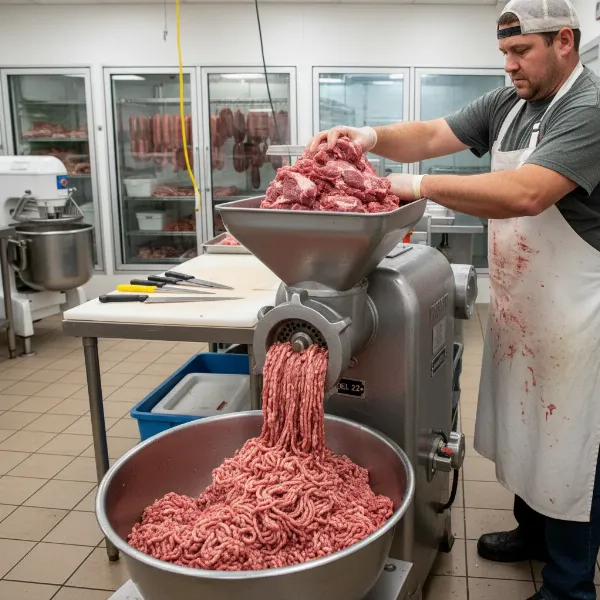 A powerful #22 meat grinder operating in a professional butcher shop, processing large cuts of meat.
Buying Guide: Choosing the Right Meat Grinder
Selecting the optimal meat grinder size involves a careful assessment of your needs and expectations. Consider these factors before making your investment:
Determine Your Usage Volume and Frequency
This is arguably the most critical factor.
- Occasional/Small Batches (1-5 lbs): A #5 or #8 grinder will likely suffice.
- Regular Home Use/Moderate Batches (5-20 lbs): A robust #8 or a smaller #12 is a good fit.
- Frequent/Large Batches (20+ lbs) / Annual Game Processing: A #12 or #22 grinder is essential for efficiency and longevity.
- Commercial/Heavy Duty: #22 and larger models are designed for these demanding environments.
Consider the Type of Meat You’ll Grind
- Soft Meats (Chicken, Fish): Smaller, less powerful grinders can handle these.
- Domestic Meats (Pork, Beef): Most #8 and larger grinders will perform well.
- Tough Game Meats (Venison, Elk): Opt for a #12 or #22 grinder with a powerful motor (at least 0.75 HP) to prevent bogging down and ensure a smooth grind.
Evaluate Motor Power
For electric grinders, motor power is crucial for performance. Horsepower (HP) or wattage ratings indicate the grinder’s strength.
- Under 0.5 HP: Best for light-duty grinding of softer meats.
- 0.5 – 0.75 HP: Adequate for regular home use and moderate amounts of tougher meats.
- 0.75 HP and above: Necessary for large batches, tough game, and commercial operations, ensuring consistent performance without overheating.
Look for Essential Features and Materials
- Material: Stainless steel components are highly recommended for durability, hygiene, and ease of cleaning, surpassing plastic or aluminum.
- Attachments: Consider if you need sausage stuffing tubes, kubbe attachments, or various grinding plate hole sizes for different textures. Most grinders come with multiple plates.
- Ease of Cleaning: Removable parts and simple disassembly will save you considerable time and effort.
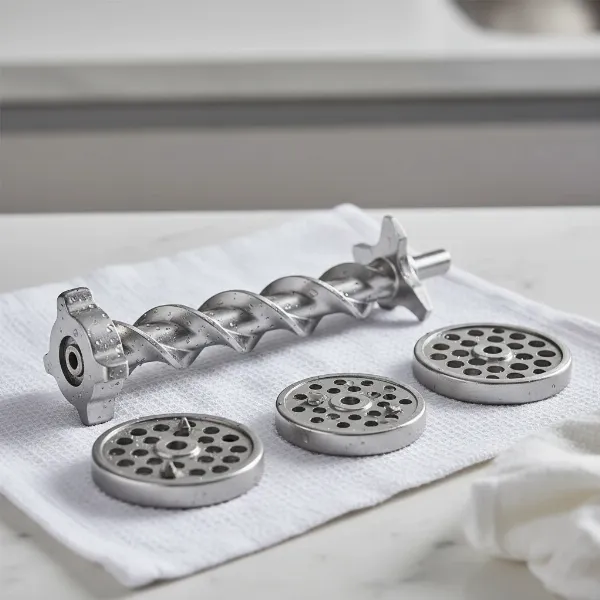 Various stainless steel components of a meat grinder laid out on a clean surface, emphasizing durability and hygiene.
Set Your Budget
Meat grinders vary widely in price based on size, power, and features. Determine what you can comfortably spend, keeping in mind that a slightly higher investment upfront can lead to greater satisfaction and a longer-lasting machine.
Comparison Table: Meat Grinder Sizes at a Glance
| Grinder Size | Approximate Plate Diameter | Typical Use Case | Estimated Output (lbs/min) | Ideal User |
|---|---|---|---|---|
| #5 | 2 1/8 inches | Very light home use, small batches | 1-2 lbs/min | Occasional home cook |
| #8 | 2 1/2 inches | Regular home use, small game | 2-5 lbs/min | Home cook, casual hunter |
| #12 | 2 3/4 inches | Serious home/small commercial, game | 3-7 lbs/min | Avid home user, small butcher, hunter |
| #22 | 3 1/4 inches | High-volume home/medium commercial | 9-12 lbs/min | Commercial kitchen, heavy-duty processor |
Tips for Using and Maintaining Your Meat Grinder
Regardless of the size you choose, proper usage and maintenance are key to maximizing your meat grinder’s performance and lifespan.
- Keep Meat Cold: Always ensure your meat is very cold or partially frozen before grinding. This helps the grinder cut cleanly rather than mash, leading to a better texture and less strain on the machine.
- Cut Meat into Appropriate Sizes: Slice meat into pieces that fit comfortably into the grinder’s feed tube without forcing them. This prevents clogs and ensures smooth operation.
- Clean Immediately: After each use, disassemble and clean all parts thoroughly. Warm, soapy water is usually sufficient for stainless steel components. Dry everything completely before reassembling or storing to prevent rust.
- Maintain Sharpness: Grinder knives and plates can dull over time. Consider sharpening or replacing them periodically, ideally as a matched set, to maintain efficient cutting performance.
- Avoid Grinding Bones (Unless Specified): Only heavy-duty, commercial-grade grinders with powerful motors are designed to handle soft bones. Attempting to grind bones in a smaller, less powerful machine can cause severe damage.
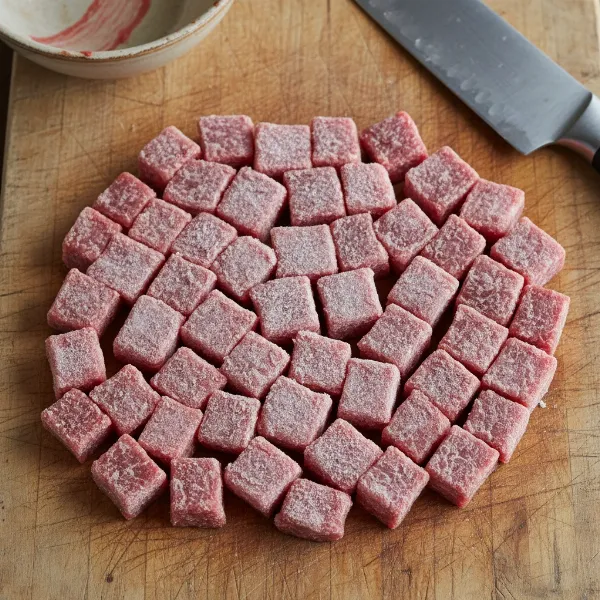 Chilled meat, cut into uniform cubes, ready to be fed into a meat grinder for optimal processing.
Conclusion
Choosing the right meat grinder size is fundamental to achieving your grinding goals, whether you’re a passionate home cook creating custom burger blends or a professional preparing daily batches of sausage. By understanding the distinctions between #5, #8, #12, and #22 grinders—which primarily denote the size of the grinding head and corresponding capacity—you can make an informed decision tailored to your specific needs. Investing in a meat grinder that aligns with your volume, frequency, and type of meat will ensure years of efficient, satisfying performance. What culinary adventures will you embark on with your perfectly chosen meat grinder?
Frequently Asked Questions
What is the most common meat grinder size for home use?
The #8 meat grinder is widely considered the most common and versatile size for typical home use. It offers a good balance of power and capacity for grinding regular batches of meat, processing small game, and making various sausages without being overly large or expensive.
Can I use a #8 grinder for deer meat?
Yes, a #8 grinder can be used for deer meat, especially if you’re processing one deer or less per year. However, for quicker processing of larger quantities or tougher cuts, a #12 grinder or larger would provide greater efficiency and less strain on the machine.
What’s the main advantage of a #22 meat grinder over a #12?
The main advantage of a #22 meat grinder over a #12 is significantly higher capacity and speed, making it ideal for large-volume processing. A #22 can handle larger chunks of meat and process 9-12 pounds per minute, compared to the #12’s 3-7 pounds per minute, suitable for commercial or heavy-duty use.
Do meat grinder numbers refer to the hole size of the grinding plate?
No, the numbers (#5, #8, #12, #22) on meat grinders refer to the overall size of the grinder head and the diameter of the grinding plate, not the specific hole size of the plate itself. The hole size of the grinding plates (e.g., 1/8-inch, 3/16-inch) determines the fineness or coarseness of the grind.
Are larger meat grinders always better?
Larger meat grinders offer higher capacity, speed, and durability for processing large volumes and tough meats. However, “better” depends on your needs. For occasional or small-batch home use, a #5 or #8 grinder might be more practical due to its compact size and lower cost.