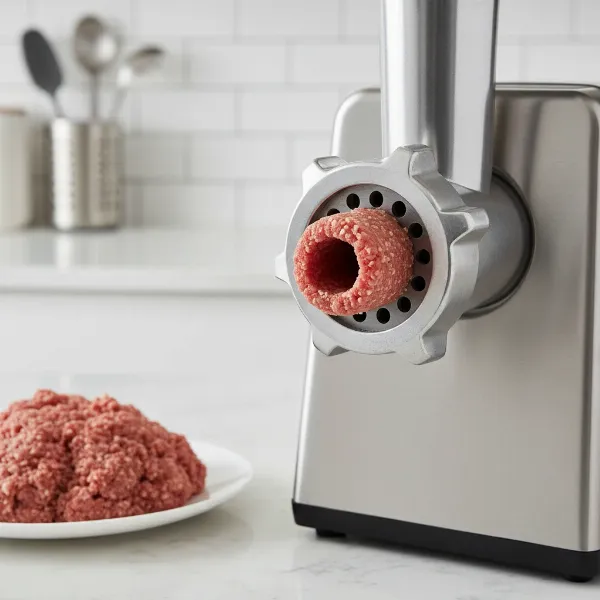
There’s nothing quite as frustrating as expecting a perfectly textured batch of ground meat, only to pull out a greasy, smeared, and unappetizing mess. What starts as a simple task can quickly turn into a culinary headache when your meat grinder decides to turn your prime cuts into a pink paste. But before you banish your grinder to the back of the cupboard, understand that meat smearing is a common issue with clear causes and straightforward solutions. As an experienced technician, I’ve seen countless machines and techniques, and I’m here to guide you through the secrets of achieving that ideal, loose, and beautifully textured grind every single time. Let’s diagnose the problem and equip you with the knowledge to get your grinder performing at its peak.
Mastering Your Meat Grinder: A Comprehensive Troubleshooting Guide
Achieving the perfect ground meat texture isn’t just about the raw ingredients; it’s heavily reliant on understanding your meat grinder’s mechanics and optimal operating conditions. When meat emerges smeared, it’s a clear signal that something in this delicate balance is off. This guide will walk you through the most common culprits and how to rectify them, ensuring your grinder works for you, not against you.
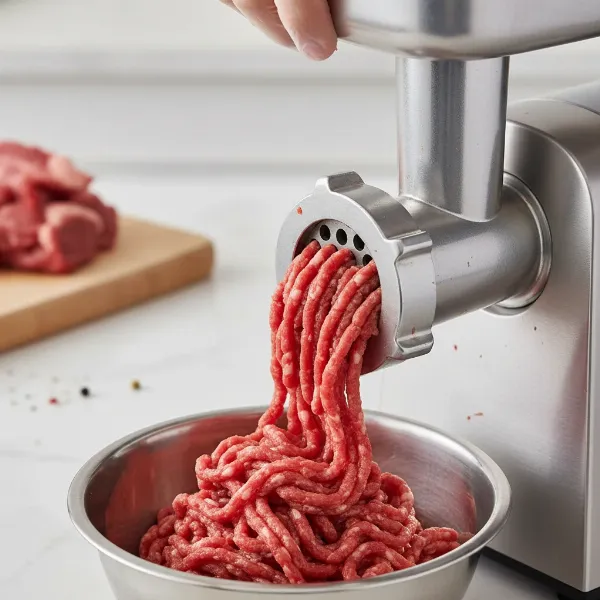 An electric meat grinder actively grinding meat, producing perfectly textured, loose ground meat without smearing.
Understanding Different Meat Grinder Components and Their Role in Preventing Smearing
Every meat grinder, whether a simple manual model or a robust electric workhorse, relies on the synchronized action of its components. While the core principle remains the same—pushing meat through a cutting blade and a perforated plate—their design variations can influence how easily smearing occurs.
- Manual vs. Electric Grinders: Manual grinders offer direct control over speed, which can be advantageous in preventing smearing by allowing you to adjust pressure and pace based on the meat’s resistance. Electric grinders, especially powerful ones, process meat quickly, making proper preparation and sharp components even more critical to avoid mushing. A less powerful electric grinder might struggle with tougher cuts, leading to more friction and potential smearing if not properly maintained.
- Industrial Grinders: Designed for high volume and durability, industrial models typically feature more robust motors and heavier-duty components. While generally less prone to smearing due to sheer power and precision engineering, even these machines can produce poor quality grinds if blades are dull or meat is improperly prepared, demonstrating that fundamental principles of operation still apply regardless of scale.
|
Our Picks for the Best Meat grinder in 2026
As an Amazon Associate I earn from qualifying purchases.
|
||
| Num | Product | Action |
|---|---|---|
| 1 | KitchenAid Stand Mixer Attachment, Food Grinder KSMMGA, Metal Food Grinder |

|
| 2 | GANIZA Food Processors, Electric Food Chopper with Meat Grinder & Vegetable Chopper - 2 Bowls (8 Cup+8 Cup) with Powerful 450W Copper Motor - Includes 2 Sets of Bi-Level Blades for Fruits/Meat/Nuts |
|
| 3 | Electric Meat Grinder, Sausage Stuffer with 3 Sausage Tubes, 2 Blades, 3 Plates, 3200W Max, Meat Grinder Heavy Duty for Home Kitchen Use, Stainless Steel (Black) |
|
| 4 | CHEFFANO Electric Meat Grinder, [2000W Max] Heavy Duty Meat Mincer with 2 Blades, 3 Plates, Sausage Tube & Kubbe Kit for Home Kitchen Use |
|
| 5 | CHEFFANO Meat Grinder, 2600W Max Stainless Steel Meat Grinder Electric, ETL Approved Heavy Duty Meat Mincer Machine with 2 Blades, 3 Plates, Sausage Stuffer Tube & Kubbe Kit for Home Kitchen Use |
|
| 6 | Meat Chopper, Hamburger Grinder, Premium Heat Resistant Smasher for Ground Beef, Burger Grinder Nylon Potato Mix Tool, Meat & Poultry Tenderizers-Black |
|
| 7 | LEM Products BigBite #8 Meat Grinder, 0.50 HP Stainless Steel Electric Meat Grinder Machine, Ideal for Regular Use |
|
| 8 | Meat Grinder, Sausage Stuffer, [2800W Max] Electric Meat Mincer with Stainless Steel Blades & 3 Grinding Plates,Sausage Maker & Kubbe Kit for Home Kitchen & Commercial Using |
|
| 9 | Oaomi 3200W Max Electric Meat Grinder & Sausage Stuffer - Mincer Machine with Tool 2 Blade And 3 Plates, 3 Tubes & Kubbe Kit Tool for Home Kitchen Use(Black) |
|
| 10 | Meat Grinder Manual Mincer 2-in-1 Manual Meat Grinder Sausage Maker Table Mount Pork Mincer Sausage Stuffer Funnel Make Homemade Burger Patties Hand Operated Kitchen Tool FQ |
|
 Close-up view of essential meat grinder components including the blade, plate, and auger, highlighting their crucial role in preventing smearing.
The Ultimate Troubleshooting Guide: Fixing Meat Smearing Issues
When you’re faced with smeared meat, the solution often lies in one or a combination of several factors related to your equipment, preparation, and technique. Pinpointing the exact issue is the first step towards perfect results.
Check Your Blades and Plates
The most frequent cause of smearing is dull blades or worn grinding plates. Sharp edges are paramount for a clean cut, not a mushy mess.
- Importance of Sharpness: A sharp blade slices through meat fibers cleanly, creating distinct, evenly sized particles. A dull blade, however, will tear and crush the meat, resulting in that undesirable smeared texture and a pinkish, emulsified appearance as fat and lean meat combine prematurely.
- How to Inspect for Dullness/Wear: Carefully examine the edges of your grinder blade for nicks, dull spots, or a rounded appearance. The grinding plate should have sharp edges around its holes, and its flat surface, where it meets the blade, should be perfectly flat and free of gouges or uneven wear.
- Sharpening Techniques (or When to Replace): Grinder blades and plates can be sharpened using a sharpening stone, much like kitchen knives. Many experts recommend sharpening the blade roughly every 50 pounds of meat processed to maintain its edge. If components are heavily worn or damaged, replacement is often the most effective solution for optimal performance.
- Correct Blade Orientation: It’s a common, counter-intuitive mistake: the flat, sharp side of the blade must face outwards, pressing tightly against the grinding plate. If inserted the wrong way, it won’t cut, only push and smear the meat.
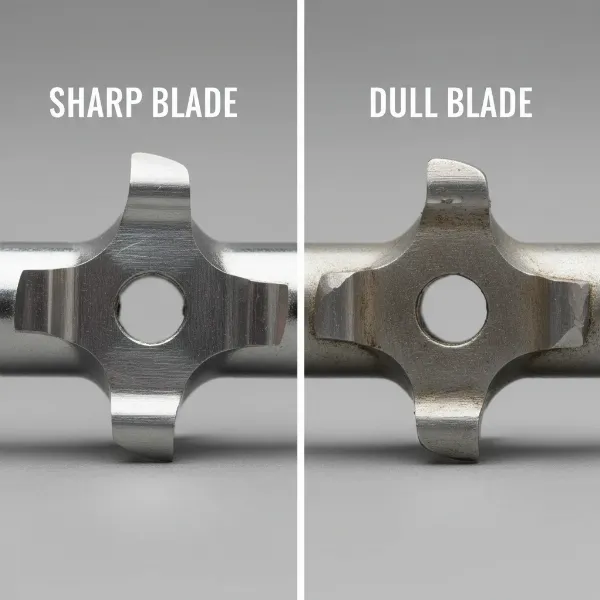 Side-by-side comparison of a sharp meat grinder blade and a dull, worn blade, clearly showing the difference in cutting edge condition.
Ensure Proper Assembly and Tightness
Even the sharpest blade won’t perform if it’s not correctly installed and secured. A loose assembly creates gaps where meat can escape being cut, leading to smearing.
- Steps for Correct Assembly: Always refer to your grinder’s manual for precise assembly instructions. Typically, the auger (worm) goes in first, followed by the blade (flat side out), and then the grinding plate, all secured by the locking ring.
- The Importance of a Tight Locking Ring: The locking ring is crucial for pressing the blade firmly against the grinding plate. A slight looseness can allow meat to slip between them, causing it to be torn and smeared instead of cleanly cut. Ensure it’s tightened as much as possible by hand, but avoid over-tightening with tools which could damage the components.
 Hands demonstrating the correct assembly of a meat grinder, specifically tightening the locking ring to secure the blade and plate.
Mastering Meat Temperature Control
Temperature is a silent hero in meat grinding; cold meat is firm and cuts cleanly, while warm meat is soft and prone to smearing.
- Why Cold Meat is Crucial: Cold meat maintains its structure, allowing the blade to slice through it efficiently. The fat remains solid, preventing it from rendering and emulsifying prematurely with the lean meat.
- Tips for Chilling Meat: For best results, partially freeze your meat for 30-60 minutes before grinding until it’s very firm but not rock-solid. It should be firm to the touch but still yielding to pressure.
- Chilling Grinder Parts: Take it a step further by chilling your grinder head, auger, blade, and plate in the freezer for at least 30 minutes before use. This helps maintain a consistently cold grinding environment, further preventing the meat from warming up during processing. Some users even add small, crushed ice chips to very lean meat, but exercise caution as uncrushed ice can nick blades.
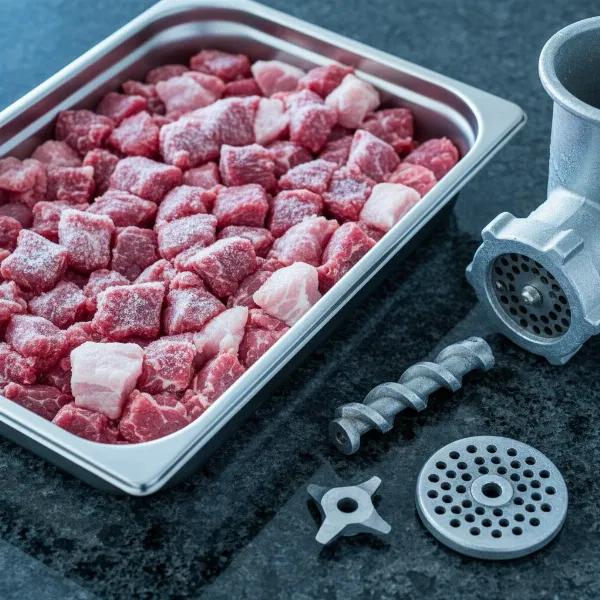 Cubes of partially frozen, well-chilled meat laid out on a tray, alongside chilled metal meat grinder parts ready for assembly.
Effective Meat Preparation
The quality of your grind starts long before the meat enters the machine. Proper trimming is key to preventing clogs and smearing.
- Trimming Sinew, Silver Skin, and Excess Fat: These tough connective tissues don’t cut cleanly and tend to wrap around the auger and blade, causing blockages and dragging the meat, leading to smearing. Meticulously trim as much as possible before grinding.
- Cutting Meat into Appropriate Sizes: Cut meat into strips or cubes that are small enough to fit easily into the grinder’s feed tube without forcing. This allows the auger to draw the meat in smoothly, ensuring consistent contact with the blade.
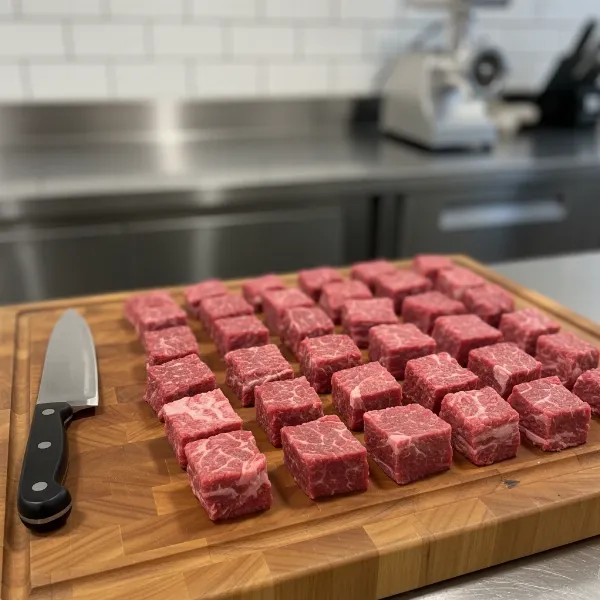 Pieces of raw beef or pork, meticulously trimmed of sinew, silver skin, and excess fat, cut into appropriate sizes for grinding.
Optimizing Grinding Technique
Even with perfectly prepped meat and a well-maintained grinder, poor technique can lead to smearing.
- Avoiding Overloading: Resist the urge to cram too much meat into the grinder at once. Feed smaller, consistent portions, allowing the machine to work efficiently without struggling. Overloading can lead to jams and overheating, which softens the meat.
- Choosing the Right Grinding Plate for the Task: Different recipes call for different textures. Starting with a coarser plate for the initial grind (especially if you plan a second, finer grind) can prevent smearing by providing a cleaner first pass. Using too fine a plate for a tough cut or an initial grind can quickly lead to blockages and mushy results.
- Knowing When to Stop Grinding: Over-grinding meat, especially through a fine plate multiple times, can break down the meat’s structure too much, leading to a smeared, pasty consistency. Grind only until the desired texture is achieved.
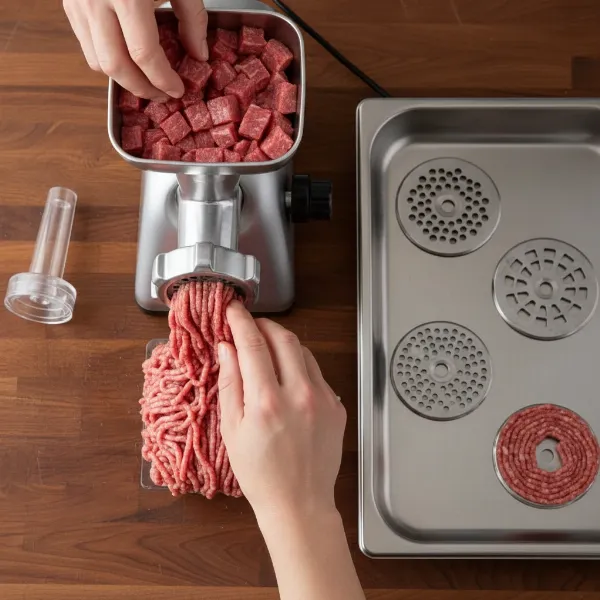 A person gently feeding small, consistent portions of meat into a grinder, with a selection of different sized grinding plates visible nearby.
Key Factors for a High-Performance, Smear-Free Meat Grinder
While addressing immediate troubleshooting issues is important, investing in a quality meat grinder and understanding its specifications can significantly reduce future smearing problems.
- Power and Motor: A meat grinder with a sufficiently powerful motor is less likely to bog down when grinding tougher cuts or larger batches. Consistent power helps maintain a steady grinding speed, reducing friction and heat buildup that can lead to smearing. For home use, look for motors typically ranging from 500W to 1200W, depending on your frequency and volume of use. Commercial units will, of course, feature much higher power outputs.
- Material Quality: The durability and performance of your grinder’s cutting components are largely determined by their material. High-quality stainless steel blades and plates are crucial. They retain sharpness longer, resist corrosion, and provide a cleaner, more consistent cut compared to cheaper, softer metals that dull quickly and promote smearing. Always prioritize robust, food-grade materials that stand up to repeated use and cleaning.
- Brand Reputation & Features: Reputable brands often incorporate superior design and engineering, leading to more precise component fit and better performance. Features like reverse functions can help clear minor clogs, preventing scenarios that might otherwise lead to pushing and smearing meat. While not directly preventing smearing, a well-designed feeder tray and auger can also contribute to smoother operation.
- Budgeting for Quality: While it might be tempting to opt for the cheapest option, a slightly higher investment in a meat grinder often translates to better material quality, a more powerful motor, and durable components. This reduces the likelihood of common issues like smearing, ultimately saving you frustration and money on replacements or frequent sharpening. Consider your expected usage frequency and volume when setting your budget.
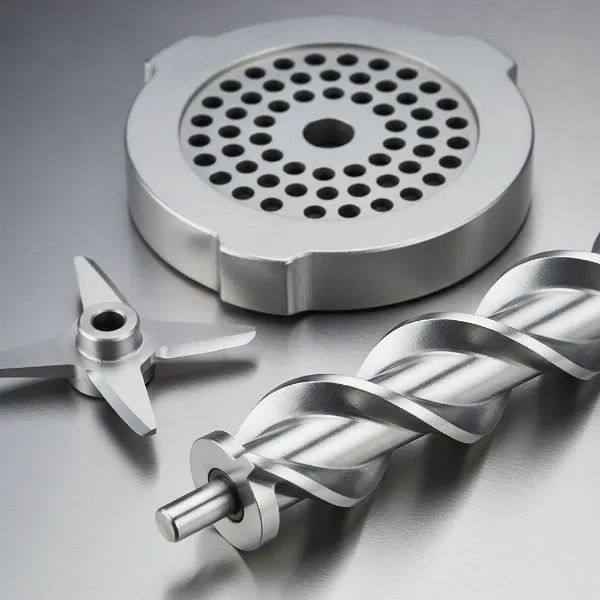 A close-up showcasing high-quality stainless steel components of a meat grinder, emphasizing their robust construction and clean finish.
Tips for Optimal Usage and Maintenance
Beyond troubleshooting, adopting a routine of best practices will ensure your meat grinder delivers perfectly textured results consistently and enjoys a long, productive life.
- Regular Cleaning Practices: Always clean your grinder immediately after use. Disassemble all parts and wash them thoroughly with warm, soapy water. Meat residue can harden, making it difficult to clean and potentially harboring bacteria. Ensure all nooks and crannies are free of food particles to maintain hygiene and prevent future blockages.
- Blade and Plate Maintenance: After cleaning, ensure blades and plates are completely dry to prevent rust. Many experts recommend lightly oiling metal parts before storage to protect them from oxidation, especially if they won’t be used for a while. Store them carefully to prevent accidental dulling or damage.
- Troubleshooting Minor Jams: If your grinder starts to struggle or meat backs up, don’t force it. Turn off the machine, disassemble the head, clear any clogs (often sinew or fat wrapped around the auger), and then reassemble. Some electric grinders have a reverse function which can help clear minor jams without full disassembly.
 Hands meticulously cleaning disassembled meat grinder parts with a brush and soapy water, illustrating proper maintenance practices.
Conclusion
Smeared meat is a clear indicator that your meat grinder isn’t operating at its best, but it’s a problem that’s almost always fixable. By diligently addressing the foundational principles of grinding – ensuring sharp components, meticulous meat preparation, proper assembly, and careful temperature control – you can eliminate this common frustration. Remember, your meat grinder is a tool designed for precision; a little attention to detail in its care and operation goes a long way. With these insights, you’re now equipped to diagnose and conquer any smearing issues, transforming your grinding experience into one of consistent success. What’s your secret for perfectly ground meat?
Frequently Asked Questions
Can a cheap meat grinder always cause meat smearing?
Not necessarily, but cheaper grinders often come with less powerful motors and lower-quality blades and plates that dull faster, making them more prone to smearing if not meticulously maintained and operated with very cold, well-trimmed meat.
How can I tell if my grinder blade is dull?
Visually inspect the blade’s cutting edges for a rounded appearance or nicks. If the meat comes out mushy, pasty, or smeared, and you’ve controlled for temperature and assembly, a dull blade is highly likely the culprit.
Is it safe to put ice in a meat grinder with the meat?
Yes, small amounts of crushed ice can help keep meat cold, especially during a second grind. However, avoid large, uncrushed ice cubes as they can damage or dull your grinder blades.
How often should I sharpen my meat grinder blade?
Expert recommendations vary, but a good rule of thumb is to sharpen your grinder blade every 50 to 100 pounds of meat processed, or whenever you notice a decline in grinding performance and an increase in smearing.
What is silver skin, and why should I remove it before grinding?
Silver skin is a tough, silvery membrane found on cuts of meat. It’s essentially connective tissue that doesn’t break down during grinding or cooking. Removing it prevents it from wrapping around the grinder’s components, which can cause clogging and lead to meat smearing.